
Altria's Dividend: A Test of Management's Capital Allocation and Moat Durability
For the disciplined investor, AltriaMO-- presents a classic puzzle. On one side, the numbers are undeniably alluring: a 7.4% dividend yield that towers over the S&P 500 average. On the other, the business engine is clearly sputtering. The core question is whether that high yield is a margin of safety or a warning sign-a symptom of a shrinking enterprise.
The yield's appeal is rooted in a formidable history. Altria has paid a dividend for over half a century, and its board has increased the payout 60 times in 56 years. Just last August, it delivered a 3.9% quarterly hike, reaffirming a stated goal for mid-single-digit annual growth. This track record of raising the dividend is the foundation of its "Dividend King" status and the primary reason many investors are drawn to the stock.
Yet, the big picture reveals a different story. The company's financial engine is powered almost entirely by a single, declining product. In the first half of 2024, smokeable products generated about 88% of revenue, and within that division, cigarettes account for just over 97% of volume. This is the essence of the value trap: the high yield is not a sign of a strong, growing business, but a feature of one in structural decline. Cigarette volumes have been falling consistently for years, with a 11.5% drop in the first half of 2024 alone.
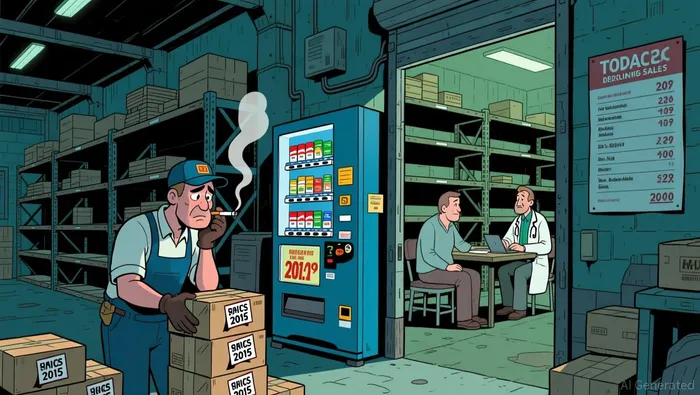
The company has managed to offset these volume losses by raising prices, a strategy that works only as long as consumer loyalty holds. But that loyalty is the very moat that is being eroded by the long-term trend. The investment proposition, therefore, hinges on a bet that management can sustain this price-driven cash flow indefinitely while funding a dividend that is meant to grow. For a value investor, the widening gap between a high yield and a shrinking business is the ultimate red flag.
Analyzing the Competitive Moat and Its Erosion
The durability of Altria's economic moat is the central question for any investor. The company's legendary brand, Marlboro, once represented a fortress of consumer loyalty and pricing power. But that fortress is under siege from within. The moat's width is being measured not by its height, but by the relentless erosion of its foundation-the steady decline of the core cigarette business.
The data on volume is unequivocal. Cigarette volumes have been falling for years, with a year-over-year drop of 8.2% in the third quarter of 2025 and a 10.6% decline through the first nine months. This is not a cyclical dip but a structural trend that has persisted for over a decade. The company's ability to offset these losses through price increases is a testament to past brand strength, but it is also a sign that the moat is being stretched thin. As one analyst notes, "You can only milk a cash cow so hard before it runs dry."
More telling than the overall volume decline is the specific weakening of the crown jewel. Marlboro's market share, the ultimate measure of dominance in this business, has fallen from 43.1% in 2021 to its current level. This erosion of the flagship brand's position signals a broader challenge to the entire portfolio's pricing power and consumer attachment. When the moat's primary defender is losing ground, the entire defensive perimeter is compromised.
Management's strategy to defend the moat has been to pivot toward alternative products. The company has invested in ventures like the NJOY vape brand, hoping to find a new growth vector. Yet, these efforts have not yet offset the losses in traditional cigarettes. The smokable tobacco business still contributes roughly 90% of revenue, and within that, cigarettes account for the vast majority of volume. The alternative products remain a small, unproven part of the story. This creates a dangerous dependency: the company's ability to compound value long-term is increasingly reliant on new ventures that have not yet proven their scale or profitability.
The bottom line is that the classic value investor's moat-the durable competitive advantage that generates predictable, high returns on capital-is in retreat. Altria's current cash flow is being sustained by extracting more from a shrinking pie, not by building a wider one. The high dividend yield, while attractive, is being paid for with a business that is fundamentally less valuable. For a moat to be wide enough to last, it must be able to grow, not just defend. Altria's current setup suggests the company is in a defensive crouch, not a position of strength.
Financial Health and the Sustainability of the Dividend
The financial capacity to fund a growing dividend is the ultimate test of a company's health. For Altria, that test is failing. The overwhelming reliance on a single, shrinking segment creates a precarious foundation. In the third quarter of 2025, the company generated roughly $6.1 billion in revenues, with the smokable tobacco business contributing $5.4 billion-just shy of 90% of the total. This is the core of the problem: the dividend is backed by a business that is systematically losing value.
The stock's flat returns over the past decade are a clear market verdict on this setup. Investors have been skeptical for years, and that skepticism is reflected in the price. The company's diversification efforts into oral tobacco products haven't been paying off, leaving it exposed to the relentless decline in cigarette volumes. This lack of growth is the fundamental risk. When a business isn't growing, its ability to generate the cash needed to fund both a rising dividend and necessary reinvestment is inherently limited.
The valuation must account for this risk. The high yield is a function of a falling stock price, not a rising dividend. The market is pricing in the uncertainty that the historically safe dividend may become unsustainable if the core business continues to shrink without a viable replacement. The company's strategy of using price increases to offset volume losses is a short-term fix that cannot last forever. It stretches the moat thinner, and eventually, the cash flow will follow the volume down.
For a value investor, the path forward is not about finding a bargain in a declining business. It is about recognizing that the dividend's safety is directly tied to the durability of the underlying cash flows. With the core engine sputtering and no clear successor in sight, the financial health of the enterprise is deteriorating. The stock's decade-long stagnation is a warning sign that the market sees this risk clearly.
Catalysts, Risks, and What to Watch
The path forward for Altria is defined by a single, urgent question: can management bridge the widening gap between a shrinking cash flow and its commitments? The company's stated goal of mid-single-digit annual dividend growth is set to expire in 2028, creating a clear deadline for a successful pivot. Until then, investors must watch a few key metrics to gauge the sustainability of the current setup.
First and foremost, the quarterly trends in the smokeable tobacco segment are the most immediate barometer of the core business's health. The company has been using price increases to offset volume losses, but this strategy is a blunt instrument. Any acceleration in the decline of cigarette volumes would signal that the moat is eroding faster than management can compensate. Conversely, stabilization or a slowdown in the drop would be a positive signal that the current pricing power is holding. The evidence shows a year-over-year drop of 8.2% in the third quarter of 2025 and a 10.6% decline through the first nine months. Monitoring these numbers quarter after quarter is essential to see if the decline is stabilizing or worsening.
Second, progress on alternative products is the only credible source of future growth. The company's diversification efforts into oral tobacco and other ventures have not yet paid off, leaving it exposed. Investors must watch for any updates on these initiatives that suggest they are gaining traction or, conversely, for signs that they are failing to scale. This is the primary hope for funding the dividend without further stretching the core business.
The primary risk, however, remains a dividend cut. The high yield is a function of a falling stock price, not a rising payout. If the core business continues its decline without a viable replacement, the financial pressure to cut the dividend will become overwhelming. A cut would likely trigger a sharp decline in the stock price, turning the current high yield into a classic value trap-a yield that is no longer safe. The market has already priced in this risk, as evidenced by the stock's decade-long stagnation. For a disciplined investor, the setup is clear: the company's capital allocation must succeed in finding a new growth vector before the cash flow from the old one dries up. Until that happens, the high yield is a warning sign, not a bargain.





Comentarios
Aún no hay comentarios