
The Altcoin Volatility Storm of Q3 2025: Macro Shocks and Liquidity Tsunamis
The Q3 2025 altcoin market was a rollercoaster of euphoria and despair, driven by a collision of macroeconomic headwinds and liquidity shifts. While BitcoinBTC-- basked in the glow of institutional adoption and regulatory clarity, altcoins faced a perfect storm of volatility, with EthereumETH--, SolanaSOL--, and ChainlinkLINK-- experiencing sharp price corrections amid a backdrop of central bank policy pivots and global inflationary pressures. Let's dissect the forces at play.
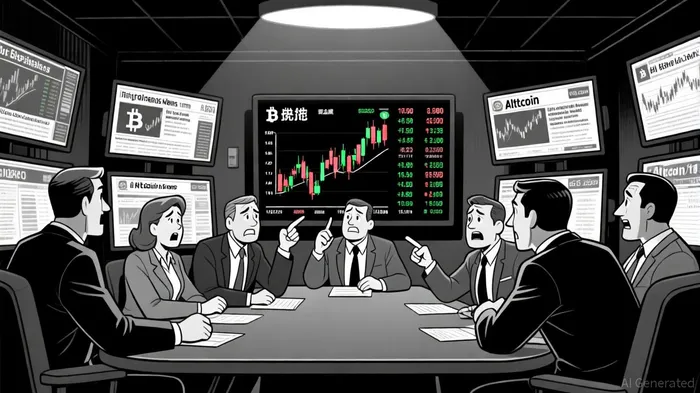
Macro Shocks: The Fed's Rate Cut and Global Liquidity Repricing
The U.S. Federal Reserve's September 2025 rate cut-its first easing move of the year-sent shockwaves through crypto markets. By lowering the federal funds target range by 25 basis points, the Fed signaled a shift toward accommodative monetary policy, aiming to cushion a softening labor market and slowing economic momentum, according to a Twelve Points review. This move, however, had unintended consequences for altcoins.
According to an Amberdata analysis, the BTC/FDUSD pair on Binance experienced a sevenfold spike in price volatility (from 0.043% to 0.304%) immediately following the Fed's announcement; market depth collapsed by 50% within 10 basis points of the midprice, while bid-ask spreads widened by 2.4x. These disruptions highlight how even anticipated policy moves can trigger liquidity crises in crypto markets, particularly for altcoins, which lack the institutional-grade infrastructure of Bitcoin.
Inflationary Headwinds and the Altcoin Paradox
While core CPI cooled to 3.1% and PCE to 2.7% in Q3 2025, inflation remained stubbornly sticky in sectors like energy and housing, as noted in Sanctum's review. The Fed's rate cut, combined with new tariffs expected to add 0.3–0.5 percentage points to inflation in 2025–2026, created a paradox for altcoin investors: lower borrowing costs fueled risk-on sentiment, but inflationary pressures eroded purchasing power, making speculative assets like altcoins less attractive, the review added.
Data from Equiti data reveals that altcoins lagged behind Bitcoin, with Ethereum and Solana posting negative year-to-date returns despite a 66% surge in ETH prices during the quarter. This divergence underscores the fragility of altcoin valuations in a macroeconomic environment where liquidity is both a tailwind and a headwind.
Regulatory Clarity vs. Liquidity Gaps
The introduction of the GENIUS and CLARITY Acts in the U.S. brought much-needed clarity to stablecoin and digital commodity regulation, stabilizing Bitcoin's price and attracting institutional inflows, according to the Twelve Points review. However, altcoins remained exposed to liquidity gaps. As stated by a CryptoRank report, the altcoin market cap ballooned to $1.72 trillion in Q3 2025, but this growth was driven by speculative fervor rather than fundamental demand.
Emerging markets further complicated the picture. While some nations accelerated CBDC development to counter crypto's rise, others imposed outright bans, creating fragmented liquidity pools and exacerbating altcoin volatility. This regulatory patchwork left altcoin investors navigating a minefield of jurisdictional risks.
The Road Ahead: Navigating the Altcoin Volatility Cycle
For investors, the Q3 2025 volatility underscores the need for a nuanced approach to altcoin exposure. Here's what to watch:
1. Liquidity Metrics: Monitor bid-ask spreads and market depth, especially for high-profile altcoins. A 2.4x widening in spreads post-FOMC, as seen in September 2025, is a red flag (the Amberdata analysis highlighted this widening).
2. Macro Correlations: Track inflation data and central bank policy signals. Altcoins are highly sensitive to liquidity shifts, and a 25-basis-point rate cut can trigger cascading volatility (the Twelve Points review provides context on this dynamic).
3. Regulatory Tailwinds: The GENIUS Act's impact on stablecoin liquidity may eventually benefit altcoins, but this requires time and infrastructure development, as the Twelve Points review notes.
Conclusion
The Q3 2025 altcoin volatility was notNOT-- a bug but a feature of a maturing crypto market. As macroeconomic pressures and liquidity shifts continue to reshape the landscape, investors must balance optimism with caution. The key takeaway? Altcoins are not a monolith-Bitcoin's institutional adoption and regulatory clarity offer a blueprint for stability, while the rest of the ecosystem remains a high-risk, high-reward proposition.






Comentarios
Aún no hay comentarios