
Is Altcoin Season Paving the Path to Recovery Amid Bitcoin's Weakening Dominance?
Bitcoin's Weakening Dominance: A Structural Shift?
Bitcoin's dominance (BTC.D) has declined to 58.8% in November 2025, down from 61.4% earlier in the year, marking its lowest level since December 2024. This decline aligns with a surge in the Altcoin Season Index, which hit 47-a monthly high-suggesting a growing appetite for riskier assets. Analysts note that further erosion of Bitcoin's dominance could push its market share below 54%, a threshold last seen in late 2024. While BitcoinBTC-- remains the largest cryptocurrency by market capitalization, its weakening grip on the market has created fertile ground for altcoins to attract capital.
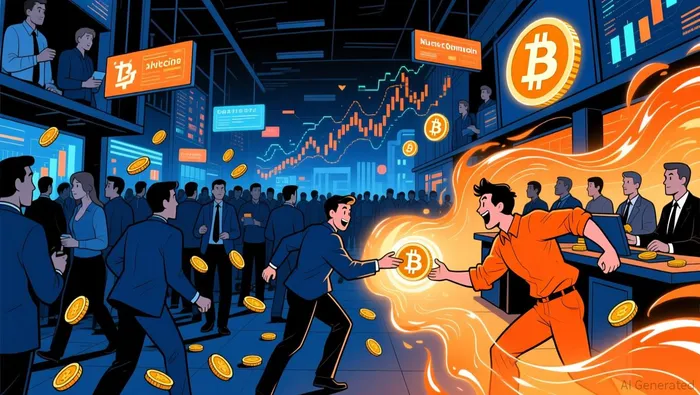 This shift is not merely speculative. Institutional and retail investors are increasingly allocating funds to altcoins as Bitcoin's price consolidates. For instance, Bitcoin ended Q3 2025 with a 6.40% return, reaching $114,000 by September, but lagged behind the explosive gains of altcoins like EthereumETH-- (+65%), ChainlinkLINK-- (+58%), and SolanaSOL-- (+32%). CoinDesk's CD20 and CD100 indices, which track broader crypto market performance, outperformed Bitcoin with returns of 30.8% and 27.8%, respectively, during the same period.
Altcoin Strength: Driven by Regulation and Innovation
The resurgence of altcoins is being fueled by a confluence of regulatory clarity and technological innovation. A pivotal catalyst has been the passage of the GENIUS Act, which has enabled traditional financial institutions to legally adopt stablecoins. This regulatory green light has spurred demand for stablecoin-linked assets, indirectly boosting altcoins that underpin decentralized finance (DeFi) and blockchain infrastructure.
Ethereum's 65% surge, for example, reflects optimismOP-- around its post-merge upgrades and the growing adoption of Ethereum-based DeFi protocols. Similarly, Solana's 32% gain underscores its appeal as a high-throughput blockchain for decentralized applications. Chainlink's 58% rise highlights renewed interest in decentralized oracleADA-- networks, which are critical for connecting smart contracts to real-world data. These gains suggest that investors are not merely chasing hype but are capitalizing on tangible use cases and infrastructure advancements.
Market Structure Shifts: Implications for Investors
The decline in Bitcoin's dominance signals a maturing market structure, where crypto investors are diversifying their portfolios beyond the "safe haven" of Bitcoin. This trend mirrors traditional financial markets, where equities and alternative assets often outperform cash during periods of economic uncertainty. In crypto, altcoins are increasingly viewed as vehicles for innovation and growth, rather than speculative gambles.
However, this shift also introduces risks. Altcoins are inherently more volatile than Bitcoin, and their performance is often tied to macroeconomic factors such as interest rates and regulatory sentiment. For instance, the Industrial Solutions segment of Vow ASA-a company with exposure to crypto-related infrastructure-saw negative revenue in Q3 2025 due to cost overruns, illustrating the operational challenges that can accompany altcoin-driven growth. Investors must balance the allure of high returns with the need for rigorous due diligence.
The Road Ahead: Caution Amid Optimism
While the current altcoin rally is compelling, its sustainability depends on broader market conditions. Bitcoin's price action remains a critical barometer: if it breaks above $120,000, it could reassert dominance and draw capital back from altcoins. Conversely, a prolonged consolidation phase may allow altcoins to maintain their momentum.
Regulatory developments will also play a decisive role. The GENIUS Act's impact on stablecoins could either catalyze further altcoin adoption or trigger a regulatory crackdown if compliance issues arise. Investors should monitor these dynamics closely while maintaining a diversified portfolio that balances exposure to Bitcoin's stability with altcoins' growth potential.
Conclusion
The weakening of Bitcoin's dominance and the rise of altcoins reflect a maturing crypto market where innovation and regulation are reshaping investor behavior. While altcoin strength offers a promising path to recovery, it is not without risks. For now, the data suggests a structural shift rather than a fleeting trend, but prudence remains essential in navigating this evolving landscape.






Comentarios
Aún no hay comentarios