
Why Altcoin Season 2025 Has Failed to Materialize and Where Capital Is Flowing Instead
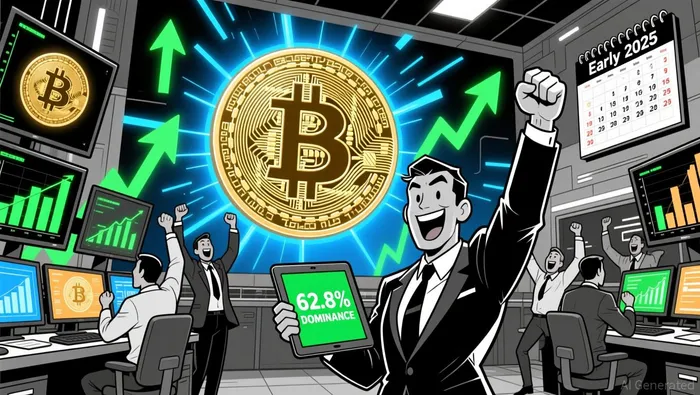
The cryptocurrency market in 2025 was poised for a dramatic shift. Analysts and investors anticipated a robust "altcoin season," driven by institutional adoption, regulatory clarity, and macroeconomic tailwinds. Yet, as the year unfolded, the narrative diverged sharply from expectations. Altcoin season failed to materialize in a sustained way, with Bitcoin's dominance surging to 62.8% by Q1 2025, while altcoins struggled to break free from a cycle of underperformance and volatility. This article dissects the capital allocation dynamics and institutional sentiment shifts that explain this divergence and identifies where capital is now flowing.
Bitcoin Dominance: A Structural Shift
Bitcoin's dominance in 2025 was not merely a short-term trend but a structural realignment of capital flows. As global liquidity tightened and macroeconomic uncertainty persisted, investors flocked to BitcoinBTC-- as a "safe haven" within the crypto ecosystem. By Q1 2025, Bitcoin's dominance had climbed from 53.54% to 62.8%, reflecting a broader market preference for its perceived stability and institutional backing. This shift was amplified by the maturation of Bitcoin ETFs, approved in 2024, which institutionalized Bitcoin as a core asset class while leaving altcoins in a fragmented, speculative niche according to research.
The CMC Altcoin Season Index, a key barometer for altcoin momentum, hovered at 52 in March 2025-a neutral reading that signaled a transitional phase rather than a breakout according to data. Historical patterns suggest altcoin seasons follow a four-stage cycle, beginning with Bitcoin accumulation and ending in speculative fervor. However, 2025's market environment lacked the liquidity and risk-on sentiment needed to progress beyond the early stages of this cycle.
Institutional Capital Allocation: A Tale of Two Halves
Institutional capital flows in 2025 tell a nuanced story. While Q2 saw a brief surge in altcoin interest, the latter half of the year revealed a stark reversal. In Q2, all six crypto sectors posted positive returns, driven by regulatory developments like the U.S. GENIUS Act, which provided a framework for stablecoin usage and spurred activity on smart contract platforms like EthereumETH--. Digital asset treasuries (DATs), where public companies added crypto to their balance sheets, further fueled institutional demand for tokens like ETHETH--, SOL, and BNBBNB--.
However, this optimism unraveled in Q4. Solana, a standout performer in Q2 and Q3, with gains of 24.2% and 34.9%, plummeted by 39.1% in its worst quarter ever. The collapse was emblematic of a broader institutional caution, as macroeconomic headwinds and regulatory scrutiny dampened risk appetite. By October 2025, Bitcoin entered a bear market, with demand growth falling below historical trends-a red flag for altcoins, which are historically more volatile and beta-heavy.
Market Sentiment: From Cautious Optimism to Extreme Fear
Market sentiment in 2025 swung wildly, further stifling altcoin momentum. In March, the Crypto Fear & Greed Index stood at 58, signaling cautious optimism. Yet, by November, the index had plunged into "extreme fear" territory, the lowest level since July 2022. This shift was driven by a combination of factors: delayed macroeconomic data, conflicting Federal Reserve signals, and a wave of selling from long-term Bitcoin holders, some inactive for over a decade.
Altcoins, which typically follow Bitcoin's lead during risk-off periods, were hit disproportionately. The holiday season saw major cryptocurrencies trading sideways, reflecting a lack of conviction in market direction. Institutional investors, who had previously shown interest in altcoins, retreated to Bitcoin and cash, prioritizing capital preservation over speculative bets.
Where Capital Is Flowing: Bitcoin, Stablecoins, and Selective Allocations
With altcoin season faltering, capital in 2025 reallocated to three primary areas:
1. Bitcoin as a Core Asset: Institutional adoption of Bitcoin ETFs and DATs cemented its role as a digital reserve asset.
2. Stablecoins and Smart Contract Platforms: The GENIUS Act spurred demand for stablecoins, with Ethereum seeing a surge in transaction volumes driven by use cases like cross-border payments and DeFi.
3. Undervalued Altcoins with Strong Fundamentals: While the broader altcoin market struggled, tokens like Ethereum and Solana showed resilience in Q2, attracting investors seeking long-term growth.
Conclusion: A Market in Transition
The failure of altcoin season in 2025 underscores a maturing crypto market. Institutional capital, once a wild west of speculation, now prioritizes stability and regulatory compliance. Bitcoin's dominance and the rise of DATs reflect a shift toward institutional-grade assets, while altcoins face the dual challenges of narrative saturation and liquidity constraints. For investors, the lesson is clear: diversification and risk management remain critical in a market where sentiment can pivot overnight.
As we enter 2026, the question is not whether altcoin season will return, but how the market will adapt to a new equilibrium-one where Bitcoin's maturation and institutional pragmatism redefine the rules of the game.







Comentarios
Aún no hay comentarios