
Altair Minerals and BHP's Oak Dam: Navigating Legal and Strategic Risks in Junior Miner Partnerships
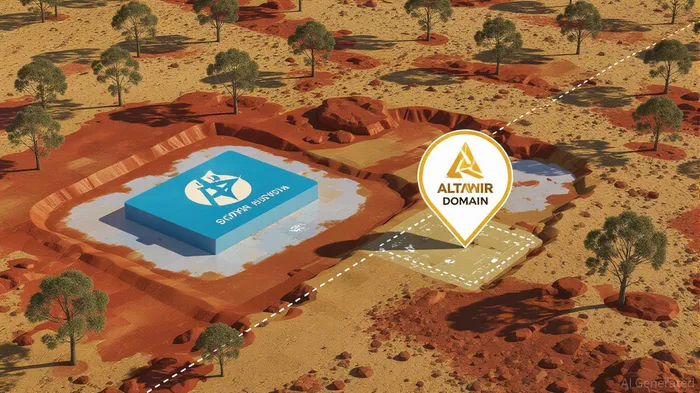
In the competitive landscape of global mining, junior explorers like Altair Minerals face a dual challenge: unlocking the potential of high-grade deposits while navigating the legal and strategic risks inherent in operating near major projects. Altair's Olympic Domain project, located just 5 kilometers from BHP's Oak Dam deposit—a resource containing 1.34 billion tonnes at 0.66% copper and 0.33 grams per tonne gold[2]—exemplifies the opportunities and pitfalls of such proximity. While no direct legal dispute between Altair and BHPBHP-- has been documented, the broader industry context reveals systemic risks that investors must scrutinize.
Strategic Risks: Capital Constraints and Market Volatility
Junior miners often rely on capital-intensive exploration programs to validate their projects, yet 2024-2025 data shows that 30% of junior miners delayed pre-feasibility or feasibility studies due to funding constraints[2]. Altair's Olympic Domain, with its promising geophysical anomalies, requires sustained investment to advance. However, the oversupply of metals like nickel and lithium, coupled with geopolitical trade tensions, has dampened investor appetite for junior projects. This creates a paradox: while copper demand remains robust due to electrification and renewable energy transitions[1], junior miners struggle to secure financing without concrete discoveries.
For Altair, the proximity to BHP's Oak Dam—a major copper-gold asset—could theoretically attract synergies, such as shared infrastructure or joint exploration. Yet such partnerships are fraught with challenges. Larger firms like BHP may prioritize their own operational boundaries, leaving junior partners to navigate overlapping claims or regulatory scrutiny. A 2025 study on mining partnerships notes that only 25-30% of junior miners are deemed “investment-worthy” due to financial sustainability and project quality[2], underscoring the sector's high attrition rate.
Legal and Jurisdictional Challenges
While no recent legal disputes between Altair and BHP have been reported[1], the proximity of their projects raises jurisdictional questions. South Australia's mining regulations emphasize resource nationalism, with policies favoring domestic operators and stringent environmental reviews[2]. Junior miners, often lacking the legal resources of majors, may face delays in securing permits or resolving boundary disputes. For instance, if Altair's exploration activities inadvertently encroach on BHP's operational zones, it could trigger litigation or regulatory penalties—a risk amplified by the Gawler Craton's complex geological and legal history.
Moreover, the absence of a formal cohabitation agreement between Altair and BHP highlights a broader industry trend. A 2025 academic analysis on mining partnerships argues that structured agreements—such as revenue-sharing models or joint exploration pacts—are critical for mitigating conflicts[2]. Without such frameworks, junior miners risk being sidelined by larger players, even in regions with high mineral potential.
Industry-Wide Implications
The Altair-BHP dynamic reflects a larger issue: the tension between junior innovation and major miner dominance. While junior companies like Altair drive exploration in underdeveloped regions, their success hinges on navigating a fragmented capital market and regulatory landscape. A 2025 report by Whitecase notes that geopolitical shifts and decarbonization pressures are reshaping the mining sector, with critical minerals becoming strategic assets[3]. This environment demands not only geological expertise but also legal agility to secure partnerships and avoid jurisdictional pitfalls.
Conclusion
Altair Minerals' Olympic Domain project represents a compelling case study in the risks and rewards of junior miner partnerships near major operations. While the absence of a direct Altair-BHP dispute is reassuring, the broader industry context—marked by capital constraints, regulatory complexity, and geopolitical volatility—demands cautious optimism. Investors must weigh Altair's exploration potential against the systemic challenges facing junior miners, particularly in regions where proximity to majors can be both an asset and a liability. As the mining sector evolves, the ability to forge structured, legally sound partnerships will likely determine the success of junior explorers like Altair.





Comentarios
Aún no hay comentarios