
Alstom's Strategic Expansion in European Rail: A Golden Opportunity for Investors in Smart Transportation
The European rail sector is undergoing a seismic shift, driven by the urgent need to modernize aging infrastructure and meet ambitious climate goals. At the forefront of this transformation is Alstom (EPA:ALO), a global leader in rail technology, which is leveraging its engineering prowess and strategic partnerships to dominate the smart transportation revolution. For investors, this is not just a story of infrastructure—it's a high-conviction play on the convergence of decarbonization, digitalization, and public policy.
Strategic Wins: Anchoring Growth in Germany and Beyond
Alstom's recent $600 million framework agreement with Deutsche Bahn to modernize Germany's rail network is a masterstroke[1]. This 9-year contract, spanning until 2032, focuses on digital interlocking systems and train control technologies—critical for improving efficiency and safety in a country where rail demand is surging. Germany's push to electrify 40% of its freight corridors by 2030[1] ensures this project isn't a one-off but part of a long-term trend.
Equally compelling is Alstom's involvement in the Rail4EARTH initiative, a $95.1 million EU-funded project under the Europe's Rail program[2]. By developing energy-efficient infrastructure and circular economy solutions, Alstom is aligning itself with the EU's Green Deal objectives. This isn't just about sustainability—it's about future-proofing its business in a regulatory environment where carbon neutrality is non-negotiable.
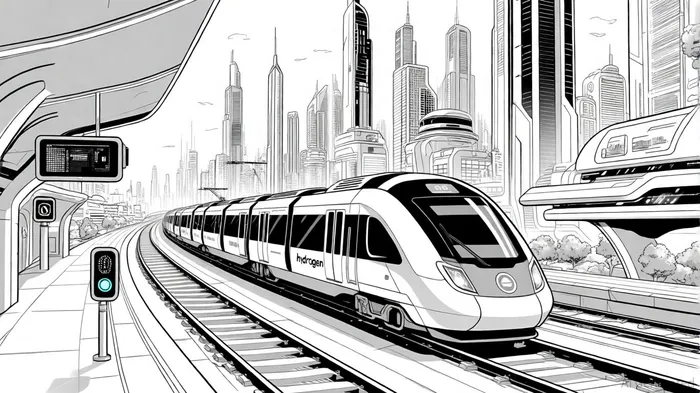
Meanwhile, the company's $63 million investment in Italy to test hydrogen-powered trains and expand production capacity[3] underscores its geographic diversification. Italy's rail network, plagued by delays and inefficiencies, is a ripe market for Alstom's Coradia iLint hydrogen trains—a product already proven in Germany.
Financial Fortitude: A Cash-Flow Engine in a High-Growth Sector
Alstom's fiscal 2024/25 results are a testament to its operational discipline. With sales of €18.5 billion and a book-to-bill ratio of 1.1, the company secured €19.8 billion in orders, including €13.1 billion in Europe[2]. This order backlog, bolstered by contracts like the €3.6 billion S-Bahn Rheinland project and the €850 million Avelia Horizon train order, ensures steady revenue visibility.
What's more, Alstom slashed its net debt from €2.99 billion to €434 million and generated €502 million in free cash flow[2]. This financial flexibility is a luxury in capital-intensive sectors and positions Alstom to reinvest in R&D or return value to shareholders—both attractive prospects for investors.
Market Tailwinds: The Smart Transportation Boom
The European smart transportation market is a rocket ship. Intelligent transportation systems (ITS), valued at $7.9 billion in 2024, are projected to hit $14.62 billion by 2033 at a 7.08% CAGR[1]. Alstom's expertise in AI-powered traffic management and 5G-enabled V2X solutions[1] puts it at the vanguard of this shift.
Broader smart transportation, including automated freight logistics and public transit systems, is expected to grow at an 8.3% CAGR, reaching $166.76 billion by 2033[2]. Alstom's digital twin technologies and hydrogen innovations are not just incremental—they're foundational to this ecosystem.
Competitive Edge: Outpacing the Pack
While rivals like CRRC and Siemens Global are formidable, Alstom's focus on end-to-end solutions—from rolling stock to digital infrastructure—creates a moat. Its partnerships with public entities (e.g., Deutsche Bahn) and EU-funded projects reduce execution risk, a critical factor in a sector prone to regulatory delays.
Moreover, Alstom's commitment to sustainability isn't just ethical—it's economic. With the EU allocating €25 billion for rail modernization under the 2023–2027 budget[2], Alstom's green credentials will likely secure more contracts in a carbon-conscious era.
Verdict: A Buy for the Long Haul
Alstom's strategic bets in digitalization, sustainability, and geographic expansion are paying off. With a robust order book, improving balance sheet, and a market poised for explosive growth, this is a stock that offers both near-term stability and long-term upside. For investors seeking exposure to the smart transportation revolution, Alstom is the locomotive to ride.







Comentarios
Aún no hay comentarios