
Alstom’s Leadership Transition: A Catalyst for Green Growth or a Risk?
Amid the global push toward sustainable transportation and infrastructure modernization, Alstom’s impending leadership transition has sparked debate over whether its strategic momentum—and its stock—can withstand the departure of CEO Henri Poupart-Lafarge. With a €95 billion order backlog, strong financials, and a clear focus on decarbonization, Alstom stands at the crossroads of opportunity and uncertainty. This analysis dissects how the CEO succession could shape its trajectory in green energy and rail infrastructure—and whether now is the time to bet on its shares.
Leadership Transition: Stability or Stumble?
Poupart-Lafarge, who has helmed Alstom since 2005, will step down in 2027 after completing his third term. While the successor remains unnamed, the board has emphasized a “deliberate search process” to ensure continuity. This gradual transition—coupled with recent internal leadership moves, such as appointing Andrew DeLeone as Europe Region President and Martin Vaujour to oversee Africa, the Middle East, and Central Asia—suggests a focus on aligning regional expertise with growth priorities.
DeLeone’s track record in complex project execution (e.g., integrating Bombardier’s legacy contracts) and Vaujour’s experience in M&A and cross-border operations underscore a strategic reshuffle to leverage high-margin services and emerging markets. The CEO’s departure, while notable, is not an abrupt shock, with Poupart-Lafarge retaining oversight until 2027. For investors, this mitigates near-term governance risks, even as the successor’s vision for innovation and global expansion remains unclear.
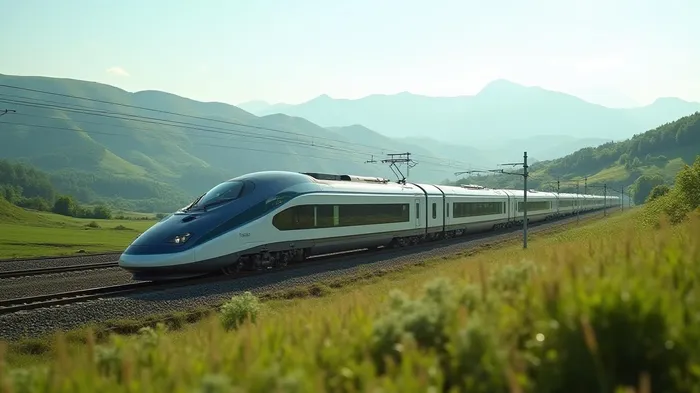
Strategic Stability: Green Energy and Rail Modernization
Alstom’s core strategies—hydrogen trains, smart signaling, and decarbonized transport—are well-positioned to capitalize on global infrastructure spending. Consider:
- Hydrogen Leadership: Its Coradia iLint trains, the first hydrogen-powered models, have secured orders in Germany and the U.S., with pilot projects in Italy.
- EU Funding Windfall: The €900 billion NextGeneration EU plan prioritizes rail modernization, aligning with Alstom’s strength in high-speed and regional networks.
- Backlog Strength: A €95 billion backlog (up 11% year-on-year) includes contracts like the €3.6 billion S-Bahn Rheinland deal in Germany and Morocco’s €781 million Avelia Horizon order.
The company’s adjusted EBIT margin rose to 6.4% in FY2024/25, with a path to 8-10% by 2027, driven by cost savings and operational efficiency. Even as supply chain headwinds persist, Alstom’s focus on local manufacturing partnerships (e.g., in India and the U.S.) aims to reduce risks.
Valuation: Undervalued Amid Growth Catalysts?
Alstom’s stock trades at a forward P/E of 10.77, below its five-year average of 14.2, despite strong fundamentals. Key metrics suggest a compelling entry point:
- Free Cash Flow (FCF): Turned positive in FY2024/25 at €502 million, with a 5.44% FCF yield.
- EV/EBITDA: At 6.32x, it’s cheaper than peers like Siemens Mobility (9.5x) and Bombardier (8.2x).
- Analyst Consensus: A €23.40 average 12-month target implies 23.5% upside, with bulls like CFRA targeting €24–€30.
While risks include succession delays and geopolitical tensions (e.g., Russia-related contracts), the company’s debt-to-equity ratio of 0.34 and €10.58 billion equity provide a strong financial cushion. The French government’s €100 billion rail investment plan further solidifies near-term demand.
Risks and Rewards: Why Act Now?
Catalysts to Watch:
1. EU Green Deal Contracts: Alstom’s role in electrifying rail networks and hydrogen infrastructure could secure multi-billion-euro deals.
2. Successor Appointment: A visionary leader could accelerate innovation, while delays might test investor patience.
3. Profit Margins: Achieving the 8-10% EBIT target by youth 2027 hinges on cost discipline and high-margin services.
Risks to Mitigate:
- Supply Chain Volatility: Component shortages could delay project timelines.
- Geopolitical Uncertainty: Contracts in regions like the Middle East face macroeconomic risks.
Conclusion: Buy with a Long-Term Lens
Alstom’s €18.94 share price sits at a 23.5% discount to analyst targets, offering a compelling entry for investors willing to overlook near-term leadership uncertainty. The company’s strong backlog, EU-aligned growth drivers, and sustainable valuation make it a core holding in green infrastructure portfolios.
While succession risks linger, the deliberate transition timeline and strategic leadership reshuffles suggest Alstom’s decarbonization and rail modernization strategies remain intact. For those betting on a global shift to sustainable transport, Alstom’s shares represent a high-conviction opportunity to capitalize on the next wave of green investment.
Action Item: Consider a gradual accumulation of shares at current levels, with a focus on the €23–€24 target range as a near-term catalyst.
This analysis combines financial data, strategic insights, and market context to provide a data-driven perspective. Always conduct further research and consult a financial advisor before making investment decisions.







Comentarios
Aún no hay comentarios