
Alstom's EUR475m European Rail Contract: A Strategic Inflection Point for Sustainable Infrastructure Growth
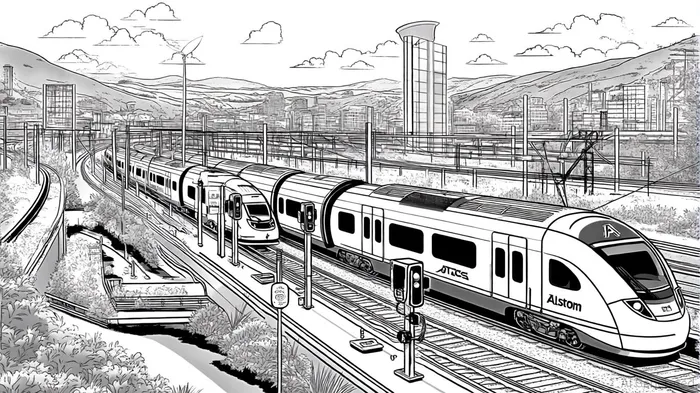
Alstom's recent EUR475 million contract with Deutsche Bahn for the digitalisation of Germany's rail network marks a pivotal moment in the company's evolution as a green infrastructure leader. This long-term framework agreement, valued at over EUR600 million in total, underscores Alstom's strategic alignment with the European Union's decarbonisation agenda and its ambition to reshape the continent's transportation systems. By integrating digital interlocking technology and train control systems under the international ETCS standard, Alstom is not only modernising rail operations but also embedding sustainability at the core of infrastructure development [1].
Strategic Alignment with EU Green Goals
The contract aligns with the EU's Green Deal, which demands annual green investments of approximately €1.2 trillion to achieve climate neutrality by 2050 [2]. Alstom's digital interlocking units, which include energy-efficient switch drives and signals, directly contribute to reducing rail networks' carbon footprints. For instance, the company's Driver Advisory Systems (DAS) have already demonstrated an 11% reduction in energy consumption on Spanish high-speed trains, with a payback period of just 2.5 years [3]. By 2025, Alstom aims to cut energy consumption in its solutions by 25% compared to 2014 levels and ensure 100% of its main offerings are eco-designed [4]. These targets position the firm as a critical enabler of the EU's 2030 climate goals, particularly in the transport sector, where €754 billion annually is required for carbon-neutral transitions [5].
Financial Health and Growth Trajectory
Alstom's FY 2024/25 results reinforce its credibility as a long-term investment. The company reported €19.8 billion in orders and €18.5 billion in sales, with a book-to-bill ratio of 1.1 and organic sales growth of 6.6% [6]. Notably, net debt plummeted from €2.99 billion to €434 million, reflecting disciplined deleveraging. This financial resilience is critical as Alstom ramps up production for projects like the EUR3.6 billion S-Bahn Rheinland contract and the EUR850 million very high-speed train deal in France [7]. The EUR475m call-off with Deutsche Bahn, part of a EUR95 billion order backlog, further strengthens its cash flow visibility. With free cash flow reaching €502 million in FY 2024/25—well above analyst expectations—Alstom is well-positioned to fund R&D (3.8% of sales) and expand its hydrogen train portfolio, which already includes 59 firm contracts across Europe [8].
Competitive Positioning in a Shifting Landscape
While competitors like Skanska and AECOM focus on green building technologies, Alstom's expertise in rail digitalisation and hydrogen mobility creates a unique value proposition. The company's global experience—over 135 ETCS projects and 3,000 interlockings installed—gives it a first-mover advantage in markets prioritising rail modernisation [9]. Moreover, Alstom's 15,000 service engineers and 35,000-vehicle maintenance capacity ensure operational scalability, a critical factor as the EU accelerates infrastructure renewal. The firm's commitment to sourcing 88% of electricity from renewables in 2025 (with a 100% target by year-end) also aligns with investor demands for decarbonisation [10].
Long-Term Investment Potential
The EU's 2025 sustainability agenda, now more competitiveness-focused post-2024 elections, prioritises industrial leadership in clean tech. Alstom's “Alstom in Motion 2025” strategy—emphasising green traction, digitalisation, and profitability—positions it to capitalise on this shift. With the EU's green investment gap at €344 billion annually, Alstom's ability to secure public-private partnerships (e.g., via REPowerEU and InvestEU funds) will be key. However, risks such as supply chain bottlenecks in rolling stock and underutilised cleantech manufacturing capacity remain [11].
For investors, Alstom represents a compelling case study in balancing decarbonisation with industrial growth. Its EUR475m contract is not an isolated win but a harbinger of broader opportunities in Europe's green infrastructure revolution. As the ECB notes, structural shifts toward low-carbon economies will reshape markets, and Alstom's strategic agility—coupled with its financial discipline—makes it a prime candidate to lead this transition.







Comentarios
Aún no hay comentarios