
Alstom's EUR 1.4 Billion Eurostar Contract: A Strategic Inflection Point in European Green Mobility and High-Speed Rail Leadership
Strategic Inflection in Green Mobility
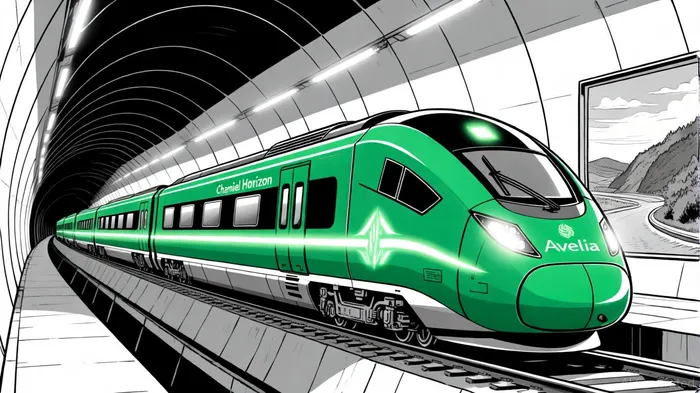
The Avelia Horizon trains represent a technological leap forward, combining energy efficiency, passenger capacity, and cross-border interoperability. These double-deck trains, capable of 320 km/h speeds, , according to Alstom's press release. Eurostar's pledge to power these trains entirely with renewable energy by 2030 aligns with the 's 2030 targets, which aim to slash emissions by 55% and prioritize low-carbon transport.
Eurostar's sustainability efforts extend beyond energy use. , per Eurostar's . Collaborations like its solar project with Infrabel in Belgium further demonstrate its circular economy ambitions. By incentivizing rail over air travel and expanding open hubs, Eurostar is directly contributing to the EU's 2030 goal of making 50% of passenger journeys under 500 km occur by rail, according to a European Commission report.
Alstom's Competitive Positioning
, according to RayHaber. The company's recent EUR 1.7 billion contract for 96 RER NG trains in France and undisclosed €760 million deals were reported by RailMarket. With a 39% global market share in multiple-unit trains as of 2022, per Statista, Alstom's Avelia platform is a cornerstone of its strategy to lead the green mobility transition.
The EUR 1.4 billion Eurostar contract also reinforces Alstom's domestic production capabilities. , ensuring local expertise in sustainable rail solutions, as Alstom noted in its press release. This aligns with the EU's "just transition" agenda, which emphasizes job creation and industrial resilience in green sectors, a trend highlighted by RailTech.
European Rail Investment Trends
Post-2023, European rail infrastructure spending has surged, , according to a Fortune Business Insights report. , , including high-speed lines in cohesion countries, as reported by . , while ERTMS deployment is accelerating digital interoperability across 11 member states, according to Railway Gazette.
These trends are driven by the EU's climate strategy, which positions rail as a low-emission alternative to aviation and road transport. , as the European Commission has highlighted. With the CEF retained in the post-2027 budget, investments will continue prioritizing sustainability, digitalization, and cross-border connectivity, according to a RailMarket analysis.
Investment Case for Alstom
Alstom's alignment with European green mobility goals and its leadership in high-speed rail make it a high-conviction play. The company's order backlog, technological innovation, , per the Fortune Business Insights report. As governments and private investors accelerate electrification and ERTMS adoption, Alstom's expertise in energy-efficient trains and digital systems will drive recurring revenue streams.
Moreover, the Eurostar contract's emphasis on cross-border operations-spanning Germany, Belgium, France, the Netherlands, and the UK-highlights Alstom's ability to navigate complex regulatory environments and deliver interoperable solutions, as noted by the Financial Times. This capability is critical as the EU expands its Trans-European Transport Network (TEN-T) to enhance regional connectivity.
Conclusion
The EUR 1.4 billion Eurostar contract is more than a commercial win for Alstom; it is a testament to the company's role in shaping Europe's sustainable transport future. By combining cutting-edge technology, strategic production investments, and alignment with EU climate goals, Alstom is well-positioned to benefit from the decarbonization wave sweeping across the rail sector. For investors, this represents a compelling opportunity to participate in a structural shift toward greener mobility, underpinned by robust policy support and long-term infrastructure demand.







Comentarios
Aún no hay comentarios