
AlphaTON Capital's Share Offering: Balancing Shareholder Value and Capital Structure Risks
AlphaTON Capital Corp. (ATON) has recently drawn investor attention with its filing to sell 7.47 million ordinary shares, a move framed as part of its broader strategy to expand its TONTON-- token treasury and solidify its position in the Telegram-based crypto ecosystem. However, the offering raises critical questions about shareholder value and capital structure optimization, particularly given the company's reliance on equity financing and its opaque regulatory framework.
Capital Structure Implications: Dilution vs. Strategic Growth
The 7.47 million shares offering, as disclosed in its Form F-3 registration statement, includes 4.215 million issued and outstanding shares and 3.258 million shares issuable upon the exercise of pre-funded warrants. Notably, AlphaTONATON-- itself is not selling shares in this resale offering and will not receive proceeds from the transaction. Instead, the company's recent private placements-such as the September 2025 issuance of 6.32 million shares at $5.73 per share, raising $36.2 million, according to a GlobeNewswire release-have already contributed to a surge in its TON token holdings.
The company's capital structure has become increasingly reliant on equity and debt instruments. For instance, a $35 million loan from BitGo Prime, LLC, combined with the $36.2 million private placement, enabled AlphaTON to acquire approximately $30 million in TON tokens. While this strategy aligns with its mission to build a "digital asset treasury," it also raises concerns about dilution. The issuance of 7.47 million shares-combined with prior offerings-could pressure the stock price, especially given AlphaTON's foreign reporting status, which limits its Exchange Act disclosure obligations and reduces transparency for U.S. investors, according to a Seeking Alpha report.
Shareholder Value: Treasury Expansion or Short-Term Gains?
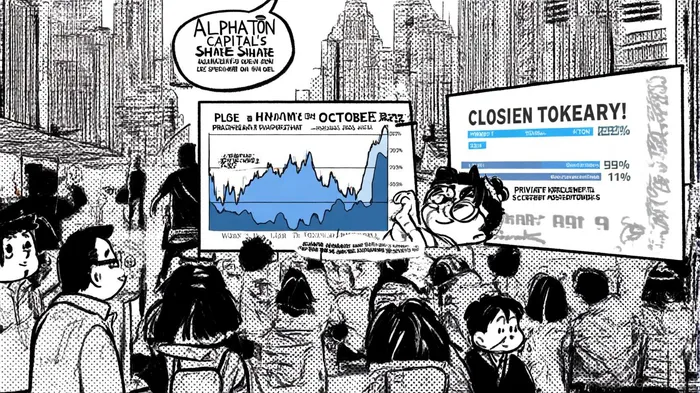
AlphaTON's use of proceeds from its recent financings underscores a dual focus: 99% of net cash from offerings is allocated to TON token purchases, while 1% covers operational expenses, as noted in the prospectus supplement. This approach mirrors traditional "buy-and-hold" treasury strategies but introduces unique risks tied to the volatility of TON, a digital asset with limited institutional adoption. According to a report by Seeking Alpha, the company has also announced a $250 million share buyback program, signaling confidence in its long-term value proposition. However, such buybacks may be constrained by the need to maintain liquidity for further TON acquisitions.
The recent $5.73/share private placement price contrasts sharply with AlphaTON's October 9 closing price of $8.35, suggesting potential undervaluation in secondary offerings. This discrepancy could either create arbitrage opportunities for investors or indicate market skepticism about the company's ability to justify higher valuations through TON's performance.
Risk Factors and Market Realities
AlphaTON's reliance on the TON ecosystem exposes it to operational and legal risks, including custodial challenges and regulatory scrutiny of digital assets. Additionally, its foreign reporting status-registered in the British Virgin Islands-limits the depth of financial disclosures available to U.S. investors, potentially deterring institutional participation. A Form 424B5 filing further highlights these risks, noting that the company's debt securities are subject to volatility and banking access issues.
Conclusion: A Calculated Bet on TON's Future
AlphaTON's share offerings reflect a high-stakes bet on the TON blockchain's potential to disrupt the crypto ecosystem. While the company's treasury strategy could generate long-term value if TON's price appreciates, the aggressive issuance of shares and limited transparency pose significant risks to shareholder equity. Investors must weigh the benefits of exposure to an emerging digital asset against the dilutive effects of repeated capital raises and the uncertainties of a nascent market.





Comentarios
Aún no hay comentarios