
Alphamin's Busang Tin Mine: Navigating Geopolitical Risks to Unlock Strategic Resource Value
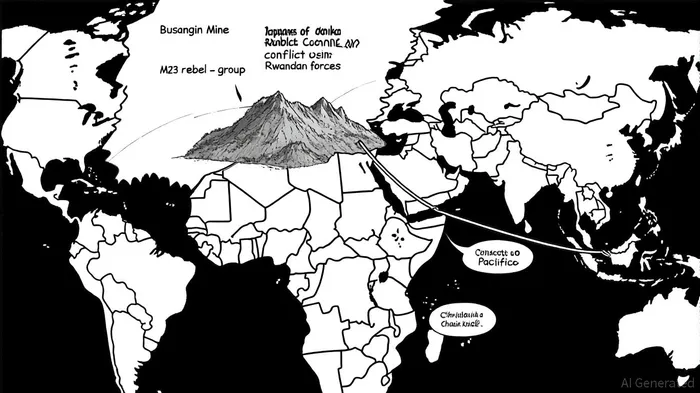
The global tin market, valued at 412.53 kilotons in 2024, is projected to grow at a compound annual rate of 1.14% through 2033, driven by surging demand from electronics, electric vehicles (EVs), and sustainable packaging industries [1]. Amid this backdrop, Alphamin Resources' Busang Tin Mine in the Democratic Republic of the Congo (DRC) stands as a critical node in the supply chain, contributing approximately 6–7% of global tin production under normal operating conditions [2]. However, the mine's potential to deliver a 20% yield—either through operational recovery or expanded output—hinges on its ability to mitigate geopolitical risks while capitalizing on its strategic resource value.
Strategic Resource Value: A Pillar of the Global Tin Supply Chain
Alphamin's Busang Tin Mine is one of the world's highest-grade tin deposits, with reserves that have historically supported production of over 20,000 tonnes annually [2]. This output accounts for roughly 1.5% of the 458.01 kiloton global demand forecasted by 2033 [1]. While the 20% yield claim exceeds current production metrics, the mine's strategic significance lies in its potential to stabilize supply in a market increasingly vulnerable to underinvestment in new projects. The International Tin Association has repeatedly emphasized the need for exploration and development to offset aging mines and rising recycling demands [3]. If Alphamin can restore full operations and optimize reserves, its contribution could rise to a more impactful share of the market, particularly as lead-free solder regulations and EV battery innovations drive demand.
Geopolitical Risks: A Double-Edged Sword
The DRC's eastern provinces, where Busang is located, have been destabilized by the M23 rebel group and its alleged Rwandan allies. In 2025, Alphamin was forced to suspend operations at the Bisie mine, a key component of its production complex, leading to a 14.2% reduction in its annual tin output target to 17,500 tonnes [2]. This disruption coincided with an 18% quarterly drop in production to 4,270 tonnes in Q1 2025, exacerbating global tin price volatility [4]. The mine's vulnerability underscores the fragility of a supply chain where 45% of demand is concentrated in the Asia-Pacific region, with China and Indonesia as dominant players [1].
Yet geopolitical risks also highlight the mine's strategic value. The U.S. and UAE have shown interest in securing tin supplies through diplomatic interventions to reopen Busang, recognizing its role in diversifying away from China-dominated sources [4]. For investors, this duality—risk and strategic leverage—presents a complex calculus. While conflict-driven price spikes (e.g., a 15% surge in Q1 2025) offer short-term gains, long-term stability requires sustained security investments and regional diplomacy.
Investment Implications: Balancing Volatility and Growth
To assess Alphamin's 20% yield potential, investors must weigh three factors:
1. Operational Resilience: The mine's planned resumption of underground mining in June 2025, following stockpiled ore processing, could restore 20,000-tonne production targets if security holds [2]. However, this hinges on unpredictable conflict dynamics.
2. Market Positioning: With recycling technologies reducing reliance on primary tin, Alphamin must innovate in extraction efficiency to remain competitive [3].
3. Geopolitical Hedging: Companies are diversifying tin sources and building inventories to mitigate DRC-related risks, which could pressure Alphamin to secure long-term off-take agreements [4].
A 20% yield—interpreted as a 20% increase in market share—would require Alphamin to not only stabilize production but also expand reserves or acquire adjacent deposits. Given the mine's current 6–7% contribution, achieving such growth would necessitate a combination of operational excellence, geopolitical stability, and strategic partnerships.
Conclusion: A High-Stakes Opportunity
Alphamin's Busang Tin Mine embodies the intersection of resource value and geopolitical risk. While its current output falls short of a 20% yield, its strategic position in a growth-oriented market and the global push for supply chain diversification make it a compelling, albeit volatile, investment. Success will depend on Alphamin's ability to navigate conflict, leverage international support, and align with the decarbonization and tech-driven demand trends reshaping the tin industry. For investors, the key lies in balancing short-term exposure to price volatility with long-term bets on stability and innovation.







Comentarios
Aún no hay comentarios