
Alphabet's Strategic Energy Play: How the Intersect Power Acquisition Accelerates AI Leadership
In the race to dominate the AI era, infrastructure has become the new battleground. Alphabet's $4.75 billion acquisition of Intersect Power, a data center and clean energy developer, marks a pivotal shift in how tech giants secure energy-driven competitive advantages. By vertically integrating energy infrastructure, Alphabet is not only addressing the immediate challenges of grid bottlenecks but also positioning itself to lead in an AI-driven future where energy supply and computational demand are inextricably linked.
Strategic Rationale: Bypassing Grid Bottlenecks and Securing Clean Energy
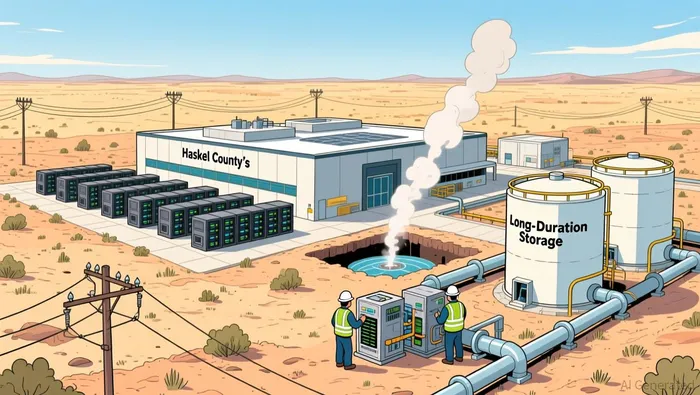
Alphabet's acquisition of Intersect Power is a calculated move to future-proof its AI infrastructureAIIA--. The deal includes Intersect's future development projects and its technical team, enabling Alphabet to co-locate power generation and data centers. This strategy is exemplified by the Haskell County, Texas project, where a co-located site is already under construction. By avoiding reliance on third-party energy providers, Alphabet gains direct control over energy sourcing, a critical factor as AI training demands escalate.
The acquisition also aligns with Alphabet's broader $40 billion Texas investment plan, a state poised to become a hub for AI innovation, due to its abundant energy resources. By securing access to multiple gigawatts of energy projects, including advanced geothermal and long-duration storage, Alphabet ensures a scalable and reliable energy supply for its expanding data center network. This vertical integration reduces exposure to grid volatility and regulatory uncertainties, creating a moat around its AI operations.
AI's Energy Appetite and Alphabet's Efficiency Edge
The energy demands of AI are staggering. According to a 2025 MIT Technology Review report, AI is projected to consume over half of data center electricity by 2028, with global data center electricity use expected to double to 945 terawatt-hours (TWh) by 2030. Alphabet's acquisition of Intersect directly addresses this challenge. By co-locating power generation and data centers, Alphabet minimizes transmission losses and optimizes energy use, a critical advantage as AI workloads grow.
Alphabet's energy efficiency gains are further amplified by its full-stack optimization strategy. For instance, the Gemini models reduced energy consumption from 33 times in 2024 to just 0.24 watt-hours per text prompt in 2025, driven by custom TPUs and speculative decoding techniques. This contrasts sharply with competitors like Microsoft, which reported a 23.4% increase in emissions between 2020 and 2024. Alphabet's data centers, with a Power Usage Effectiveness (PUE) of 1.09, already outperform industry averages, and the Intersect acquisition will further enhance this edge.
Competitive Advantage: Vertical Integration and Innovation
Alphabet's move represents the first time a major tech company has directly acquired a renewable energy developer, signaling a paradigm shift in energy sourcing. This vertical integration allows Alphabet to innovate at the intersection of energy and AI. For example, the company plans to use AI to accelerate grid connections for new power plants and scale energy efficiency programs in data center communities. Such synergies create a flywheel effect: AI optimizes energy infrastructure, while energy infrastructure fuels AI growth.
The Haskell County project underscores this dynamic. By co-locating power generation and data centers, Alphabet reduces latency and energy costs while accelerating deployment timelines. This model could become a blueprint for future AI infrastructure, particularly as the U.S. energy sector grapples with the need to add 75–100 gigawatts of new generating capacity by 2030. Alphabet's early mover advantage in this space positions it to capture market share in both AI and clean energy.
Long-Term Implications for Investors
For investors, Alphabet's energy strategy offers a compelling narrative. The acquisition not only mitigates energy-related risks but also creates a durable competitive advantage. By securing access to cutting-edge energy technologies and co-located infrastructure, Alphabet is better positioned to handle the exponential growth of AI workloads. This is particularly relevant as AI's electricity demand is projected to surpass the combined usage of Germany and France by 2030.
Moreover, Alphabet's focus on sustainability aligns with global regulatory trends. As governments impose stricter carbon and water usage standards, Alphabet's efficient data centers and renewable energy investments will reduce compliance costs and enhance its ESG profile. This dual benefit-operational efficiency and regulatory compliance-strengthens its long-term value proposition.
Conclusion
Alphabet's acquisition of Intersect Power is more than a strategic acquisition; it is a masterstroke in energy-driven AI leadership. By vertically integrating energy infrastructure, optimizing AI efficiency, and pioneering co-located solutions, Alphabet is building a fortress around its AI ambitions. As the energy-AI nexus becomes a defining factor in tech competitiveness, Alphabet's forward-looking approach positions it as a leader in both innovation and sustainability. For investors, this represents a rare opportunity to back a company that is not just adapting to the future but actively shaping it.







Comentarios
Aún no hay comentarios