
Alphabet (GOOG.O) Market Cap Exceeds $4 Trillion for the First Time
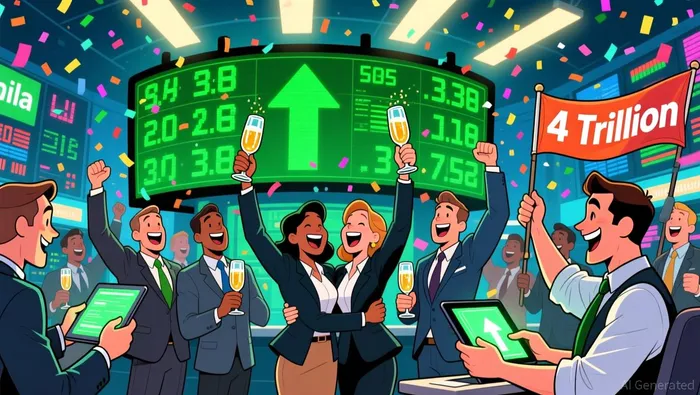
Alphabet Inc. (GOOG.O) reached a market capitalization of $4 trillion on January 12, 2026, marking a significant milestone as the fourth company to surpass the threshold, following Nvidia, Microsoft, and AppleAAPL--. This development came as investors increasingly recognize Alphabet as a leader in the artificial intelligence (AI) sector, driven by its Gemini AI model and strategic cloud unit. The stock price climbed to $334.04, translating to the historic valuation.
The rise in market cap was partly fueled by news that Apple Inc.AAPL-- selected Alphabet's Gemini to power an AI-enhanced version of its Siri digital assistant. Apple reportedly plans to pay Alphabet approximately $1 billion annually for the service. This partnership, first reported by Bloomberg in November, has been a catalyst for investor sentiment, with shares rising 4.8% so far this year.
Alphabet's valuation has grown significantly in recent months, building on a 65% rally in 2025 that made it the top-performing stock among the Magnificent Seven. The company's stock has surged by nearly 1.7% as of the latest market update.
Why Did This Happen?
Alphabet's success is largely attributed to its strategic focus on AI and cloud computing. The launch of its Gemini AI model has drawn positive reviews, addressing concerns about competition from firms like OpenAI and reinforcing Alphabet's position in the AI landscape. Additionally, the company has turned its once-overlooked cloud unit into a major growth engine, with Google Cloud's revenue rising 34% in Q3 2025.
The company's dominance in AI is not limited to software. Alphabet has begun renting out its custom tensor processing unit (TPU) chips to external customers, a move that has accelerated the unit's growth. Meta Platforms Inc. is reportedly in talks to purchase billions worth of Alphabet's chips for use in its data centers starting in 2027.
How Did Markets React?
Alphabet's stock has traded at 28 times estimated earnings, a level not seen since 2021 and well above its 10-year average of 20.5. Despite its elevated valuation, the stock still trades at a slight discount to the overall Magnificent Seven Index. This suggests investors see Alphabet as a high-growth, but not overvalued, play in the AI space.
The company's market performance also benefited from a key regulatory development in September 2025. A U.S. judge ruled against breaking up Alphabet and allowed the company to retain control of its Chrome browser and Android mobile operating system. This decision removed a potential drag on the company's long-term growth prospects and added to investor optimism.
What Are Analysts Watching Next?
Analysts are increasingly bullish on Alphabet's AI-driven growth. Janus Henderson Investors' Divyaunsh Divatia noted that Alphabet's competitive advantages are not only intact but growing, with no other player matching its breadth of models, compute power, applications, talent, and data.
Several Wall Street analysts have recently upgraded their outlook on Alphabet. Cantor Fitzgerald raised its price target to $370 from $310, citing the company's strong position across the AI tech stack. Mizuho analyst Lloyd Walmsley also increased his price target to $365 from $325, highlighting Google Cloud's potential for significant revenue growth.
Looking ahead, Alphabet's ability to maintain its edge in AI and cloud computing will be closely watched. The company's ongoing investments in AI infrastructure and its expanding partnerships—such as its collaboration with Walmart to integrate Gemini into a new shopping tool— suggest continued innovation.
Alphabet's market performance also received a rare stamp of approval from Warren Buffett's Berkshire Hathaway, which revealed a stake in the company during Q3 2025. This move, while small in the context of Berkshire's portfolio, underscores the growing confidence in Alphabet's long-term value.
Alphabet CEO Sundar Pichai has sold $10.4 million in shares in recent months, but his remaining holdings suggest continued alignment with shareholders' interests. The market's reaction to such insider activity will be another key factor for investors to monitor.





Comentarios
Aún no hay comentarios