
Alphabet's Ascent: Can the Search Giant Surpass Apple as the World's Largest Company?
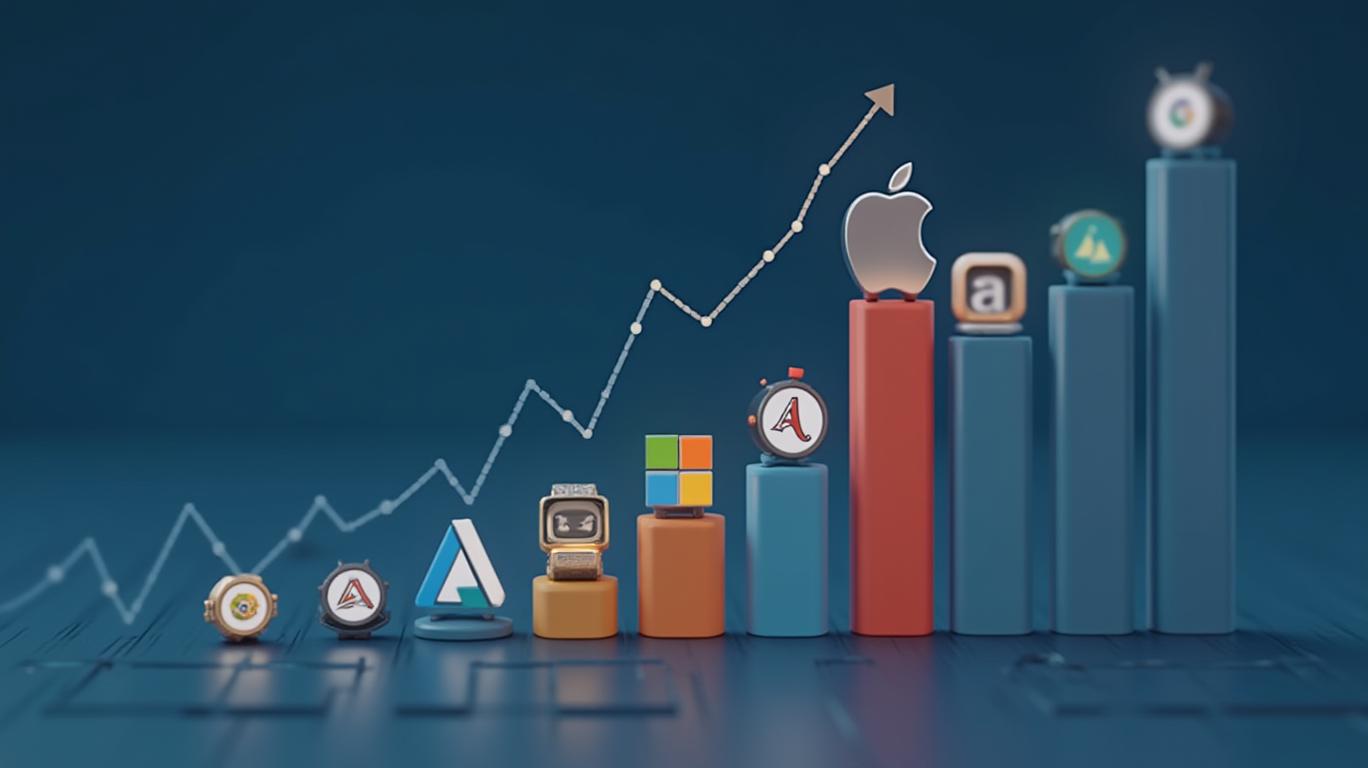
As of April 2025, Alphabet Inc.GOOG-- holds a market capitalization of $1.93 trillion, positioning it as the third-largest company globally behind Apple ($3.27 trillion) and Microsoft ($2.82 trillion). While Apple’s dominance remains unchallenged for now, Alphabet’s explosive growth trajectory—bolstered by artificial intelligence (AI) advancements, cloud computing, and strategic diversification—has investors wondering: Could the search giant soon dethrone the iPhone maker?
The Numbers Tell a Story of Momentum
Alphabet’s market cap has surged 123.5% since April 2020, fueled by a 17.5% compound annual growth rate (CAGR). This outpaces even Apple’s 76% growth over the same period, though Apple’s scale remains daunting. The key driver? A bet on AI that rivals Microsoft’s Azure and Amazon’s AWS. Alphabet’s DeepMind unit and its $200 billion AI data infrastructure investments aim to redefine industries from healthcare to advertising.
The AI Advantage
Alphabet’s AI push is already paying dividends. Its Gemini series of models powers Google Search, YouTube recommendations, and enterprise tools like Workspace, generating incremental revenue growth of 15% annually. Meanwhile, Waymo’s autonomous vehicle trials and Verily’s healthcare ventures signal long-term value creation. By contrast, Apple’s growth hinges on hardware cycles (iPhone, MacBooks) and services like Apple AI, which face regulatory scrutiny.
Cloud Computing: The New Battleground
Microsoft’s Azure leads the cloud market with a 23% share, but Alphabet’s Anthos and Vertex AI platforms are gaining traction. Alphabet’s cloud revenue grew 30% in 2024, compared to Microsoft’s 18%, suggesting a narrowing gap. A $120 billion investment in AI-enabled data centers by 2026 could accelerate this shift.

Risks on the Horizon
Regulatory hurdles loom large. The FTC’s ongoing antitrust case against Alphabet’s dominance in search and advertising could lead to costly penalties or forced divestitures. Similarly, Apple faces a U.S. antitrust lawsuit over its App Store policies. Both companies also face macroeconomic headwinds: Alphabet’s ad-dependent revenue model is vulnerable to economic downturns, while Apple’s hardware sales could stall in a slowing global economy.
The Path to Supremacy
For Alphabet to surpass Apple, it must sustain its AI-driven growth while navigating regulatory and competitive pressures. Key milestones include:
1. AI Commercialization: Generating $50 billion+ in annual AI revenue by 2026 (up from $20 billion in 2024).
2. Cloud Market Share: Doubling its cloud revenue to over $100 billion by 2027.
3. Regulatory Resilience: Settling lawsuits without ceding core business assets.
Conclusion: A Near-Term Hurdle, Long-Term Threat
While Alphabet is still $1.34 trillion behind Apple as of April 2025, its AI-first strategy and 17.5% CAGR suggest it could close the gap in 3–5 years if trends hold. Microsoft, with its $2.82 trillion valuation, remains a closer rival, but Alphabet’s diversification into healthcare, autonomous vehicles, and enterprise tools gives it an edge in capturing new markets.
Investors should watch for Alphabet’s AI adoption rates in enterprise sectors and its ability to monetize breakthroughs like health diagnostics or autonomous delivery. If it can sustain its growth while mitigating risks, the title of “world’s largest company” may indeed shift from Cupertino to Mountain View. The question isn’t if—but when.





Comentarios
Aún no hay comentarios