
Alnylam's Strategic Expansion in Genomics and Its Implications for Long-Term Value Creation
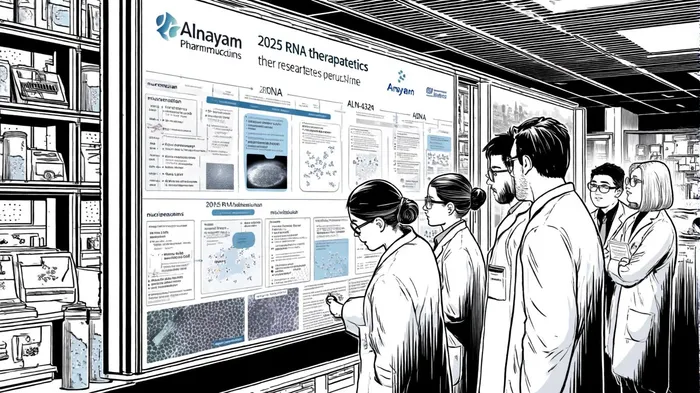
In the rapidly evolving landscape of biotechnology, Alnylam PharmaceuticalsALNY-- has emerged as a pioneer in RNA interference (RNAi) therapeutics, leveraging its proprietary platform to address diseases with high unmet medical needs. As of 2025, the company's strategic expansion into genomics and its emphasis on pipeline diversification—coupled with partnership-driven innovation—position it as a compelling case study for long-term value creation in the life sciences sector.
Pipeline Diversification: A Cornerstone of Sustainable Growth
Alnylam's 2025 pipeline reflects a deliberate shift toward therapeutic areas with substantial unmet demand and commercial potential. The TRITON Phase 3 program for nucresiran, a next-generation TTR silencer, exemplifies this strategy. Targeting ATTR amyloidosis with cardiomyopathy (ATTR-CM) and hereditary ATTR amyloidosis with polyneuropathy (hATTR-PN), TRITON-CM—a cardiovascular outcomes trial involving 1,200 patients—aims to redefine standards of care in a $5 billion market [1]. The program's focus on durable therapeutic effects aligns with investor expectations for blockbuster potential, with regulatory approval anticipated by 2030 [1].
Equally transformative is zilebesiran, an RNAi therapy for hypertension. With a Phase 3 trial planned to enroll 11,000 patients across 30 countries, this program builds on the KARDIA-3 Phase 2 trial's success in demonstrating sustained blood pressure reduction. Hypertension, a global epidemic affecting over 1.2 billion people, represents a market opportunity exceeding $10 billion annually [1]. By targeting cardiovascular outcomes—a key metric for payers and regulators—Alnylam is positioning zilebesiran to disrupt a crowded therapeutic space.
In neuroscience, AlnylamALNY-- is advancing mivelsiran for early-onset Alzheimer's disease and ALN-HTT02 for Huntington's disease, both in collaboration with RegeneronREGN--. These programs, supported by encouraging safety and efficacy data, address neurodegenerative conditions with limited treatment options. Meanwhile, ALN-4324 for type 2 diabetes, an insulin sensitizer in preclinical development, underscores the company's ambition to expand into metabolic disorders [1]. Such diversification mitigates risk while broadening the addressable market for Alnylam's RNAi platform.
Partnership-Driven Innovation: Accelerating Genomic Insights
Alnylam's strategic alliances are equally pivotal to its long-term value proposition. The company's recent membership in the Alliance for Genomic Discovery (AGD)—a consortium including AbbVieABBV--, AmgenAMGN--, and AstraZeneca—highlights its commitment to harnessing genomic data for drug discovery. By contributing to and leveraging the AGD's dataset of 250,000 whole-genomes (with plans to expand to 31,250 additional genomes), Alnylam aims to identify novel therapeutic targets tailored to diverse patient populations [2]. This collaborative approach not only accelerates R&D timelines but also enhances the precision of RNAi therapies, a critical factor in an era of personalized medicine.
Equally significant are Alnylam's partnerships with industry leaders like Roche (for zilebesiran) and Sanofi (for fitusiran). These collaborations provide access to global commercialization networks, regulatory expertise, and co-development funding, reducing the financial and operational burdens of late-stage trials. For instance, Roche's involvement in zilebesiran's development ensures a robust infrastructure for scaling production and navigating payer dynamics in high-prevalence markets [1].
Implications for Long-Term Value Creation
The convergence of pipeline diversification and partnership-driven innovation creates a flywheel effect for Alnylam's long-term value. First, the company's focus on high-impact diseases—ATTR amyloidosis, hypertension, and neurodegeneration—positions it to capture market share in therapeutic areas with strong growth trajectories. Second, its RNAi platform's versatility (e.g., targeting the central nervous system by 2030 [1]) ensures adaptability to emerging scientific breakthroughs. Third, strategic alliances mitigate the inherent risks of biotech R&D, enabling Alnylam to maintain a lean operational structure while maximizing returns.
However, challenges remain. The long timelines for Phase 3 trials (e.g., TRITON-CM's 2030 approval target) necessitate patience from investors. Additionally, competition from gene-editing technologies and small-molecule therapies could pressure pricing and market access. Yet, Alnylam's first-mover advantage in RNAi, combined with its data-driven approach to genomics, provides a durable moat.
Conclusion
Alnylam Pharmaceuticals' strategic expansion in genomics and RNA therapeutics is a masterclass in balancing innovation with pragmatism. By diversifying its pipeline into high-unmet-need areas and forging partnerships that amplify its genomic insights, the company is laying the groundwork for sustained value creation. For investors, the key takeaway is clear: Alnylam's ability to translate scientific breakthroughs into commercial success hinges on its capacity to maintain this dual focus on pipeline breadth and collaborative depth.





Comentarios
Aún no hay comentarios