
Allegiant's Gap Down: A Tactical Mispricing or a Warning Signal?
The catalyst is clear and immediate. AllegiantALGT-- Travel's stock gapped down 4% to $90.65 on heavy volume at the open on January 12, reacting to the announced $1.5 billion deal to acquire Sun Country AirlinesSNCY--. The move was a sharp reversal from the previous close of $94.97, with over 144,000 shares changing hands in a single session.
The deal's structure is the core of the market's concern. Allegiant agreed to buy Sun CountrySNCY-- for about $1.5 billion, valuing the target at $18.89 per share-a premium of roughly 20% to Sun Country's Friday close. The consideration is a mix of cash and stock: Sun Country shareholders get 0.1557 Allegiant shares plus $4.10 cash for each share. While management forecasts roughly $140 million of annual synergies and the deal is expected to be accretive to earnings, the closing is not until the second half of 2026. This long timeline, combined with the cash component and the inherent integration risk, has triggered immediate skepticism.
Evidence of bearish sentiment is mounting. Options activity shows extreme caution, with the stock's 10-day call/put volume ratio of 7.38 sitting higher than all readings from the past year. This indicates traders are buying puts at a far faster rate than calls, a classic sign of elevated fear. Short interest also reflects this view, with short interest making up 9.9% of ALGT's available float, despite having fallen in recent periods. The tactical question now is whether this negative reaction is an overreaction to a complex deal, creating a mispricing opportunity, or a justified warning signal about the risks ahead.
The Setup: Synergies vs. Execution Risks
The deal's promise is clear: a $140 million annual synergy target by the third year after closing, with the transaction expected to be accretive to earnings per share in the first year. This is the core financial justification. The combined fleet of 195 aircraft serving nearly 175 cities creates a larger, more competitive leisure-focused network. For now, the math looks good on paper.
Yet the market's negative reaction points squarely to execution risk. The primary near-term threat is that the $140 million synergy target gets missed. Integration costs for merging two airlines are real and often underestimated. More critically, the entire sector is under pressure. Both carriers have faced soaring costs following the pandemic, and the broader budget airline segment is grappling with ongoing sector headwinds. In this environment, achieving significant cost savings becomes harder, not easier.
The scale of the combined entity remains a key constraint. While the new airline will be the largest in its niche, it is still dwarfed by the top four U.S. carriers. Together, those giants commanded a roughly 70% domestic market share in late 2025. For all the talk of creating a "leading" competitor, the new Allegiant-Sun Country entity operates in a market where the real power lies elsewhere. This limits its pricing power and route expansion options compared to the majors.
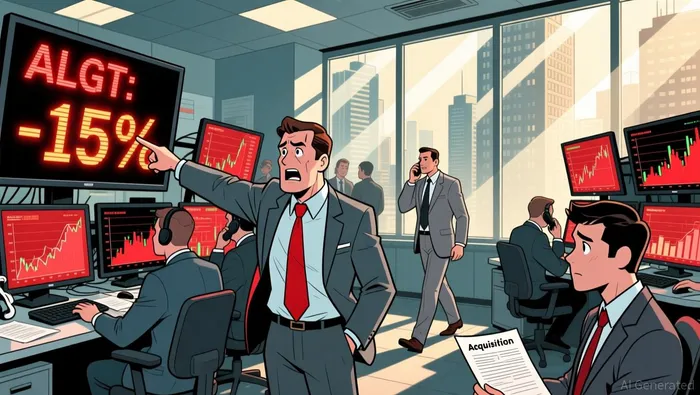
The bottom line is a classic risk/reward setup. The synergy target offers a tangible path to improved profitability, but it's a future promise dependent on flawless execution in a tough sector. The market is pricing in a high probability of that promise being diluted by integration costs and persistent cost pressures. The tactical question is whether the current gap down fully discounts that risk, or if it leaves room for a rebound if integration plans prove more robust than feared.
The Path to Validation: Key Catalysts and Watchpoints
The tactical trade hinges on a clear timeline of validation events. The market's initial sell-off prices in a high probability of execution failure. The path to a reversal runs through three specific catalysts.
The primary near-term catalyst is regulatory approval, which is currently pending. The deal is expected to close in the second half of 2026. Any significant delay or condition from antitrust authorities would be a major negative signal, likely extending the period of uncertainty and pressure. Conversely, a clean approval process would remove a key overhang.
A secondary watchpoint is the ongoing fairness investigation. An investor-rights firm has opened an investigation into whether the merger is fair to Allegiant shareholders , which could lead to legal challenges or delays. Monitoring for updates on this probe is critical. Any material change to deal terms or a timeline extension would be a bearish development, while a resolution without action would support the thesis.
The most important long-term validation comes from synergy realization. Management forecasts $140 million in annual synergies by the third year after closing. The first tangible signs of this promise must be seen in the first half of 2027. Watch for early cost cuts, route optimizations, or revenue enhancements from the combined network. Success here would confirm the deal's financial case and justify a re-rating. Failure to show progress would validate the market's skepticism about integration risks.
The setup is now binary. The stock's gap down has priced in risk. The tactical opportunity exists if the regulatory path clears and early synergy signals emerge, allowing the market to reassess the deal's accretion potential. Any stumble on the path to closing or in the initial integration phase would likely see the stock re-test its recent lows.





Comentarios
Aún no hay comentarios