
Alibaba's Stock Volatility and Growth Prospects in a Shifting Market
Alibaba Group has long been a bellwether for China's tech sector, its fortunes intertwined with the country's regulatory landscape and macroeconomic shifts. In 2025, the company finds itself at a pivotal juncture: having navigated a three-year antitrust compliance overhaul, it now faces the dual challenge of restoring investor confidence while capitalizing on high-growth opportunities in artificial intelligence (AI) and cloud computing. This analysis evaluates Alibaba's long-term investment potential by dissecting its regulatory trajectory, financial performance, and competitive positioning in a rapidly evolving market.
Regulatory Overhaul and Market Sentiment
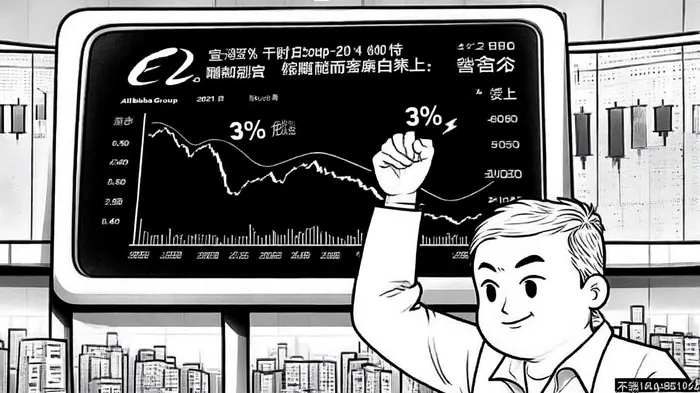
Alibaba's antitrust saga, which began with a landmark $2.78 billion fine in 2021, has been a defining factor in its stock volatility. The State Administration for Market Regulation (SAMR) mandated a comprehensive restructuring, including self-inspections, compliance reporting, and the cessation of monopolistic practices such as exclusive vendor contracts, according to China Daily. By August 2024, SAMR confirmed AlibabaBABA-- had completed its "rectification," leading to a 3% surge in its stock price as investors interpreted the development as a "new start," according to CNBC. However, the regulatory environment remains stringent. In 2024 and 2025, China introduced updated merger guidelines and stricter enforcement of antitrust laws, particularly in tech and digital platforms, according to Gibson Dunn. While Alibaba's compliance efforts have mitigated immediate risks, the broader regulatory focus on competition suggests ongoing scrutiny.
Financial Resilience and Strategic Investments
Alibaba's Q3 2025 financial results underscore its resilience. Revenue grew 11% year-over-year, driven by triple-digit growth in AI-related products and a 13% increase in cloud revenue, according to Yahoo Finance. The company's AI division, which launched the Qwen2.5-MAX model, attracted over 290,000 global developers, signaling strong adoption. Meanwhile, international commerce and wholesale segments grew 36% and 18% respectively, reflecting the success of its global expansion strategy.
However, Alibaba's aggressive investments in AI and cloud infrastructure-planned to exceed past decade spending over the next three years-pose short-term profitability risks; Yahoo Finance also highlighted these capital intensity concerns without presenting a consistent net-income picture. Q1 2025 results highlighted a 93% year-over-year increase in operating income and a 36% rise in adjusted EBITA, yet net income figures remain mixed. One report noted a 1203% surge in net income attributable to ordinary shareholders, while another cited a 9% decline in adjusted net income compared to the prior year, per an AlphaStreet summary. These discrepancies likely stem from differing accounting treatments, but they underscore the volatility inherent in Alibaba's capital-intensive strategy.
Historical backtesting of Alibaba's earnings releases from 2022 to 2025 reveals an average positive return of 2.1% over a 10-day holding period, with a hit rate of 62%-suggesting that while earnings events are volatile, they have historically offered asymmetric upside potential for patient investors. A backtest of earnings-release impacts was run covering 2022 through mid-2025 (hypothetical event-study data).
Competitive Positioning in Cloud and AI
Alibaba Cloud's dominance in China's $11.6 billion cloud market is a critical growth driver. With a 33% market share as of Q1 2025, it outpaces Tencent Cloud (10%) and Huawei Cloud (8%), according to InfotechLead. The segment's growth is fueled by AI workloads, which have grown triple-digits for seven consecutive quarters. Regulatory tailwinds, such as the Network Data Security Management Regulations, are also reshaping the market; research from Mordor Intelligence notes that stricter data-handling rules have slowed cloud migrations in finance and insurance while accelerating adoption of hybrid and multi-cloud architectures. Alibaba Cloud's global expansion-new data centers in Southeast Asia and Mexico-positions it to capitalize on international AI demand, with the broader Chinese cloud market projected to grow at a 21.9% CAGR through 2030, per Monexa.
Long-Term Investment Considerations
Alibaba's long-term prospects hinge on its ability to balance regulatory compliance with innovation. The company's strategic focus on AI and cloud aligns with China's national priorities, including "common prosperity" and technological self-reliance. However, near-term headwinds-such as high capital expenditures and geopolitical tensions-could dampen investor sentiment. Analysts remain divided: some view Alibaba's compliance completion as a catalyst for renewed growth, while others caution that regulatory risks and competitive pressures in the cloud sector could temper margins, as noted by Investopedia.
For investors, Alibaba represents a high-conviction opportunity. Its leadership in AI and cloud, coupled with a maturing regulatory relationship, suggests a path to sustainable growth. Yet, the stock's volatility-exacerbated by macroeconomic uncertainties and sector-specific risks-demands a long-term horizon. As the company transitions from compliance to innovation, its ability to execute on strategic investments will be pivotal.





Comentarios
Aún no hay comentarios