
Alibaba Shares Drop 4.7% After White House Memo Spur U.S. Security Concerns
The White House has accused Alibaba Group Holding Ltd.BABA-- of providing the Chinese military with technological support against targets in the U.S., according to a report by the Financial Times. The claims come from a national security memo that outlines concerns about Alibaba's alleged data-sharing practices with the People's Liberation Army. The memo suggests AlibabaBABA-- gave the Chinese government access to customer data, including IP addresses, WiFi information, and AI services.
The report highlights growing tensions between the U.S. and Chinese tech sectors, particularly as companies like Alibaba and Huawei expand their global influence in artificial intelligence. The memo does not specify what U.S. targets were affected, but it raises broader questions about data security and national risk.
Alibaba quickly responded, calling the claims "completely false" and questioning the "motivation behind the anonymous leak." The company added that the allegations appeared to be part of a "malicious PR operation" aimed at undermining a recent trade deal between the U.S. and China.
Market Reactions and Share Price Slump
Alibaba's shares fell sharply following the report, dropping nearly 4.7% on Friday. The decline reflects investor concerns over potential regulatory actions or restrictions on Chinese tech companies in the U.S. market. The Chinese embassy in Washington also pushed back, accusing the U.S. of distorting facts and emphasizing Beijing's efforts to improve data privacy laws.
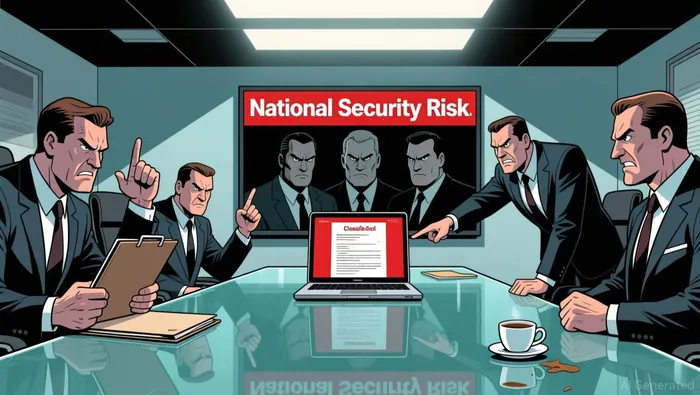
The Financial Times noted it could not independently verify the claims from the White House memo. However, the report adds to a growing list of scrutiny against Alibaba and other Chinese tech firms like TikTok and Huawei, who are increasingly seen as security risks by U.S. policymakers.
Broader Implications for AI and Geopolitical Tensions
Alibaba is in the midst of a significant AI overhaul, aiming to make its AI app more competitive with OpenAI's ChatGPT. However, the latest controversy could complicate its global expansion strategy, especially as it faces heightened geopolitical scrutiny. The U.S. has long been wary of Chinese firms' access to sensitive data, and the White House memo appears to reinforce existing concerns.
The Chinese government has repeatedly emphasized its commitment to data privacy and national security, but the U.S. allegations could strain diplomatic relations. The memo surfaced just days after Anthropic reported disrupting an AI-fueled cyberattack attributed to Chinese hackers, further heightening tensions.
What This Means for Investors and Regulators
Analysts are closely watching how this standoff could influence regulatory actions against Chinese tech firms. The U.S. has already imposed restrictions on companies like Huawei and ByteDance, and the allegations against Alibaba could lead to further scrutiny or sanctions.
For investors, the volatility in Alibaba's shares underscores the risks associated with geopolitical tensions and regulatory uncertainty. The company's stock has been under pressure in recent months, with earnings and AI competition weighing on its valuation. If the White House and Congress continue to push for tighter controls on Chinese tech, Alibaba and its peers could face significant headwinds in the U.S. and global markets.
Regulators will also be on alert for potential data misuse or security breaches linked to Chinese firms. The U.S. government has repeatedly cited national security as a reason for restricting foreign investment and technology access, and Alibaba's alleged ties to the PLA could intensify these efforts.





Comentarios
Aún no hay comentarios