
Alibaba Cloud's Global AI Expansion: A Strategic Opportunity in Cloud-Driven AI Infrastructure
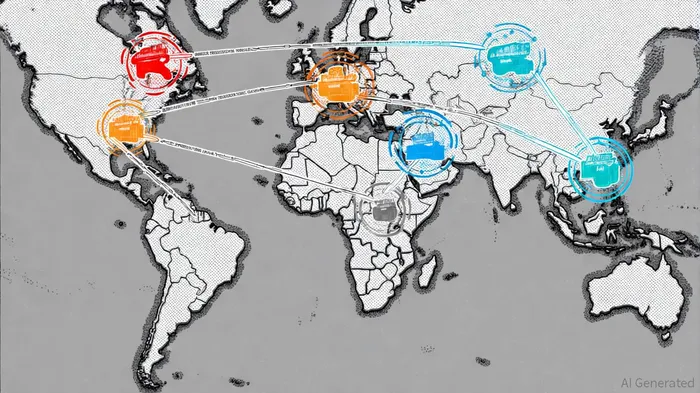
The AI revolution is reshaping the global technology landscape, and cloud infrastructure providers are at the epicenter of this transformation. AlibabaBABA-- Cloud, the fourth-largest cloud provider globally, has emerged as a formidable player in this arena, leveraging strategic investments, AI-first innovation, and aggressive international expansion to position itself as a key beneficiary of the AI boom. For investors, the question is no longer whether AI will redefine cloud computing but how companies like Alibaba Cloud will capitalize on this shift—and whether their strategies justify long-term investment.
Strategic Investments: Building a Global AI Ecosystem
Alibaba Cloud's recent $60 million USD investment in its partner ecosystem underscores its commitment to democratizing AI innovation. By collaborating with firms like Dify, Squirro, and NvidiaNVDA--, the company is enabling enterprises to access tools such as low-code AI application development platforms and scalable databases, accelerating digital transformation [1]. Notably, Alibaba Cloud has integrated Nvidia's full AI software stack into its platform, empowering developers to build real-world AI systems like humanoid robots and autonomous vehicles [2]. This partnership not only enhances Alibaba's technical capabilities but also aligns it with the cutting edge of AI deployment.
The company's $52.7 billion three-year investment plan further cements its global ambitions. This includes expanding its unified cloud network, launching 200 proprietary AI models (e.g., Qwen, now supporting 119 languages), and establishing new data centers in Brazil, France, and Dubai [4]. These moves are critical in addressing the surging demand for AI-ready infrastructure, as global AI data center capacity is projected to grow at a 33% annual rate through 2030 [5].
Financial Performance: AI-Driven Revenue Surge
Alibaba Cloud's financials reflect the momentum of its AI strategy. In Q2 2025, the unit reported a 26% year-over-year revenue increase to $4.7 billion, with AI-related products maintaining triple-digit growth for eight consecutive quarters [2]. AI services now contribute 20% of external cloud revenue, a testament to the company's ability to monetize its AI infrastructure [6]. This performance outpaces traditional cloud providers, as AI-as-a-Service (AIaaS) adoption accelerates, particularly in North America and Europe [5].
While Alibaba Cloud holds a 4% global market share (behind AWS, Azure, and Google Cloud), its AI-centric focus provides a unique edge. The global cloud AI market, valued at $89.43 billion in 2025, is projected to reach $589.22 billion by 2032 at a 28.5% CAGR [5]. Alibaba's aggressive R&D spending—exceeding past decade investments over three years—positions it to capture a larger slice of this growing pie [3].
Competitive Positioning: Navigating the "Big Three"
Alibaba Cloud faces stiff competition from AWS, Azure, and Google Cloud, which collectively control 63% of the global cloud infrastructure market [1]. However, its AI-first approach differentiates it in several ways:
1. Specialized AI Infrastructure: Unlike general-purpose cloud providers, Alibaba Cloud offers tailored solutions for AI development, including its Model Studio platform and AI Catalyst Program, which provides up to 2 billion free tokens to startups [3].
2. Regional Expansion: By establishing data centers in emerging markets like Brazil and Indonesia, Alibaba Cloud is tapping into regions where the Big Three have weaker footprints.
3. Proprietary AI Models: Advanced models like Qwen2.5-Max, which outperform competitors in benchmarks, reduce reliance on third-party AI tools and enhance customer stickiness [5].
Despite these strengths, challenges remain. The Big Three—particularly Microsoft Azure, which grew 39% in Q1 2026—benefit from deeper capital reserves and entrenched enterprise relationships [2]. Alibaba Cloud must continue innovating while scaling its global operations to sustain its growth trajectory.
Long-Term Outlook: A $2 Trillion Cloud Market
The cloud AI market is poised for explosive growth, with Goldman Sachs estimating cloud revenues will reach $2 trillion by 2030, driven by generative AI adoption [5]. Alibaba Cloud's strategic investments align with this trajectory, particularly as AI workloads consume 70% of global data center capacity by 2030 [1]. Analysts project the AI infrastructure market will grow from $36.59 billion in 2023 to $356.14 billion by 2032 at a 29.1% CAGR [2], a trend Alibaba Cloud is well-positioned to exploit.
For investors, the key risks include geopolitical tensions affecting international expansion and the need for continuous R&D to keep pace with competitors. However, Alibaba Cloud's focus on AI-driven infrastructure, coupled with its aggressive global footprint expansion, suggests it is not merely a follower in the AI race but a strategic innovator.
Conclusion: A Strategic Bet on AI-First Infrastructure
Alibaba Cloud's global AI expansion represents a compelling long-term investment opportunity. By combining substantial capital allocation, AI-centric innovation, and strategic partnerships, the company is addressing the structural shift toward AI-driven cloud infrastructure. While it operates in a crowded market, its ability to deliver scalable, regionally tailored AI solutions—backed by robust financial performance—positions it as a key player in the next phase of the cloud revolution. For investors seeking exposure to the AI boom, Alibaba Cloud's strategic bets warrant close attention.





Comentarios
Aún no hay comentarios