
Is Alexandria Real Estate (ARE) a Deep Value Buy or a Value Trap Post-Dividend Cut?
The recent 45% dividend cut by Alexandria Real Estate EquitiesARE-- (ARE) has sparked intense debate among investors. While some view the move as a necessary step to stabilize a struggling REIT, others fear it signals a deeper crisis in the life science real estate sector. To assess whether ARE represents a deep value opportunity or a value trap, we must dissect the interplay between structural industry headwinds and management's strategic response.
Structural Challenges in the Life Science Sector
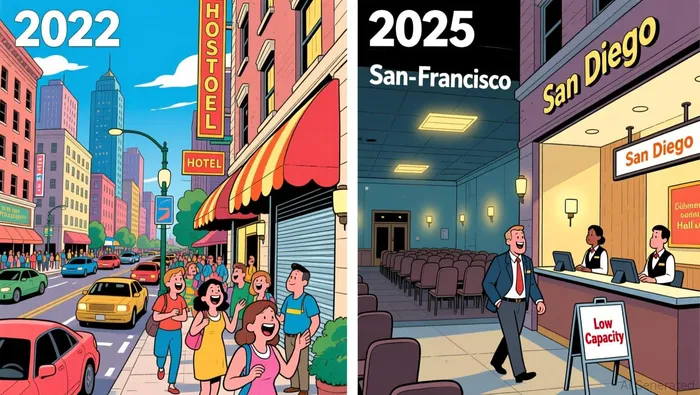
The life science real estate sector is grappling with a perfect storm of oversupply and declining demand. According to a report by PwC, occupancy rates in core markets like Boston, San Francisco, and San Diego have plummeted from the mid-90s in 2022 to the low 70s in 2025. This collapse is driven by a surge in construction pipeline-peaking in 2023-and shifting tenant dynamics, as biotech firms prioritize cost-cutting over expansion. Federal policies, including proposed pharmaceutical tariffs and "most favored nation" pricing mandates, further cloud the outlook. While construction activity is slowing, the sector's recovery remains uncertain, with occupancy declines expected to persist into 2026.
ARE's Competitive Positioning
Despite these headwinds, ARE remains the largest and most established player in the life science REIT space. As of March 2025, it managed 39.6 million rentable square feet, with a 90.8% occupancy rate and a 70.5% gross profit margin. Its "Megacampus™ ecosystems" strategy-fostering collaboration between tenants-has historically differentiated it from peers like Ventas and Boston Properties. Additionally, ARE's venture capital investments in early-stage life science firms add a unique revenue stream. A recent valuation analysis suggests the stock is trading at a 42.3% discount to intrinsic value, based on a discounted cash flow model.
However, recent financial performance raises red flags. ARE reported a Q3 2025 net loss of $235 million and a $206 million impairment charge on a Long Island City property. A shareholder lawsuit alleging misstatements about asset prospects further erodes confidence.
Management's Strategic Response
The dividend cut and a $500 million share repurchase program through 2026 signal a pivot toward capital preservation. By reducing annual dividend payments by $410 million, management aims to strengthen liquidity and reduce leverage. Concurrently, ARE plans to dispose of non-core assets and reinvest proceeds into megacampuses, which are expected to generate 90-95% of rental revenue by 2026. Cost-cutting measures, including a $72 million reduction in general and administrative expenses, further underscore this focus.
Yet, these efforts may not offset the sector's broader challenges. Occupancy is projected to fall into the high-80% range in 2026, and 2026 guidance reflects a bleak outlook, with FFO per share expected to decline to $6.25–$6.55. The company's $4.6 billion liquidity cushion is a buffer, but it remains unclear whether this will suffice to weather prolonged demand weakness.
Long-Term Sustainability and Industry Adaptation
ARE's long-term strategy hinges on sustainability and innovation. Its 2024 Corporate Responsibility Report highlights a 18% reduction in operational greenhouse gas emissions since 2022, with a 30% reduction target by 2030. Investments in geothermal energy and wastewater heat recovery systems at properties in Boston and Seattle demonstrate a commitment to cutting-edge solutions. These initiatives align with growing investor demand for ESG-aligned assets and could insulate ARE from future regulatory pressures.
However, structural industry headwinds persist. The sector's reliance on venture capital funding-a volatile source of tenant capital-remains a vulnerability. While ARE's megacampus model may mitigate some risks, it cannot fully counteract a broader slowdown in biotech innovation or federal funding cuts.
Conclusion: Deep Value or Value Trap?
ARE's discounted valuation and robust balance sheet suggest potential for long-term investors willing to bet on a sector rebound. The company's strategic focus on megacampuses, cost discipline, and sustainability initiatives positions it to outperform peers if the life science sector stabilizes by 2026. However, the magnitude of current challenges-declining occupancy, impairment charges, and regulatory uncertainty-cannot be ignored.
For ARE to avoid becoming a value trap, management must execute its capital allocation strategy with precision. The $500 million share repurchase program and asset sales must generate sufficient liquidity to fund operations without sacrificing long-term growth. Investors should monitor key metrics: occupancy trends, same-property NOI recovery, and the pace of megacampus development.
In the end, ARE's fate may hinge on whether the life science sector's downturn is cyclical or structural. If the former, the REIT could emerge as a deep value buy. If the latter, even a well-managed balance sheet may not be enough to salvage its value.





Comentarios
Aún no hay comentarios