
Alamos Gold's Island Gold District: A Catalyst-Driven, High-Grade Growth Machine
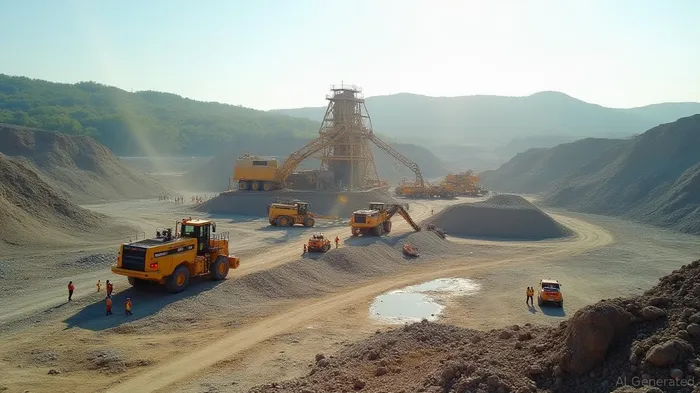
Alamos Gold (AGI) has quietly positioned itself as one of the most compelling plays in the intermediate gold producer space, thanks to its aggressive reserve growth, cost-cutting initiatives, and the strategic execution of its Phase 3+ expansion at the Island Gold District. With a 32% surge in proven and probable gold reserves in 2024 to 2.3 million ounces—driven by high-grade additions at its core asset—the company is now primed to deliver a rare combination: sustained production growth, declining costs, and a multi-decade mine life. For investors seeking exposure to gold's bull market while avoiding the volatility of pure exploration plays, Alamos' Island Gold District is a textbook example of value creation.
The Phase 3+ Expansion: A Cost-Cutting, Production-Boosting Engine
The Phase 3+ expansion is the linchpin of Alamos' growth story. By upgrading the Magino mill to process 11,200 tonnes per day (tpd)—a 17% increase from pre-expansion capacity—the company aims to reduce all-in sustaining costs (AISC) to $550–600 per ounce by 2026, down from $925 in 2024. This is no small feat. The mill's switch to grid power (from costlier compressed natural gas) alone will slash energy expenses by ~20%, while higher throughput and economies of scale will further compress costs.
But the expansion's impact doesn't stop there. By integrating ore from the Island Gold underground mine—which boasts industry-leading grades of 11.4 g/t Au—into the Magino mill, AlamosAGI-- is creating a high-grade, low-cost feedstock mix. This synergy has already begun to boost production: Island Gold's underground mining rate is ramping up to 1,400 tpd by late 2025, with grades averaging 12.5 g/t Au in the second half of the year. The result? 24% production growth by 2027, lifting annual output to 680,000–730,000 ounces from 550,000 in 2024.
Why the 32% Reserve Growth Matters
The 2024 reserve increase wasn't just a numbers game. It was a strategic win that solidified Island Gold's status as one of the world's highest-grade deposits. Key highlights:
- High-Grade Additions: 718,000 ounces were added in the Island Main and East zones, grading 12.47 g/t Au—far above the global average of ~5 g/t.
- Mine Life Extension: The deposit remains open at depth and along strike, with exploration potential to add another 1.9 million inferred ounces grading 20.8 g/t Au in the lower Island East zone.
- Lynn Lake Synergy: The inclusion of Burnt Timber and Linkwood (0.9 million ounces) extends the Lynn Lake mine life to 27 years, providing a stable feed source for the upgraded mill.
This isn't just reserve growth—it's quality growth. Higher grades mean lower stripping ratios and lower processing costs, compounding the Phase 3+ expansion's benefits.
A Low-Cost, High-Margin Asset in a Gold Bull Market
The combination of falling costs and rising production is set to supercharge free cash flow. By 2027, Alamos' AISC could drop to $775–875 per ounce, while gold prices remain elevated—$1,800/oz+ is now the baseline. At these levels, cash margins could exceed $900/oz, turning the Island Gold District into a profit machine.
Moreover, the company's balance sheet is pristine. With $325 million in cash and a net cash position, Alamos can fund its $72 million 2025 exploration budget (focused on Island Gold and Lynn Lake) without dilution. This financial flexibility is critical as it pushes to convert inferred resources—1.9 million ounces at 20.8 g/t—into reserves, further extending its growth runway.
Valuation: A Hidden Gem in the Gold Sector
Alamos trades at a discount to its peers, despite its robust growth profile. At current prices (~$7.50), the stock is valued at 8.5x 2025 consensus EBITDA, far below the sector average of ~12x. Even more compelling: its free cash flow yield is 12%, versus ~6% for peers.
The disconnect between the stock and its fundamentals is puzzling. While gold stocks have rallied this year, Alamos has lagged due to lingering concerns about its transition to a low-cost producer. But with Phase 3+ nearing completion and cost savings materializing, this valuation gap is primed to close.
The Investment Thesis: Buy the Catalysts
Investors should consider Alamos GoldAGI-- a buy on two key catalysts:
1. Phase 3+ Completion (H1 2026): Once operational, costs will drop sharply, and production will hit its 24% growth target.
2. 2025 Reserve Update (Feb 2026): The inclusion of inferred ounces and exploration success could push reserves even higher.
With gold prices likely to remain firm amid geopolitical tensions and central bank buying, Alamos' high-margin asset is a low-risk leveraged play on the gold bull market.
Risks to Consider
- Project Delays: Any hiccup in the Phase 3+ timeline could delay cost savings.
- Gold Price Dips: A sustained drop below $1,600/oz would pressure margins.
Final Take
Alamos Gold's Island Gold District is a textbook example of value creation: reserve growth, cost discipline, and a multi-decade mine life. With shares undervalued and catalysts lining up, this is a rare opportunity to own a high-quality gold producer at a discount. Investors ignoring Alamos today may regret missing a once-in-a-cycle growth story.





Comentarios
Aún no hay comentarios