
Alabama Power Coal Ash Storage Poses Environmental Threats
- Alabama Power stores in unlined ponds along the Mobile River, risking groundwater contamination.
- The Mobile-Tensaw Delta is a biodiverse area that could face irreversible damage if a breach occurs.
- A 2025 study by the and Texas A&M highlights increased climate risk, including storm surges and sea level rise.
- Federal regulators have denied Alabama Power's coal ash plan for inadequate groundwater protection.
- Critics argue that Alabama Power prioritizes fossil fuel investments over environmental safety, despite legal pressure and public concern.
The coal ash ponds near the Mobile River have become a focal point for environmental and investor concerns. Alabama Power's use of unlined pits to store millions of tons of toxic waste has raised alarms among regulators and environmental groups. 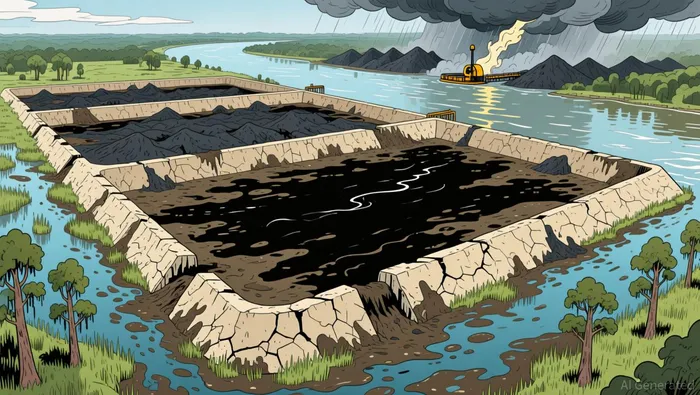 The potential for groundwater contamination and catastrophic breaches could have long-term ecological and economic consequences, especially in a region known for its rich biodiversity and ecological value. , threatening not only the environment but also local communities that rely on the waterway for livelihoods and recreation.
The issue is not just environmental—it is also regulatory and legal. Federal regulators have pointed out that Alabama Power's approach falls short of required standards, and the company has faced criticism for slow progress in implementing safer alternatives. Environmental groups and watchdog organizations argue that the company resists more secure methods of coal ash disposal used by other utilities, potentially prioritizing cost-cutting over long-term environmental protection. This has led to multiple legal challenges and growing public pressure to address the risks associated with coal ash storage.
Why Is Alabama Power's Coal Ash Storage a Problem for Investors?
Investors may be concerned about the financial and regulatory implications of Alabama Power's coal ash storage practices. Legal challenges and public scrutiny could result in costly fines or operational disruptions. Moreover, if a breach occurs, the environmental cleanup costs could be substantial, further impacting the company's bottom line. While Alabama Power has committed to recycling some of the coal ash and improving monitoring, many critics argue these steps are insufficient to mitigate the long-term risks. With climate change increasing the likelihood of extreme weather events, the vulnerability of these unlined ponds becomes even more pronounced.
What Are the Environmental and Public Health Risks of Coal Ash Storage?
Coal ash contains heavy metals like arsenic and cadmium, which are known carcinogens and can leach into groundwater. This poses serious public health risks, especially in communities that rely on the Mobile-Tensaw Delta for drinking water and agriculture. The environmental impact of a breach could be catastrophic, not only for the local ecosystem but also for the regional economy, which depends on tourism and natural resources. Federal and state regulators are increasingly focused on ensuring that companies like Alabama Power adhere to more stringent environmental standards. This shift may lead to new regulations or stricter enforcement, potentially increasing costs for the company.
The situation with Alabama Power's coal ash storage underscores a broader debate about the risks of fossil fuel infrastructure. As investors and policymakers focus more on sustainability and environmental protection, companies that continue to rely on outdated or risky practices may find themselves at a disadvantage. The company's response to these challenges will be a key factor in determining how it navigates the evolving regulatory and public expectations landscape. For now, the risks remain significant, and the potential for environmental disaster looms large over the Mobile-Tensaw Delta and Mobile Bay.







Comentarios
Aún no hay comentarios