
Al Rajhi Bank's U.S. Dollar-Denominated Tier 2 Social Sukuk: A Strategic Move for Islamic Finance and Capital Resilience
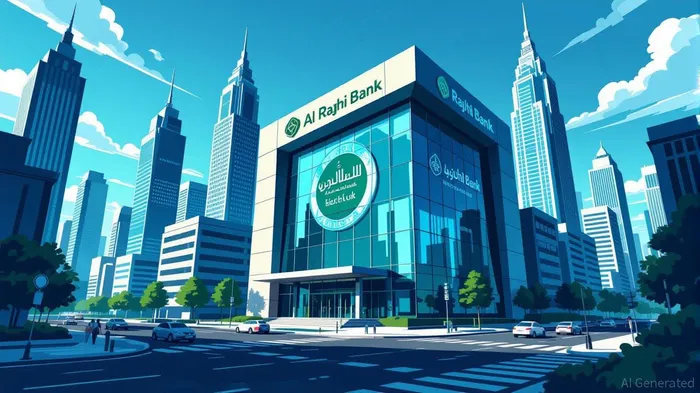
Al Rajhi Bank’s recent announcement of a U.S. dollar-denominated Tier 2 Social Sukuk issuance marks a pivotal moment in the evolution of Islamic finance. This move not only underscores the bank’s commitment to capital structure optimization but also aligns with broader regional and global trends in sustainable finance. As Saudi Arabia’s Vision 2030 accelerates the diversification of its economy, Al Rajhi’s strategic use of sukuk—a Sharia-compliant debt instrument—demonstrates how Islamic financial institutions can balance regulatory compliance, social impact, and investor demand.
Strategic Implications for Islamic Finance
The issuance of dollar-denominated sukuk is gaining traction in the Gulf Cooperation Council (GCC) region, with Fitch Ratings noting that over $210 billion of sukuk were rated globally in the first half of 2025 [4]. Al Rajhi’s Tier 2 Social Sukuk, managed through its Cayman Islands-based special-purpose vehicle (ARSL), is a testament to the growing sophistication of Islamic finance. By leveraging a U.S. dollar structure, the bank taps into international liquidity while adhering to Sharia principles, which prohibit interest-based transactions. This approach is critical for attracting a broader investor base, including non-Muslim institutions seeking ESG-aligned assets.
Moreover, the sukuk’s social focus—targeting renewable energy, clean transport, and other sustainable sectors—reflects a shift in Islamic finance toward measurable societal impact. According to a report by the Capital Market Authority (CMA), Saudi Arabia has been actively promoting innovative financing models like sukuk crowdfunding to align with Vision 2030’s sustainability goals [3]. Al Rajhi’s issuance reinforces this trend, positioning the bank as a leader in ethical finance while complying with the country’s regulatory framework.
Capital Structure Optimization and Risk Mitigation
From a capital structure perspective, the Tier 2 Social Sukuk serves a dual purpose. First, it strengthens Al Rajhi’s balance sheet by raising subordinated debt, which is essential for meeting Basel III capital adequacy requirements. The sukuk’s unsecured, subordinated nature means it ranks below senior debt but above equity, offering a middle-ground solution for capital resilience. Second, the inclusion of a “write-down” clause in the event of a non-viability event ensures that the bank can absorb losses without triggering insolvency. This feature, coupled with Al Rajhi’s purchase undertaking to buy back the certificates, provides investors with a layer of security while maintaining flexibility in crisis scenarios [2].
Fitch Ratings’ assignment of a ‘BBB(EXP)’ rating to the sukuk—two notches below the bank’s ‘A-’ IDR—highlights the instrument’s risk profile. However, this rating also reflects confidence in Al Rajhi’s robust governance and its ability to manage capital volatility. The bank’s internal Sharia board and external advisers ensure strict compliance with Islamic principles, a critical factor in maintaining credibility in a market where ethical alignment is paramount [2].
Market Context and Future Outlook
The sukuk market’s expansion is driven by both demand and supply-side dynamics. On the demand side, global investors are increasingly prioritizing ESG criteria, and Islamic finance’s inherent ethical framework makes it an attractive option. On the supply side, Saudi Arabia’s regulatory environment—bolstered by Vision 2030—has created a fertile ground for innovation. Al Rajhi’s $1 billion sustainable AT1 issuance in 2024, the first of its kind in Saudi Arabia, set a precedent for blending Islamic finance with advanced capital instruments [4]. The Tier 2 Social Sukuk builds on this legacy, offering a blueprint for other GCC banks seeking to optimize their capital structures while adhering to Sharia.
Conclusion
Al Rajhi Bank’s Tier 2 Social Sukuk issuance is more than a capital-raising exercise—it is a strategic maneuver that bridges the gap between Islamic finance’s traditional principles and modern capital market demands. By prioritizing social impact, leveraging dollar-denominated structures, and adhering to rigorous Sharia governance, the bank is setting a new standard for ethical finance in the GCC. As the sukuk market continues to grow, Al Rajhi’s approach offers a compelling model for institutions seeking to balance regulatory compliance, investor appeal, and sustainable development.
Source:
[1] Islamic Finance 2025 - Saudi Arabia - Global Practice Guides [https://practiceguides.chambers.com/practice-guides/islamic-finance-2025/saudi-arabia]
[2] Fitch Rates Al Rajhi Sukuk Limited's Subordinated Tier 2 ... [https://www.marketscreener.com/news/fitch-rates-al-rajhi-sukuk-limited-s-subordinated-tier-2-sukuk-bbb-exp--ce7d59dedd8ef523]
[3] The CMA allows crowdfunding of debt instruments through capital market institutions licensed for arranging activities [https://www.zawya.com/en/press-release/companies-news/the-cma-allows-crowdfunding-of-debt-instruments-through-capital-market-institutions-licensed-for-arranging-activities-flaawd7o]
[4] Fitch-rated sukuk surpasses $210bn as market expands 16%, [https://www.arabnews.com/node/2610984/business-economy]







Comentarios
Aún no hay comentarios