
Akash Network Completes Burn Mint Equilibrium Code to Align Token Value with Network Activity
The Burn Mint Equilibrium (BME) model represents a significant development in the evolution of tokenomics for Akash Network. By tying AKT supply to real-world compute demand, the platform aims to create a more stable and usage-driven economic system according to reports. This approach is designed to ensure that AKT remains a mandatory component for network activity, which could provide long-term value capture for token holders as demand increases as analysis shows.
From a technical analysis perspective, the price movement of AKT suggests that the token may be transitioning from a corrective phase into a bullish continuation. A falling wedge pattern, combined with a rounding bottom, indicates accumulation and a potential shift in market sentiment according to technical analysis. The price has recently moved above the 50-day moving average, a key indicator of trend reversal as recent data indicates.
What is the Burn Mint Equilibrium Model?
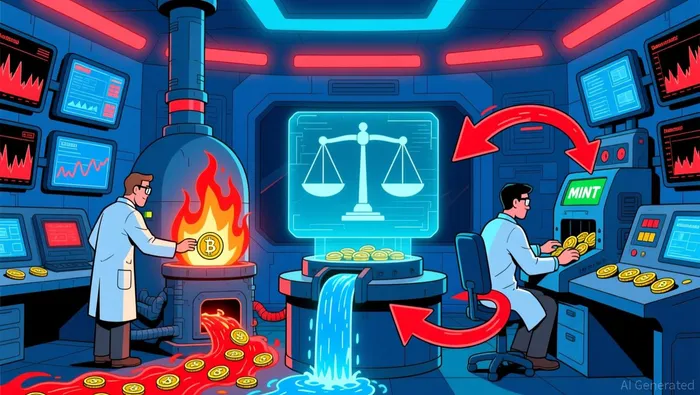
The Burn Mint Equilibrium model is a novel approach to token supply management in blockchain ecosystems. Unlike traditional token models, this mechanism is designed to create a direct link between token supply and network utility. When AKT is spent on compute resources, it is burned and converted into a USD-pegged token called ACT. This dynamic adjusts the total supply of AKT based on real-world usage, creating a self-regulating economic system as detailed in reports.
The model is also supported by WASM contracts and PythPYTH-- oracle integrations, which ensure accurate and decentralized validation of transactions and data according to technical documentation. These technical advancements are key to maintaining the integrity of the system and ensuring that the token supply remains aligned with demand. This approach may appeal to institutional investors who value predictable token behavior and clear utility models as market analysis shows.
How Does the Price Action Reflect Market Sentiment?
The price action of AKT has recently shown signs of stabilization and potential accumulation. A falling wedge pattern is considered a bullish continuation pattern, often indicating a trend reversal after a period of bearish momentum according to technical indicators. The price has formed a rounding bottom, suggesting that sellers are becoming less aggressive and buyers are taking control as price charts show.
The 50-day moving average has historically acted as a resistance level for AKT, but recent price action indicates that it is now functioning as support. This shift is a positive sign for traders, as it suggests a potential break above key resistance levels as market data indicates. A decisive move above $0.5441 would confirm this reversal and could lead to renewed institutional interest in the token according to technical analysis.
What Are the Risks and Limitations?
Despite the potential for a bullish trend, there are several risks associated with the Burn Mint Equilibrium model and AKT's price action. Retail traders may face short-term volatility as the market digests the changes in token supply and as speculative trading increases according to market observations. The model also introduces execution risks, particularly during periods of high demand for compute resources as system reports note.
Additionally, the SaaS industry as a whole is at risk of disruption due to the rise of AI-as-a-Colleague (AaaC) models, which may reduce the need for traditional SaaS tools according to industry analysis. While this is not directly related to AKT, it is an important trend to consider when evaluating the broader market context. This disruption could impact demand for cloud compute resources, which are a key use case for Akash Network as market reports indicate.
Finally, regulatory uncertainty remains a major challenge for the blockchain and digital finance sectors. While platforms like Clearpool Prime are bridging traditional finance with DeFi, regulatory clarity is still needed to ensure long-term adoption according to financial reports. The lack of harmonized regulations across countries continues to fragment the market and increase operational risks for institutions as regulatory analysis shows.
Conclusion
The Burn Mint Equilibrium model and AKT's price action represent two key factors shaping the current market landscape. From a technical perspective, the token is showing signs of a potential bullish reversal, while from a fundamental standpoint, the model is designed to create a more stable and usage-driven economic system according to analysis. These developments could attract both retail and institutional investors who are looking for predictable and utility-driven assets.
However, investors should also consider the broader risks, including regulatory uncertainty and potential disruptions in the SaaS industry as market research indicates. As the digital finance ecosystem continues to evolve, it is likely that we will see more integrations between traditional financial systems and blockchain-based solutions according to industry trends. The coming months will be crucial in determining whether these trends will continue or if new challenges will emerge.







Comentarios
Aún no hay comentarios