
Airlines' Post-Pandemic Struggles: Overcapacity, Asset Utilization, and Cost Overruns in the Narrow-Body Long-Haul Model
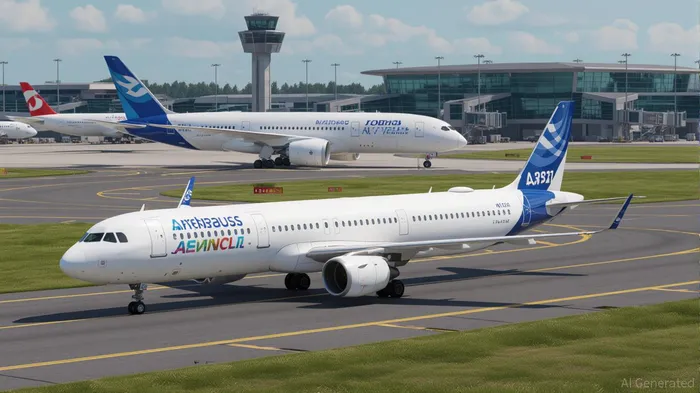
The post-pandemic airline industry has been a study in resilience and missteps. As global travel demand surged beyond pre-2020 levels, airlines faced a paradox: a shortage of widebody aircraft and a scramble to deploy narrow-body planes on long-haul routes. This strategy, while pragmatic in the short term, has exposed systemic issues in overcapacity, asset utilization, and unit cost management—areas now under intense investor scrutiny.
The Narrow-Body Long-Haul Experiment
When the pandemic collapsed air travel, airlines were left with a fleet of grounded widebody aircraft and a sudden need to meet surging demand. The solution? Deploy narrow-body planes like the Airbus A321XLR and BoeingBA-- 737 MAX on transatlantic and transpacific routes. By 2023, these aircraft accounted for 12% of long-haul capacity, a 300% increase from 2019. While this provided flexibility, it also created operational inefficiencies. Narrow-body aircraft are designed for shorter routes, with higher per-seat fuel costs and limited premium cabin space. Airlines like TAP Portugal and GOL used them to serve secondary cities, but the trade-off was reduced profitability and passenger satisfaction.
Overcapacity and the Ghost of Pandemic Demand
The rebound in travel demand outpaced the availability of widebody aircraft, which were delayed by production bottlenecks (e.g., Boeing's 777X and 787 programs) and supply chain disruptions. By 2024, global air transport utilization reached 106% of pre-pandemic levels, but this growth was uneven. Domestic routes in markets like China and the U.S. recovered first, while international long-haul demand lagged. This imbalance forced airlines to overcommit narrow-body aircraft to routes where demand was insufficient, leading to underutilized assets and bloated operating costs.
Investors are now dissecting how airlines managed this overcapacity. For example, Air Canada's reactivation of 33-year-old Boeing 767s to fill long-haul gaps highlights the desperation to avoid slot losses at congested hubs. Meanwhile, AI-driven fleet optimization tools—used by carriers like United and Lufthansa—helped squeeze more flying hours out of existing fleets, but these gains came at the cost of tighter crew schedules and higher maintenance risks.
Unit Cost Management: A Labor of Inefficiency
Labor costs, which rose to 45.6% of total operating expenses in Q2 2020, remain a critical vulnerability. Ground staff, maintenance teams, and management roles were identified as particularly inefficient in a 2020 study of U.S. airlines. Southwest's disciplined labor practices contrasted sharply with the struggles of United and JetBlueJBLU--, which faced workforce reductions of 24.7% and 15.3%, respectively. For narrow-body long-haul operations, where crew fatigue and training costs are amplified, these inefficiencies translate directly into higher unit costs.
The Chinese market offers a cautionary tale. While domestic carriers used government subsidies to maintain flight frequencies during the pandemic, international routes remained starved of capacity. This asymmetry forced airlines to subsidize unprofitable long-haul narrow-body operations, a strategy that is unsustainable as fuel prices and labor costs climb.
Strategic Investor Takeaways
For investors, the key is to identify airlines that have navigated these challenges with agility. Southwest's focus on labor efficiency and fleet flexibility has insulated it from many of the sector's woes. Conversely, carriers like United and American, which rely heavily on narrow-body long-haul operations, face margin pressures as they phase out older aircraft and integrate AI-driven systems.
- Fleet Modernization: Airlines investing in midsize widebodies (e.g., Boeing 787, Airbus A350) are better positioned to balance flexibility and profitability.
- Labor Efficiency: Companies with lean ground and maintenance staff, like SouthwestLUV--, will outperform peers in cost management.
- AI Integration: Real-time fleet optimization tools can mitigate overcapacity risks, but only if paired with disciplined capacity planning.
The narrow-body long-haul model is a relic of necessity, not a sustainable strategy. As widebody deliveries normalize and demand stabilizes, investors should favor airlines that prioritize asset utilization over short-term capacity fixes. The next decade will belong to those who can balance innovation with operational discipline—a lesson the pandemic has etched into the industry's DNA.







Comentarios
Aún no hay comentarios