
Airbus' End-Year Delivery Crunch: A Financial Bill to Pay
Generado por agente de IAWesley Park
martes, 7 de enero de 2025, 6:25 am ET2 min de lectura
Airbus, the world's largest planemaker, is facing a significant financial bill following its end-year delivery crunch. The European-based company has been grappling with supply chain issues, including engine shortages, which have led to a revision in its 2024 delivery guidance. In this article, we will analyze the primary factors contributing to Airbus' end-year delivery crunch, the impact on its financial performance, and the role of supply chain issues in the company's delivery delays and financial challenges.
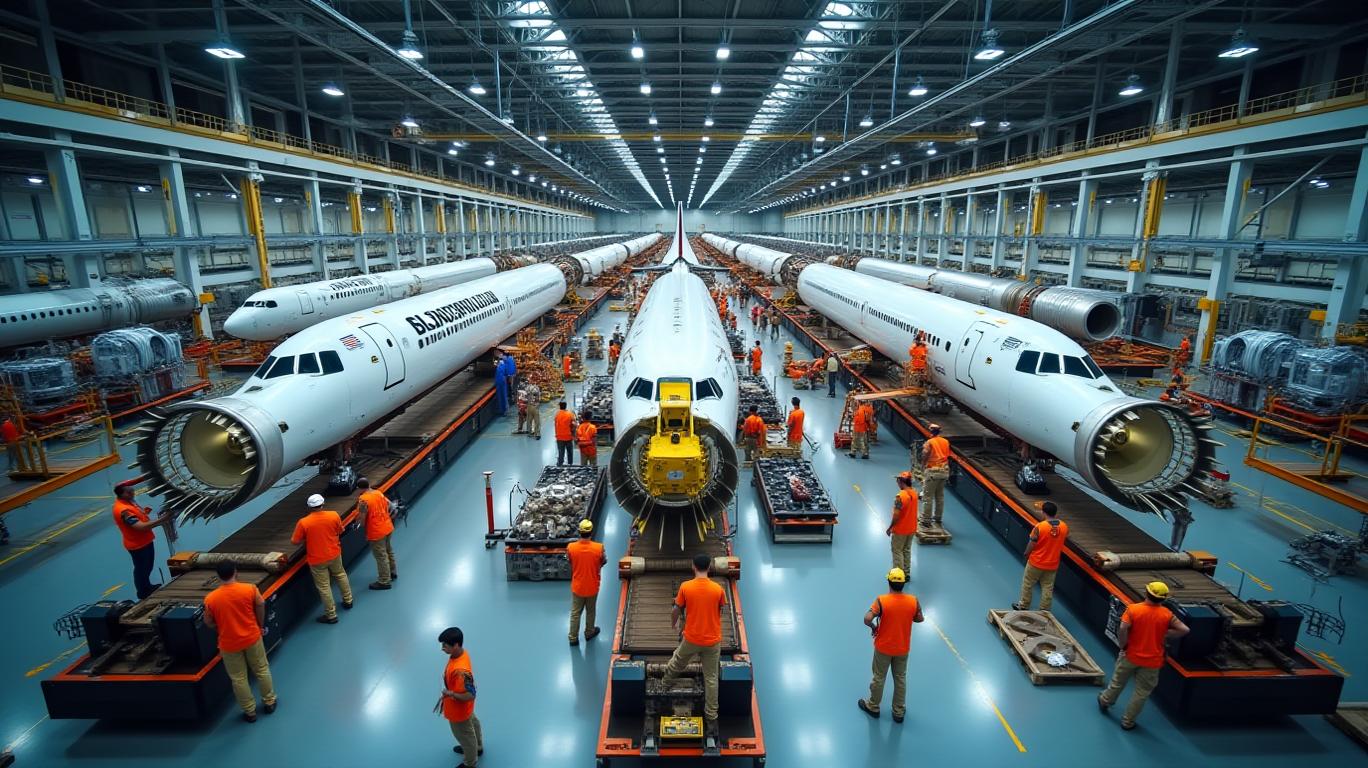
Airbus' end-year delivery crunch is primarily driven by supply chain issues, including shortages of engines, aircraft structural components, and interior cabin equipment. These supply chain challenges have resulted in a shortage of engines, leading to a delay in the planned production rate ramp-up of the A320neo family to 75 aircraft per month, which was pushed back from 2026 to 2027. Additionally, the company has been facing weak supply chains, which have forced planemakers to compensate airlines for cosmetic defects or pay for extra maintenance if they agree to take jets before deadlines. This practice, known as "concession letters," can involve tens of thousands of dollars or even up to one or two million for large jets.
These factors have impacted Airbus' financial performance, leading to a revision of its 2024 guidance. The company now expects to deliver around 770 aircraft, down from its initial target of 800. This revision has also affected the company's earnings before interest and taxes (EBIT) and free cash flow (FCF) before customer financing guidance.
Supply chain issues, particularly engine shortages, have significantly impacted Airbus' delivery delays and financial challenges. In 2024, Airbus revised its delivery guidance to around 770 aircraft due to persistent supply chain issues, including engine, aerostructures, and cabin equipment shortages. Engine shortages, in particular, have been a bottleneck in the manufacturing process, contributing to the delivery shortfall.
To address these issues in the future, Airbus can consider the following steps:
1. Strengthen supplier relationships: Airbus should work closely with engine manufacturers like CFM International and Pratt & Whitney to ensure a steady supply of engines. This could involve long-term contracts, joint planning, and regular communication to anticipate and mitigate potential shortages.
2. Diversify the supply chain: Airbus can explore alternative sources for engines and other critical components to reduce dependence on a single supplier. This diversification can help mitigate risks associated with supply chain disruptions.
3. Invest in advanced manufacturing technologies: Adopting advanced manufacturing technologies, such as additive manufacturing and automation, can help improve production efficiency and reduce lead times. This can help Airbus better manage supply chain challenges and meet delivery targets.
4. Enhance inventory management: Effective inventory management can help Airbus maintain adequate stock levels of critical components, reducing the impact of supply chain disruptions on production and deliveries.
In conclusion, Airbus' end-year delivery crunch has resulted in a significant financial bill for the company. Supply chain issues, particularly engine shortages, have played a crucial role in the company's delivery delays and financial challenges. To mitigate these issues in the future, Airbus should focus on strengthening supplier relationships, diversifying its supply chain, investing in advanced manufacturing technologies, and enhancing inventory management. By taking these steps, Airbus can better manage its supply chain challenges and meet its delivery targets, ultimately improving its financial performance.



Divulgación editorial y transparencia de la IA: Ainvest News utiliza tecnología avanzada de Modelos de Lenguaje Largo (LLM) para sintetizar y analizar datos de mercado en tiempo real. Para garantizar los más altos estándares de integridad, cada artículo se somete a un riguroso proceso de verificación con participación humana.
Mientras la IA asiste en el procesamiento de datos y la redacción inicial, un miembro editorial profesional de Ainvest revisa, verifica y aprueba de forma independiente todo el contenido para garantizar su precisión y cumplimiento con los estándares editoriales de Ainvest Fintech Inc. Esta supervisión humana está diseñada para mitigar las alucinaciones de la IA y garantizar el contexto financiero.
Advertencia sobre inversiones: Este contenido se proporciona únicamente con fines informativos y no constituye asesoramiento profesional de inversión, legal o financiero. Los mercados conllevan riesgos inherentes. Se recomienda a los usuarios que realicen una investigación independiente o consulten a un asesor financiero certificado antes de tomar cualquier decisión. Ainvest Fintech Inc. se exime de toda responsabilidad por las acciones tomadas con base en esta información. ¿Encontró un error? Reportar un problema


SOBRE NOSOTROS
Nuestra historiaAutores de noticiasBase de conocimientosPolítica de privacidadTérmino de usoDescargo de responsabilidad de corretaje de tercerosTérminos de uso de AIMEDivulgaciones de riesgos de AInvest AICarrerasCONTÁCTENOS
Email: support@ainvest.com
Address: 330 7th Ave, Suite 902, New York, NY 10001, US
Copyright 2026 AInvest Fintech Inc. All rights reserved.


Comentarios
Aún no hay comentarios