
Airbus' Strategic Gambit: How Rémi Maillard's Leadership is Pivoting the Future of Aerospace
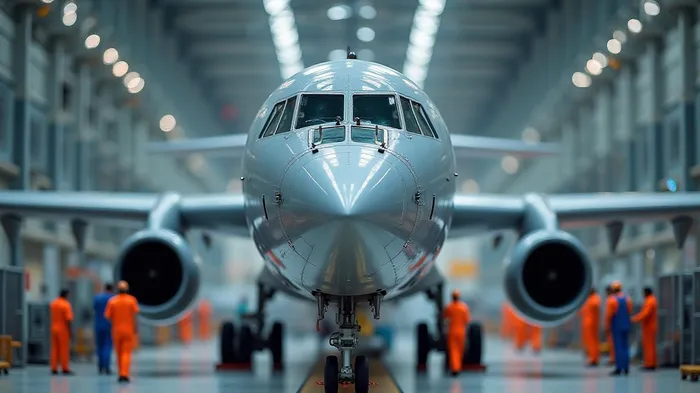
Airbus's appointment of Rémi Maillard as Chief Technology Officer (CTO) marks a pivotal shift in its strategy, signaling an acceleration of R&D investment and a renewed focus on high-growth markets like India. Maillard'sDDS-- track record in India—where he spearheaded landmark projects such as the first private-sector military aircraft assembly line—positions him to bridge Airbus's commercial aircraft challenges with emerging opportunities in defense, sustainability, and regional industrialization. For investors, this leadership move underscores a compelling thesis: Airbus is recalibrating its future around innovation-driven growth in markets where demand is soaring and geopolitical stakes are high.
The India Play: A Blueprint for Global Dominance
Maillard's tenure as President of Airbus in India (2020–2024) delivered transformative results. He oversaw the launch of the C295 Final Assembly Line (FAL) in Gujarat, a collaboration with Tata Advanced Systems that marks India's first private-sector military aircraft production. Over 85% of components are now sourced locally, directly supporting 15,000+ jobs and aligning with Prime Minister Modi's “Make in India” agenda. This project isn't just about manufacturing—it's a gateway to defense partnerships. Airbus has since expanded to helicopter assembly lines (e.g., the H125) and aims to industrialize the A400M transport aircraft in India, leveraging its growing defense budget.
The success in India isn't confined to defense. Maillard's team secured $2 billion in procurement commitments from Indian suppliers by 2025, up from €750 million in 2020, while expanding Airbus's Bengaluru campus to 5,000 employees. This regional hub now fuels global R&D, including sustainable aviation fuel (SAF) partnerships with Indian firms. The lesson? Maillard's strategy isn't incremental—it's a full-scale industrial reset in Asia.
Why the CTO Role is a Masterstroke
Maillard's elevation to CTO reflects Airbus's urgency to balance its commercial aircraft headwinds (e.g., A320neo delays) with high-margin opportunities in defense and innovation. His technical pedigree—former Head of Airbus Services and engineer on critical helicopter programs like the H175—gives him the credibility to drive two critical pivots:
Defense & Helicopter Dominance: With global defense spending rising (+5% annually to 2030), Maillard's focus on programs like the C295 and H125 assembly lines positions Airbus to capture Asia's military modernization. India alone plans to spend $125 billion on defense by 2030.
R&D Synergy with Emerging Markets: By integrating India's engineering talent into Airbus's global pipeline—e.g., Bengaluru's role in SAF and digital design—Maillard can reduce costs while accelerating innovation. This mirrors how Boeing leverages China's supply chains, but with the added geopolitical advantage of India's Western alliances.
The Investment Case: Why Airbus is a Long-Term Play
The Maillard-led strategy offers investors three compelling levers:
High-Growth Markets: India's aviation sector is projected to need 2,840 new aircraft by 2043 (per Boeing), with Airbus already securing 72 of 766 global deliveries in 2023.
Defense Upside: The C295 line alone guarantees $4.5 billion in revenue from India's 40-aircraft order, with export potential to Southeast Asia.
Cost Efficiency: Localized manufacturing in India reduces reliance on European supply chains, shielding margins from inflation and geopolitical risks.
Risks and Considerations
Skeptics may cite Airbus's commercial aircraft delays and competition from Boeing. However, Maillard's focus on defense and regional partnerships creates a moat in markets where Boeing's access is constrained (e.g., India's “Make in India” policies favor local collaborations).
Conclusion: A New Era of Aerospace Leadership
Rémi Maillard's ascent to CTO is more than a personnel change—it's a declaration that Airbus will compete on innovation and localization in high-growth regions. With India as its testing ground for “Make in World” strategies, Airbus is primed to dominate markets where demand is exponential and geopolitical alignment is favorable. For investors, this is a generational opportunity: a global industrial titan recalibrating its future, with Maillard at the helm. Act now—before the skies fill with the fruits of this strategic gambit.







Comentarios
Aún no hay comentarios