
Airbus Software Glitch and Aviation Industry Resilience: Operational Risk Management in Aerospace Stocks
Operational Disruptions and Immediate Impacts
The glitch, first identified after a JetBlue flight experienced an uncommanded pitch-down maneuver in October 2025, led to widespread grounding of A320-family aircraft. Airlines such as American AirlinesAAL--, DeltaDAL--, and United scrambled to implement software updates, with American Airlines reporting , minimizing further disruptions. However, , , according to CBC updates. The timing of the recall-coinciding with the Thanksgiving travel peak-amplified its economic impact, particularly in the U.S., Europe, and Asia according to USA Today.
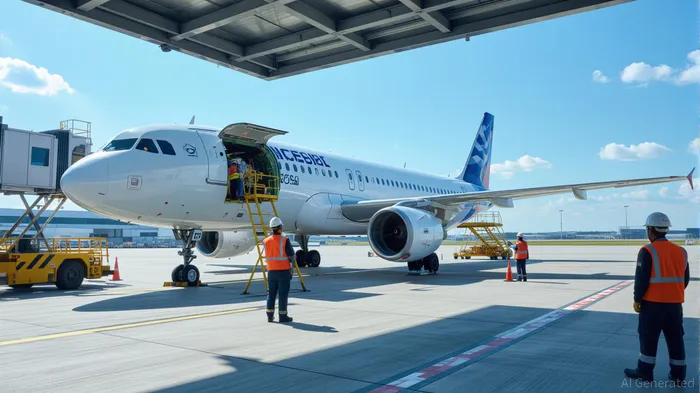
Airbus's response, including an Emergency Airworthiness Directive and a public apology prioritizing safety, highlighted the company's acknowledgment of operational risks. Yet, the incident revealed systemic challenges in managing software vulnerabilities in a fleet of this scale. As Bloomberg noted, the recall "exposes the growing reliance on software in modern aircraft and the potential operational risks in the aerospace sector".
Investment Implications and Risk Management Strategies
For aerospace stocks, the A320 recall raises concerns about technical reliability and regulatory scrutiny. The incident parallels Boeing's 733 MAX crisis, where software flaws led to two fatal crashes and a prolonged grounding. Unlike BoeingBA--, however, Airbus managed to resolve the A320 issue relatively quickly, with most repairs completed within days. Still, the event has prompted investors to reassess risk profiles for aerospace manufacturers, particularly those with large fleets of software-dependent aircraft according to a Wikipedia analysis.
Experts emphasize that operational risk management in aerospace now hinges on three pillars: software robustness, contingency planning, and regulatory alignment. According to a Forbes analysis, airlines that adopted decentralized systems, such as mobile boarding platforms and independent check-in systems, . Similarly, Reuters highlighted .
The financial implications are equally significant. , particularly for Boeing, which is already struggling to compete with Airbus in production and order fulfillment according to Forbes analysis. For investors, . As of AeroDynamic Advisory noted, in a commentary, "While the A320 issue is manageable, .
Long-Term Resilience and Industry Outlook
The A320 recall also highlights broader trends in the aerospace industry. The increasing complexity of fly-by-wire systems, while enhancing efficiency, . This has led to calls for stricter software certification standards and more frequent updates. According to a Wall Street Journal report, .
For long-term resilience, . Companies that invest in cybersecurity, redundancy systems, . Conversely, . The A320 incident serves as a cautionary tale: even minor can escalate into global crises if not addressed proactively.
Conclusion
The Airbus A320 software glitch is a wake-up call for the aerospace industry. While the immediate operational disruptions were largely contained, the event underscores the critical role of operational risk management in safeguarding aerospace stocks. , cyber threats, or . , resilience will depend on proactive innovation, , and a commitment to transparency.





Comentarios
Aún no hay comentarios