
Airbus Safety Recalls and Global Aviation Supply Chain Impact: Assessing the Investment Risks and Opportunities in Aerospace and Airline Sectors Amid Urgent A320 Software Fixes
Operational Disruptions and Airline Exposure
The recall's operational impact is immediate and severe. Airlines such as American AirlinesAAL--, Lufthansa, Avianca, and Wizz Air have grounded significant portions of their A320 fleets, with some carriers reporting up to 70% of their A320s affected according to reports. American Airlines, which operates the largest A320 fleet, confirmed that 340 of its 480 aircraft require repairs, with most expected to be completed by late November according to reports. However, older models may need hardware changes, prolonging groundings for up to three days according to reports. The timing of the recall-during a period of heightened travel demand-has exacerbated concerns about delays and cancellations, with some airlines closing ticket sales due to operational uncertainty according to reports.
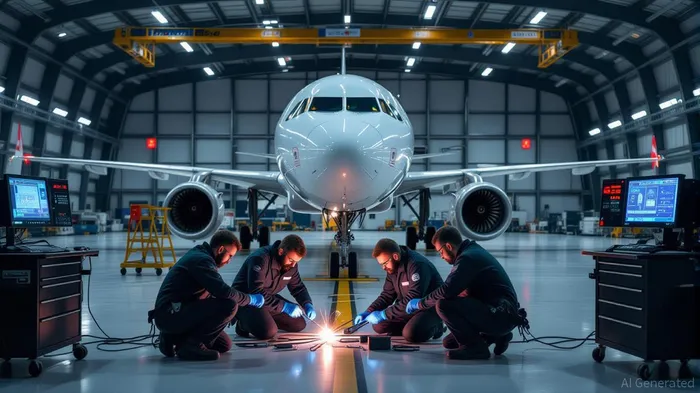 For investors, the key risk lies in the ripple effects of these disruptions. Flight cancellations and delays not only erode airline revenues but also strain customer trust and increase operational costs. According to a report by The Nikkei, the recall threatens to create "widespread disruptions during peak travel periods," particularly in regions like China and India, where A320s are heavily utilized according to reports.
Financial and Market Implications for Airbus
Airbus' stock has faced headwinds following the recall. On November 28, 2025, shares closed at €204.45, according to reports. While the company's stock had gained 27% year-to-date prior to the recall, driven by the A320's milestone as the most-delivered aircraft model in history according to reports, the incident has introduced volatility. Analysts at Morgan Stanley revised their price target upward to €250 from €231, citing strong production progress and supply chain improvements according to reports, but others warn of short-term pressure. , hinting at long-term opportunities despite near-term challenges according to reports.
The recall also raises questions about Airbus' financial resilience. , according to reports, but the cost of repairs and potential compensation claims could strain margins. For context, the recall requires urgent software updates and hardware modifications, with some airlines reporting repair costs in the millions according to reports.
Supply Chain Dynamics and Strategic Opportunities
While the recall poses risks, it also highlights Airbus' broader supply chain progress. The company has reported increased confidence among suppliers, with production targets for 2025 set at 820 aircraft-up 7% from 2024 according to reports. Airbus CEO emphasized that supply chain partners are aligned with these goals, and the company is on track to open a second U.S. assembly line for A320neo jets in Mobile, Alabama, while planning expansions in China according to reports. These moves suggest that Airbus is positioning itself to meet long-term demand, even as it navigates short-term challenges.
For investors, the supply chain's stability is a critical factor. While engine delivery delays remain a concern, the broader network appears resilient. This resilience could translate into opportunities for suppliers, particularly those involved in software and hardware upgrades for the A320 family. For example, companies providing avionics systems or cybersecurity solutions may benefit from increased demand for retrofitting aircraft according to reports.
Investment Risks and Opportunities: A Balanced View
The A320 recall underscores the dual-edged nature of investing in aerospace and airlines. On one hand, the incident highlights operational vulnerabilities, including the risks of software glitches in an increasingly digitized industry. On the other, it reinforces Airbus' dominant position in the narrow-body aircraft market and its ability to execute large-scale recalls efficiently.
For airlines, the recall is a test of their ability to manage disruptions. Carriers with diversified fleets or strong maintenance capabilities may recover faster, while those reliant on A320s could face prolonged challenges. American Airlines' aggressive repair timeline-aiming to fix 340 planes within days-demonstrates the importance of operational agility according to reports.
For Airbus, the recall could ultimately strengthen its reputation. The company's swift response, including collaboration with regulators and transparency about the root cause (solar radiation interference), may mitigate long-term reputational damage according to reports. Moreover, the incident could accelerate demand for more robust cybersecurity and radiation-resistant software in aviation, creating new markets for innovation according to reports.
Conclusion
The Airbus A320 recall is a stark reminder of the complexities inherent in modern aviation. While the immediate risks-flight disruptions, repair costs, and stock volatility-are significant, the long-term outlook for Airbus and its partners remains cautiously optimistic. Investors should monitor the company's ability to execute repairs efficiently, maintain supply chain momentum, and adapt to emerging technical challenges. For now, the recall serves as both a cautionary tale and a case study in resilience-a duality that defines the aerospace sector's investment landscape.





Comentarios
Aún no hay comentarios