
Airbus' Global A320 Recall and Its Impact on Airline Equity Valuations
Short-Term Volatility: Operational Disruptions and Market Reactions
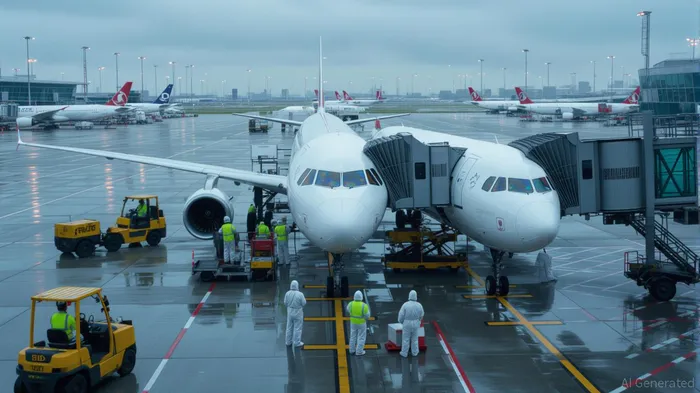
The recall, announced in late November 2025, required urgent software updates and, in some cases, hardware replacements to address uncommanded pitch-down risks. While airlines like American Airlines and Delta Air Lines managed to complete most repairs by the weekend, others faced prolonged disruptions. Avianca, for instance, , while , .
These operational hiccups have introduced short-term uncertainty. American Airlines, , , . However, the airline's . DeltaDAL-- and United, with smaller affected fleets, , .
Long-Term Resilience: Strategic Adaptation and Financial Metrics
Beyond the immediate chaos, the recall has exposed the varying degrees of operational resilience among carriers. American Airlines, for example, has prioritized cost-cutting and revenue diversification, . , though .
Delta Air Lines, meanwhile, has leveraged its premium and international growth strategies to maintain profitability. , . United AirlinesUAL--, , has also demonstrated resilience, though .
Post-Pandemic Lessons: Diversification and Flexibility
The A320 recall highlights a broader theme: the need for diversified strategies in an industry prone to shocks. Airlines with hybrid leasing models and mid-life aircraft portfolios-such as Avianca and Air India-are now reevaluating their fleet management approaches. Meanwhile, carriers like American and Delta are investing .
From a valuation perspective, . While short-term disruptions may pressure earnings, , .
Conclusion: Navigating the Storm
The Airbus A320 recall is a stark reminder of the fragility of even the most robust aviation networks. However, the swift responses from airlines and Airbus-alongside the sector's demonstrated adaptability-suggest that the long-term fundamentals remain intact. For investors, the key lies in identifying carriers with strong balance sheets, agile operational strategies, and a clear path to post-pandemic profitability. As the industry recalibrates, those with the most resilient business models will emerge not just unscathed, but stronger.







Comentarios
Aún no hay comentarios