
Airbus A320 Software Recall: Implications for Aerospace & Airline Stocks
Operational Resilience: A Test of Speed and Coordination
The recall, mandated by the European Union Aviation Safety Agency (EASA) and endorsed by the U.S. Federal Aviation Administration (FAA), required airlines to implement urgent software updates or hardware modifications to prevent potential flight control failures according to Airbus. While most aircraft could be repaired within hours, approximately 1,000 older models faced extended downtime due to hardware realignments as reported by Airbus. This highlighted the sector's reliance on rapid response mechanisms and the capacity of maintenance facilities to handle large-scale disruptions.
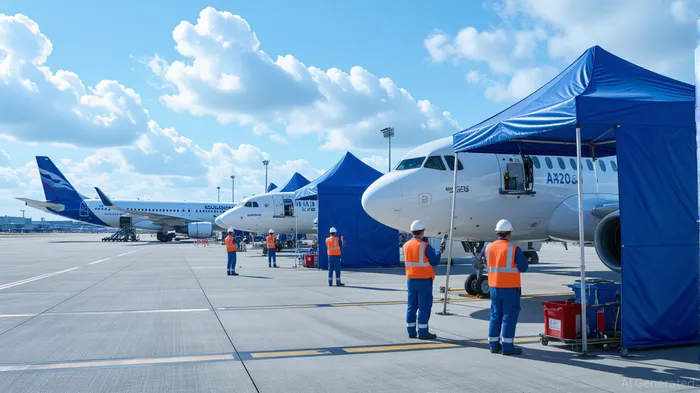
U.S. airlines demonstrated varying degrees of preparedness. American AirlinesAAL-- initially reported 340 affected aircraft but revised the number to 209 after further clarification from Airbus according to CNBC. The carrier completed most updates by late November, minimizing operational impacts during the Thanksgiving travel peak as Reuters reported. Similarly, the U.S. Department of Transportation emphasized that only a small percentage of aircraft required immediate action, with Secretary Sean Duffy stating that carriers were on track to meet deadlines according to Fox Business. However, JetBlue faced significant cancellations, underscoring the uneven distribution of risk across operators as reported by Economic Times.
Indian airlines, such as Air India, also mobilized swiftly, with engineers working "around-the-clock" to address the issue without schedule disruptions as reported by Times of India. This cross-regional response illustrates the sector's operational resilience but also reveals gaps in capacity and coordination, particularly for carriers with aging fleets.
Risk-Adjusted Returns: Financial and Reputational Costs
The recall has introduced short-term financial headwinds for airlines and aerospace manufacturers. For airlines, the cost of grounding fleets, expedited repairs, and reputational damage could weigh on earnings. American Airlines, for instance, faces a high debt-to-equity ratio and an Altman Z-Score of 0.72, signaling potential financial distress. Analysts have assigned the airline a mixed recommendation score of 2.5 out of 5, reflecting concerns about its ability to navigate operational and financial risks.
For Airbus, the recall risks eroding investor confidence in its A320 fleet, a cornerstone of its commercial aviation business. The company's stock has faced volatility, with a beta of 1.74 indicating heightened sensitivity to market movements. While Airbus's swift regulatory engagement with EASA and the FAA has mitigated some reputational damage, the incident underscores the need for robust software testing protocols in an era of increasing technological complexity.
Regulatory Alignment and Supply Chain Robustness
The recall has also spotlighted the importance of regulatory alignment. EASA's emergency airworthiness directive was swiftly mirrored by the FAA, ensuring a unified global response. This coordination is critical for maintaining safety standards but also raises questions about the adequacy of current regulatory frameworks in addressing emerging risks such as solar radiation impacts.
Supply chain robustness has emerged as another key concern. The need for hardware modifications for older aircraft has strained repair facilities, already burdened by post-pandemic demand. Analysts warn that such bottlenecks could delay fleet availability and exacerbate operational costs, particularly for airlines with limited spare capacity. This highlights the sector's vulnerability to cascading disruptions and the need for diversified supply chains.
Long-Term Implications for Equities
From an investment perspective, the Airbus A320 recall serves as a stress test for the aviation sector's ability to adapt to technological and environmental challenges. Aerospace equities, including Airbus and its competitors, may face increased scrutiny over software development practices and risk mitigation strategies. For airlines, the incident underscores the importance of fleet modernization and contingency planning.
In the long term, regulatory bodies may push for standardized protocols to address software vulnerabilities, potentially increasing costs for manufacturers and operators. However, the industry's swift response to this crisis also demonstrates its capacity for innovation and resilience-qualities that could bolster investor confidence in the post-pandemic recovery.
Conclusion
The Airbus A320 software recall is a stark reminder of the interconnected risks facing the aviation sector. While the immediate operational and financial impacts are significant, the event also highlights the sector's capacity for rapid adaptation. For investors, the key will be to balance short-term volatility with long-term resilience, focusing on companies with robust risk management frameworks and agile supply chains. As the industry navigates this challenge, the alignment of regulatory standards and the prioritization of technological safeguards will be critical to sustaining investor confidence.





Comentarios
Aún no hay comentarios