
Airbus's A320 Repair Directive: Navigating Short-Term Volatility and Long-Term Opportunities in Aviation and Alternative Travel Infrastructure
Short-Term Market Volatility: Operational Disruptions and Stock Reactions
The directive has caused widespread flight cancellations and delays, with airlines such as American AirlinesAAL--, DeltaDAL--, and Wizz Air reporting significant operational challenges. , according to NPR. , .
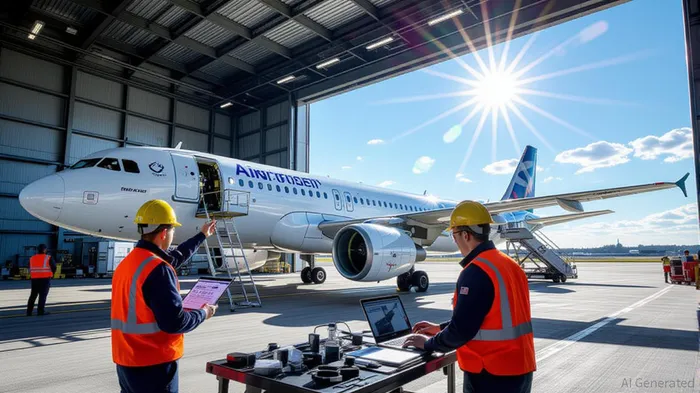
Market reactions have been mixed. While some analysts view the directive as a proactive safety measure, others highlight the short-term operational strain on airlines and maintenance providers. For instance, the UK's Transport Secretary noted limited impacts on UK carriers, but global airlines, including IndiGo and Air New Zealand, have implemented precautionary measures, as reported by BBC. Aerospace stocks, particularly those tied to Airbus and its supply chain, have experienced volatility, .
Long-Term Investment Opportunities: Aviation Maintenance and Cybersecurity
The crisis has spotlighted a critical bottleneck in the aviation maintenance sector. With hangar capacity already strained by post-pandemic backlogs and labor shortages, the A320 directive has exacerbated capacity constraints. , according to Global News. However, this crisis also presents a long-term opportunity for maintenance infrastructure expansion. Airlines and third-party maintenance providers are likely to invest in advanced diagnostics, predictive maintenance tools, and workforce training to mitigate future disruptions.
Moreover, the incident has intensified focus on aviation cybersecurity. The vulnerability to solar radiation-induced data corruption highlights the need for robust software safeguards in avionics systems. The global aviation cybersecurity market, , according to financial data. Investors in cybersecurity firms specializing in aviation, such as those offering modular, adaptable software solutions, may find themselves in a strong position to capitalize on this trend.
Alternative Travel Infrastructure: Policy Shifts and Funding Acceleration
The A320 directive has also accelerated interest in alternative travel infrastructure, particularly high-speed rail and electric vertical takeoff and landing (eVTOL) technologies. The European Commission's recent High-Speed Rail Action Plan, aiming to connect key nodes of the Trans-European Transport Network (TEN-T) at 200 km/h or more by 2040, reflects a strategic shift toward reducing reliance on air travel for short- to medium-haul routes according to EU transport news. This initiative, paired with the EU's Sustainable Transport Investment Plan (STIP), , according to European news.
In the U.S., the Federal Aviation Administration's (FAA) eVTOL Integration Pilot Program (eIPP) is another key development. By modernizing regulations for eVTOL aircraft, the FAA aims to facilitate the integration of advanced air mobility (AAM) into the National Airspace System. This aligns with growing investor interest in eVTOL companies like Archer Aviation and Joby Aviation, according to PR Newswire. The A320 incident, by highlighting the fragility of traditional air travel systems, may further catalyze demand for redundant, technology-driven mobility solutions.
Conclusion: Balancing Risk and Resilience
While the Airbus A320 directive has created immediate turbulence for airlines and investors, . Short-term volatility is inevitable, , cybersecurity, and alternative infrastructure. Investors who position themselves in sectors aligned with these trends-such as aviation cybersecurity, high-speed rail, . As the industry grapples with the lessons of 2025, the path forward will likely be defined by resilience, adaptability, and a reimagining of what it means to move people and goods in an increasingly interconnected world.





Comentarios
Aún no hay comentarios