
Airbus A320 Recall and Its Implications for Aerospace and Aviation Stocks
Operational Disruptions and Supply Chain Strains
The recall requires immediate software updates or hardware modifications for affected aircraft, according to industry sources. Airlines such as American AirlinesAAL--, Lufthansa, and Avianca have reported significant operational challenges, with Avianca halting ticket sales until December 8 due to the scale of repairs as reported by the Guardian. These disruptions are compounded by pre-existing supply chain bottlenecks. As Reuters notes, engine shortages have already led to the early retirement of nearly new A320 Neo aircraft, with operators opting to scrap airframes to salvage engines for other planes. This trend has intensified demand for spare parts, particularly for Pratt & Whitney GTF and CFM Leap engines, which are already facing manufacturing defects and maintenance backlogs according to industry analysis.
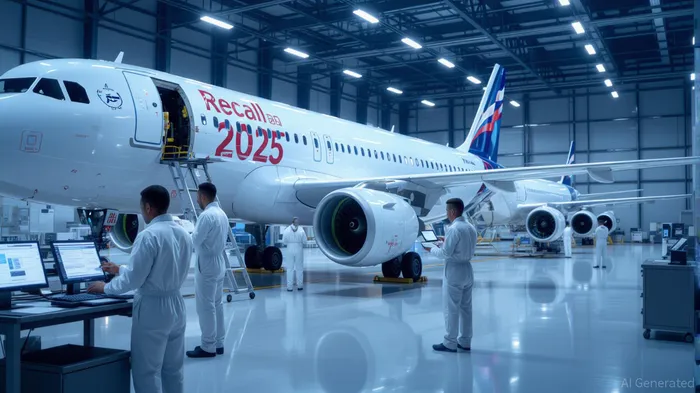 The European Union Aviation Safety Agency (EASA) has mandated the repairs as a precautionary measure, emphasizing that affected aircraft cannot operate until modifications are completed according to . While Airbus claims the software fix is straightforward, the hardware adjustments required for older models could exacerbate delays, particularly for airlines already stretched by labor shortages and pandemic-related maintenance backlogs according to market analysis.
Market Volatility and Investor Sentiment
The recall has introduced short-term volatility to aerospace stocks, though the sector's long-term fundamentals remain a subject of debate. Airbus's stock (EADSY) has seen mixed signals: while , signaling improving sentiment, the recall risks reputational damage and operational costs that could pressure earnings. Analysts at Fidelity note that the sector is experiencing a "dual-engine growth story," with original equipment manufacturers (OEMs) and aftermarket service providers both benefiting from increased demand for repairs and part-outs. However, this optimism is tempered by concerns over extended maintenance lead times and the economic viability of prolonging the lifespan of older aircraft according to CNBC analysis.
The broader aerospace sector is also navigating post-pandemic supply chain challenges. A 2025 industry report highlights , with Tier-1 and Tier-3 suppliers experiencing the most severe impacts. These challenges are further compounded by geopolitical uncertainties, such as global tariff fluctuations, which have added volatility to an already fragile market according to . For investors, the key question is whether aerospace firms can embed sufficient resilience-through digital innovation and collaborative partnerships-to mitigate these risks according to industry experts.
Future Outlook and Investment Considerations
Despite the immediate headwinds, the aerospace sector is projected to grow steadily in 2026, according to Deloitte analysis. The maintenance, repair, and overhaul (MRO) sector, in particular, is positioned as a growth driver, according to industry forecasts. This trend is fueled by the increasing complexity of modern aircraft and the need for more frequent engine maintenance, particularly for newer models like the A320 Neo.
For investors, the A320 recall serves as a cautionary tale about the interplay between operational risks and market dynamics. While companies like BoeingBA-- and Howmet Aluminum have shown signs of recovery post-pandemic, the sector's exposure to supply chain bottlenecks and regulatory pressures remains a wildcard according to industry analysis. The recall also highlights the importance of diversification, as firms heavily reliant on A320 operations-such as Lufthansa and easyJet-face disproportionate risks in the short term according to market reports.
In conclusion, the Airbus A320 recall is a microcosm of the broader challenges facing the aerospace and aviation sectors in the post-pandemic era. While the immediate operational and financial impacts are significant, the long-term outlook hinges on the industry's ability to adapt to supply chain constraints, technological complexities, and shifting investor sentiment. For now, the sector remains a high-risk, high-reward proposition, with volatility likely to persist until these challenges are fully addressed.







Comentarios
Aún no hay comentarios