
Airbus A320 Recall and Aviation Sector Volatility: Operational Risk and Stock Valuation Impacts
Operational Risks for Airlines: Disruptions and Financial Exposure
The recall, mandated by emergency directives from the (EASA) and the Federal Aviation Administration (FAA), requires airlines to implement software updates or hardware modifications to mitigate uncommanded flight control inputs. For airlines like American AirlinesAAL--, , the recall has compounded existing challenges, including labor shortages and maintenance backlogs. The timing-during the peak holiday travel season-has amplified revenue risks, with flight cancellations and delays reported by carriers such as Avianca, which suspended ticket sales until December 8.
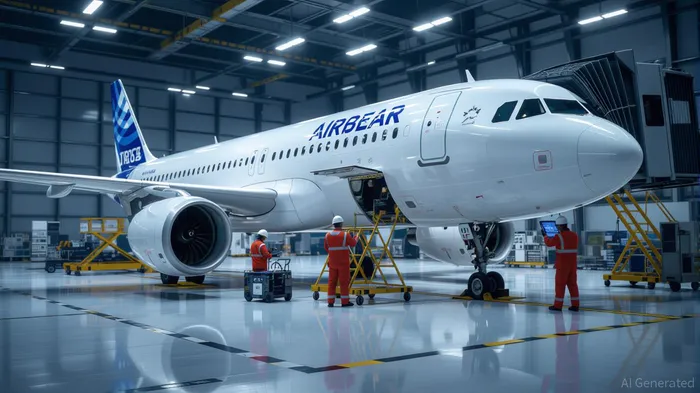
The financial burden of repairs, though relatively straightforward (two hours per aircraft for software updates), has strained operational capacity. American Airlines, for instance, faced a 10.3% year-over-year earnings decline, , signaling heightened vulnerability. Analysts warn that the recall's timing could exacerbate these metrics, particularly for airlines with limited liquidity.
Airline Stock Valuations: Mixed Reactions and Analyst Optimism
Despite the operational headwinds, airline stocks have shown resilience, driven by long-term growth expectations and strategic adjustments. American Airlines, the largest A320 operator, has seen its stock price buoyed by analyst upgrades. JPMorgan raised its price target , maintaining an Overweight rating, , citing improved demand trends. Delta Air LinesDAL--, with fewer than 50 affected aircraft, reported limited disruptions , outperforming broader market indices.
However, not all analysts are bullish. Susquehanna maintained a Neutral rating for American Airlines, highlighting structural challenges such as competition and holiday season volatility. These divergent views underscore the sector's mixed outlook, where short-term operational risks are weighed against long-term recovery narratives.
Supplier Valuations: Thales and Honeywell in the Crosshairs
The recall has also exposed vulnerabilities in the supply chain, particularly for suppliers like Thales, which manufactures the ELAC system. Thales clarified that the software issue lies outside its direct control, as it complies with Airbus specifications. Nevertheless, , reflecting investor concerns over reputational and operational risks. Analysts remain divided, with some citing strategic contracts in the UAE and Ukraine as long-term positives according to market analysis.
Honeywell, though not directly implicated in the recall, faced a double downgrade in November. Bank of America cut its price target , citing valuation concerns, while Barrons echoed the bearish sentiment. Despite these downgrades, 52% of analysts still rate . The disconnect between operational risks and market sentiment highlights the sector's complexity, where supplier exposure to Airbus's broader challenges remains a key uncertainty.
Broader Implications and Investment Considerations
The Airbus A320 recall underscores the aviation sector's susceptibility to external shocks, from solar radiation to regulatory overhauls. For investors, the crisis highlights the importance of evaluating operational risk metrics, such as liquidity, maintenance capacity, and supplier diversification. Airlines with robust balance sheets and agile maintenance networks, like DeltaDAL--, may emerge stronger, while those with weaker financials could face prolonged challenges.
Suppliers, meanwhile, must navigate reputational risks and regulatory scrutiny. Thales's ability to demonstrate compliance and transparency will be critical, while Honeywell's resilience will depend on its broader aerospace portfolio. Investors should monitor analyst ratings and stock price volatility as leading indicators of sector confidence.
In conclusion, the Airbus A320 recall serves as a case study in operational risk management and its financial ripple effects. While the immediate disruptions are significant, the long-term trajectory for airlines and suppliers will hinge on their capacity to adapt to an increasingly volatile aviation landscape.





Comentarios
Aún no hay comentarios