
Airbus A320 Grounding: Implications for Airline Stocks and Aerospace Suppliers
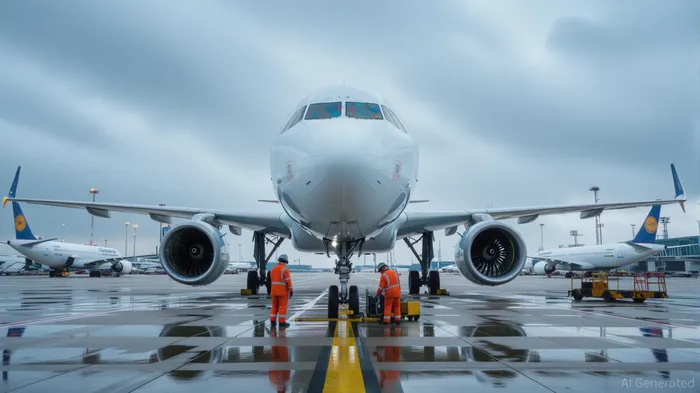
The November 2025 grounding of 6,000 Airbus A320-family aircraft due to a flight-control software vulnerability has sent shockwaves through the aviation sector. Triggered by intense solar radiation corrupting critical data systems, the recall has forced airlines into urgent operational adjustments, while regulators and manufacturers scramble to mitigate risks. For investors, the incident underscores both immediate financial vulnerabilities and long-term strategic shifts in the aerospace industry.
Operational and Financial Risks for Airlines
The grounding has disrupted global air travel, particularly during the peak holiday season. Airlines such as American AirlinesAAL--, Avianca, and easyJet have reported widespread delays and cancellations. American Airlines, for instance, , with repairs taking approximately two hours per aircraft
according to Bloomberg. Avianca, , , compounding revenue losses
as reported by Al Jazeera.
Financially, airlines face dual pressures: repair costs and lost revenue. While software updates are relatively quick, , exacerbating capacity shortages.
According to a CNBC report, the recall coincides with existing maintenance backlogs and labor shortages, amplifying operational strain. For carriers like Air France and VolarisVLRS--, , the financial toll includes compensation costs and reputational damage
according to Global Banking and Finance.
Impact on OEMs: Airbus's Challenges and Reputational Risks
Airbus, the manufacturer at the center of the crisis, faces significant operational and reputational risks. The recall-its largest in history-has drawn scrutiny over software reliability, echoing past issues with .
Regulatory actions by EASA and FAA mandate urgent fixes, . While Airbus maintains a stable stock price, the incident could erode investor confidence if repair timelines or costs exceed expectations.
The grounding also highlights vulnerabilities in Airbus's supply chain. Suppliers like Thales, which produces the affected Elevator Aileron Computers (ELACs), have faced questions about component resilience. Though Thales asserts compliance with Airbus specifications,
the incident may prompt stricter audits.
Supplier Implications and Strategic Adjustments
Aerospace suppliers are navigating both challenges and opportunities. Pratt & Whitney, whose GTF engines power some A321neo aircraft, faces indirect pressure as airlines prioritize A320 repairs over newer models. Meanwhile,
demand for spare parts has surged, , according to Sirius Aviation Capital. This trend could benefit suppliers specializing in retrofitting or engine leasing.
The recall has also accelerated early retirements of A320 Neo and A321 Neo aircraft due to maintenance complexities.
This shift may create a secondary market for airframes and engines, offering opportunities for suppliers with expertise in asset recycling.
Stock Market Reactions and Competitor Dynamics
The stock market has reacted cautiously. Qantas, for example, , while Airbus (EADSY) has maintained relative stability
according to Meyka. Competitors like Boeing, whose 737 MAX faced a similar software-related grounding, may face renewed scrutiny, though their smaller A320 fleet exposure limits direct comparisons
according to Reuters.
Investors should monitor regulatory responses, as EASA and FAA directives could influence long-term maintenance protocols. For instance,
the FAA's updated directive on structural inspections for A320s reflects a broader emphasis on hardware resilience.
Strategic Opportunities Amid Uncertainty
Despite the near-term risks, the crisis presents strategic opportunities. Airlines with diversified fleets or robust contingency planning-such as Air Canada, which reported minimal impacts-may gain market share. Suppliers offering rapid repair solutions or advanced software safeguards could see increased demand. Additionally, the incident may spur innovation in radiation-resistant avionics, benefiting firms with R&D capabilities.
For investors, the key lies in balancing short-term volatility with long-term resilience. Airlines with strong liquidity and flexible maintenance networks are better positioned to weather disruptions. Similarly, suppliers with diversified product lines and regulatory expertise may emerge stronger.
Conclusion
The Airbus A320 grounding underscores the fragility of modern aviation systems in the face of unforeseen risks. While airlines and OEMs face immediate financial and operational challenges, the crisis also highlights opportunities for innovation and market differentiation. Investors should prioritize companies with robust contingency strategies, technological agility, and regulatory alignment to navigate this turbulent period.







Comentarios
Aún no hay comentarios