
AirBoss of America (ABSSF): Navigating Earnings Gains and Strategic Resilience Amid Geopolitical Risks
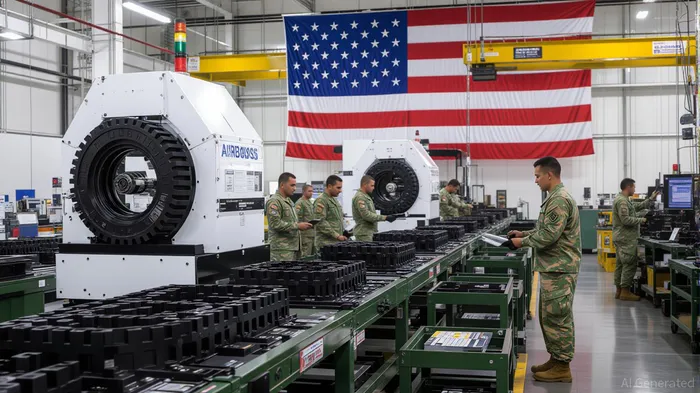
AirBoss of America (ABSSF) has emerged as a compelling case study in strategic resilience amid a volatile macroeconomic landscape. The company's Q2 2025 earnings report underscores a stark divergence between its two core segments: the struggling AirBoss Rubber Solutions (ARS) division and the surging AirBoss Manufactured Products (AMP) unit. For investors, the critical question is whether AMP's defense and manufacturing growth, fueled by U.S. reshoring trends, can offset ARS's margin erosion and position ABSSF as a long-term value creator.
Segment Divergence: Defense and Manufacturing Outperform, Rubber Solutions Stumble
ABSSF's Q2 2025 results revealed a 3.4% year-over-year increase in consolidated net sales to $98.6 million, driven entirely by AMP's 35.2% revenue surge to $54.9 million. This outperformance contrasts sharply with ARS's 13.7% decline in sales to $50.9 million, a slump attributed to soft demand in tolling and non-tolling rubber compounding, compounded by inflationary pressures and shifting tariffs.
The AMPAMP-- segment's turnaround is a masterclass in operational discipline. Gross profit soared from a $1.8 million loss in Q2 2024 to $9.6 million in Q2 2025, with gross margins expanding to 17.4%. This transformation was enabled by cost reductions, inventory write-downs, and a focus on high-margin defense contracts. Meanwhile, ARS's gross margins contracted to 13% from 17.4%, reflecting a challenging product mix and volume declines.
Reshoring Tailwinds and Defense Spending: A Strategic Catalyst
The AMP segment's success is inextricably linked to the U.S. reshoring movement and global defense spending trends. AirBoss has capitalized on companies relocating production to the U.S. to mitigate supply chain risks, securing new awards from OEMs and Tier 1 manufacturers. These contracts are projected to generate $80 million in sales over five years, a clear vote of confidence in ABSSF's capabilities.
The defense manufacturing division, in particular, is a linchpin of ABSSF's strategy. Deliveries under the Bandolier program, though delayed by supply chain bottlenecks, are now on track for 2026 completion. Management's collaboration with NATO and Canadian defense officials further signals access to a growing pool of contracts. With NATO nations pledging increased defense budgets post-Ukraine and amid U.S. policy shifts, AirBoss is well-positioned to benefit from a secular uptick in military procurement.
Balancing Risks: Can AMP Sustain Momentum?
While AMP's performance is impressive, investors must weigh several risks. ARS's decline, though expected in a cyclical industry, raises concerns about its long-term contribution to ABSSF's profitability. The segment's pivot to specialty compounds and R&D investments is promising but may take years to bear fruit. Additionally, AMP's reliance on defense contracts exposes it to geopolitical volatility—budget cuts or shifting priorities could disrupt cash flows.
Financially, ABSSF has made strides in deleveraging, with net debt/EBITDA falling to 2.90x from 4.51x in late 2024. Free cash flow of $11.2 million in Q2 2025 highlights improved liquidity, but the company's acquisition appetite could strain balance sheet flexibility.
Investment Thesis: A High-Beta Play on Reshoring and Defense
ABSSF's stock offers a high-beta exposure to two powerful trends: U.S. reshoring and global defense modernization. While ARS's near-term challenges are a drag, AMP's growth trajectory and strategic alignment with government priorities suggest a path to long-term value creation. For investors with a 3–5 year horizon, ABSSF's disciplined cost management, debt reduction, and pipeline of defense contracts make it an attractive speculative play.
However, caution is warranted. The company's success hinges on executing its R&D-driven ARSSPRY-- turnaround and maintaining its edge in a competitive defense manufacturing landscape. A diversified portfolio of contracts and continued focus on margin expansion will be critical.
In conclusion, AirBoss of America is navigating a complex macroeconomic environment with a mix of pragmatism and ambition. For those willing to tolerate near-term volatility, the company's strategic resilience and alignment with structural trends could yield substantial rewards.






Comentarios
Aún no hay comentarios