
Airbnb's Valuation Reassessment in a Post-Pandemic Recovery: Value Re-Emergence Amid Improving Fundamentals
The post-pandemic era has reshaped global travel and hospitality, and AirbnbABNB--, Inc. (NASDAQ: ABNB) stands at a pivotal juncture in its valuation reassessment. After navigating the initial shock of the pandemic-marked by a 2020 workforce reduction and a 2020 IPO that valued the company at $3.5 billion-Airbnb has demonstrated resilience and adaptability. By 2025, the company's financial performance, strategic shifts, and market sentiment suggest a re-emergence of value, even as valuation metrics remain contentious.
Improving Fundamentals: Revenue Growth and Profitability
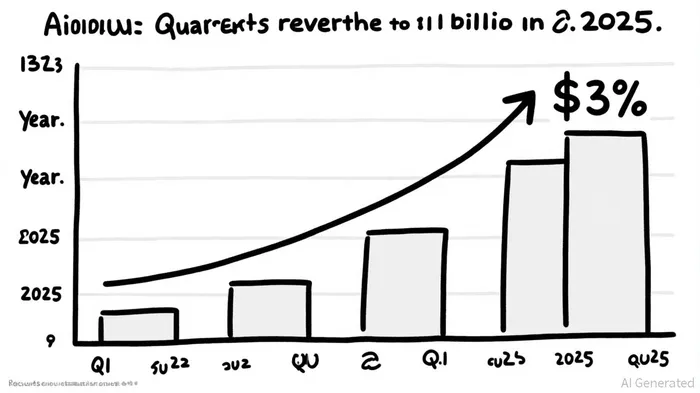
Airbnb's financials in 2025 reflect a recovery trajectory. For Q2 2025, the company reported $3.1 billion in revenue, a 13% year-over-year increase, driven by a 16% rise in net income to $642 million and a net income margin of 21%, according to Airbnb's Q2 2025 results. This follows a more subdued Q1 2025, where revenue grew 6% year-over-year but net income declined due to higher stock-based compensation and investment write-downs, per the same report. The sequential improvement underscores Airbnb's ability to scale profitability amid economic uncertainties.
The company's trailing twelve months (TTM) earnings per share (EPS) stand at $4.21, with a TTM revenue of $11.58 billion, according to StockAnalysis statistics. These figures highlight Airbnb's operational efficiency, particularly its 22.67% profit margin and 22.50% operating margin, which outperform traditional hospitality models, as noted in an 'Analysts Weigh In' piece. Analysts attribute this to Airbnb's low fixed costs and scalable platform model, which allows it to capitalize on demand without significant capital expenditures.
Valuation Metrics: A Tale of Two Perspectives
Airbnb's valuation metrics present a nuanced picture. The company's market capitalization of $77.09 billion and enterprise value of $68.01 billion are supported by a trailing P/E ratio of 29.88 and a forward P/E ratio of 28.72 (per StockAnalysis statistics). While these ratios suggest a premium valuation, they align with the company's strong revenue growth and profitability. However, the PEG ratio of 2.25-significantly higher than the Leisure and Recreation Services industry average of 1.17-raises questions about overvaluation relative to earnings growth (StockAnalysis).
The ambiguity in Airbnb's PEG ratio stems from unclear earnings growth rate assumptions. As noted in a PEG Ratio primer, the PEG metric is most reliable for stable, mature companies, and its utility diminishes for high-growth or volatile firms like Airbnb. Despite this, the company's enterprise value-to-sales ratio of 5.87 and enterprise value-to-EBITDA ratio of 25.63 suggest that investors are willing to pay a premium for its recurring revenue streams and market dominance (StockAnalysis).
Market Sentiment: Strategic Shifts and Regulatory Challenges
Market sentiment toward Airbnb is mixed. Analysts have set an average price target of $144.83, implying a 15.03% increase from the October 2025 stock price of $123.07 (StockAnalysis). This optimism is fueled by Airbnb's strategic expansion into the traditional hotel market and new verticals like "Airbnb Services," which aim to diversify revenue streams (Airbnb's Q2 2025 results). However, concerns persist about regulatory pressures-over 80% of Airbnb's top 200 markets are regulated, according to Airbnb market trends-and potential saturation in urban centers.
The company's $200 million investment in new businesses, including hotel market expansion, will be critical in Q3 2025. While some analysts, like those at Mizuho and Bernstein, view this as a "product cycle play" that could justify a higher valuation (Airbnb's Q2 2025 results), others, such as Truist Securities, maintain a "Strong Sell" rating due to booking growth deceleration (Airbnb's Q2 2025 results). This divergence reflects the broader market's uncertainty about Airbnb's ability to sustain its post-pandemic momentum.
Strategic Adaptability: Quality Over Quantity
Airbnb's strategic pivot toward quality over quantity has also influenced its valuation. By removing 100,000 low-quality listings in 2025, the company has reinforced trust and differentiated itself from competitors like Vrbo and traditional hotels (Airbnb market trends). This focus on quality aligns with shifting consumer preferences, where health-related features, contactless services, and flexible cancellation policies have become non-negotiable (Airbnb market trends). Hosts, in turn, have adapted by emphasizing differentiation and adhering to stricter regulatory frameworks, ensuring Airbnb remains competitive in a maturing market (Airbnb market trends).
Conclusion: A Justified Premium or Overvaluation?
Airbnb's valuation reassessment in 2025 hinges on its ability to balance growth, profitability, and strategic execution. While metrics like the PEG ratio suggest overvaluation, the company's strong cash flow ($9.07 billion net cash position), conservative debt-to-equity ratio (0.29), and 70% revenue growth over three years (Airbnb market trends) justify a premium. The key risk lies in regulatory headwinds and market saturation, which could pressure profit margins. However, Airbnb's adaptability-evidenced by its post-pandemic recovery and strategic innovations-positions it to navigate these challenges.
For investors, the current valuation offers a compelling case for cautious optimism. Airbnb's fundamentals remain robust, and its market leadership in the sharing economy is unlikely to wane. As the company prepares to release its Q3 2025 earnings in November 2025, the focus will shift to whether its strategic bets translate into sustainable growth.
Historically, post-earnings periods for ABNBABNB-- have shown mixed signals. A backtest of 15 events from 2022 to 2025 reveals an average return of -2.4% over 30 days, with statistically significant negative abnormal returns concentrated in the first two weeks. Win rates remained below 50% through day 15, suggesting limited upside for immediate post-earnings buyers. However, performance tends to stabilize after ~20 trading days, narrowing the under-performance gap relative to benchmarks. These findings, based on an internal backtest analysis of ABNB earnings release impacts (2022–2025), underscore the importance of patience for long-term investors, who may find better entry points 3–4 weeks post-earnings.





Comentarios
Aún no hay comentarios