
Air T's Strategic Partnership with Regional Express: A Case Study in Regional Aviation Consolidation
A High-Stakes Acquisition with Sector-Wide Implications
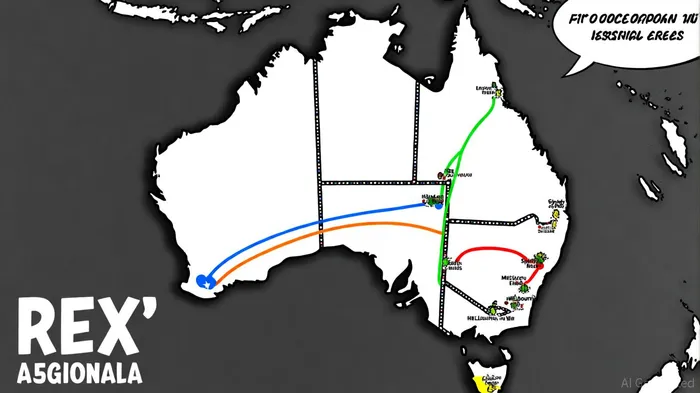
Air T's agreement to acquire Rex-a regional airline that had operated under voluntary administration for over 14 months-marks a critical juncture in the industry. The deal, contingent on creditor and court approvals, includes a comprehensive restructuring of Rex's $500 million debt and a $30 million government-backed liquidity injection, according to Australian Aviation. This financial scaffolding, coupled with Air T's commitment to fund Rex's engine renewal program, ensures the airline can continue operating its 50% unique regional routes-many of which are vital for healthcare, education, and economic access in rural Australia, as outlined in the Air T agreement with Rex.
The Australian government's role in this transaction is particularly noteworthy. By waiving regulatory hurdles like Sydney Airport's "use it or lose it" slot rule and agreeing to a direct stake if private buyers falter, policymakers have signaled a willingness to prioritize service continuity over strict market principles, as noted in an Albanese Government statement. This approach mirrors global trends where governments increasingly act as stabilizers in regional aviation, recognizing the sector's role in national infrastructure, the Financial Review observed.
Strategic Fit and Operational Synergies
Air T's expertise in regional aircraft maintenance and parts sourcing-particularly for Rex's aging Saab 340 fleet-positions the partnership as a win-win, according to StreetInsider. A Travel Monitor report also notes that Air T's access to hard-to-source components for the Saab 340, a workhorse of regional aviation, addresses a critical bottleneck in Rex's ability to maintain service reliability.
This synergy is not accidental. The acquisition reflects a broader industry trend toward consolidation, where larger players with technical and financial depth acquire struggling regional carriers to expand their footprint while improving efficiency. For Air T, the deal expands its geographic reach into the Asia-Pacific, a region projected to see robust demand for regional air travel over the next decade, ABC News reported.
Sector Implications: Consolidation as a Survival Strategy
The Rex-Air T deal highlights a structural shift in regional aviation. As smaller carriers struggle with rising fuel costs, regulatory pressures, and the high fixed costs of maintaining sparse routes, consolidation becomes a necessity rather than a choice. The Australian government's $500 million debt restructuring plan for Rex, for instance, is a lifeline that would be unsustainable for a standalone operator, the Financial Review reported.
Moreover, the transaction underscores the growing interdependence between private capital and public policy in sustaining regional connectivity. While Air T's entry brings operational expertise, government support ensures that critical routes remain viable. This hybrid model-where private acquirers are paired with public financial guarantees-could become a blueprint for other regions facing similar challenges, according to Mirage News.
Conclusion: A Model for the Future?
Air T's acquisition of Rex is more than a corporate transaction; it is a case study in how strategic partnerships can address the inherent vulnerabilities of regional aviation. By combining Air T's operational strengths with government-backed financial stability, the deal demonstrates a path forward for an industry caught between economic realities and social obligations. For investors, the transaction signals that consolidation in regional aviation is not just inevitable but essential-a trend that will likely accelerate as demand for connectivity in remote areas continues to outpace the profitability of standalone operators.





Comentarios
Aún no hay comentarios