
Air Liquide's Strategic Expansion in the U.S. Industrial Gas Market: A Decarbonization-Driven Growth Story
Air Liquide's strategic expansion in the U.S. industrial gas market is increasingly anchored in its leadership within the energy transition, particularly in hydrogen and carbon capture technologies. As the Biden-era infrastructure law catalyzed a $7 billion investment in clean hydrogen hubs, Air Liquide secured six of the Department of Energy's (DOE) flagship projects. However, the subsequent freeze on clean energy funding under the Trump administration has narrowed the scope of these initiatives, with only two projects-hydrogen production from natural gas with carbon capture-likely to proceed in the near term, according to a US News article. This regulatory uncertainty underscores the political risks inherent in decarbonization bets but also highlights Air Liquide's agility in pivoting toward commercially viable pathways.
Hydrogen and CCS: The Twin Pillars of Air Liquide's U.S. Strategy
Air Liquide's U.S. operations are deeply intertwined with hydrogen infrastructure and carbon capture and storage (CCS). The company's partnership with ExxonMobil to develop low-carbon hydrogen and ammonia at the Baytown, Texas facility exemplifies its focus on industrial decarbonization, as reported by H2‑Tech. While final investment decisions remain pending, the project aligns with Air Liquide's global target of achieving carbon neutrality by 2050. Additionally, its involvement in hydrogen mobility initiatives, such as hydrogen refueling stations with TotalEnergiesTTE--, positions it to capitalize on the nascent but growing transportation sector demand, as described on Air Liquide's energy transition page.
The company's expertise in CCS further strengthens its competitive edge. For instance, Air Liquide's Cryocap technology is central to its hydrogen production strategy, enabling efficient carbon capture from industrial processes. This capability is critical in a U.S. market where 40% of Air Liquide's project backlog is tied to energy transition initiatives, including hydrogen hubs and CCS, according to a Yahoo Finance article. By leveraging existing infrastructure-such as its extensive pipeline network in Louisiana-Air Liquide minimizes capital intensity while accelerating deployment timelines, as outlined in its Gulf Coast press release.
Competitive Advantages: Scale, Innovation, and Resilient Margins
Air Liquide's U.S. market position is bolstered by its technological leadership and financial resilience. In 2024, the company reported an operating margin of 19.9%, up from 18.4% in 2023, reflecting disciplined cost management and pricing power, according to an Air Liquide financial document. This margin outperforms peers like Air Products, which recently recorded a $3.1 billion pre-tax charge after exiting three U.S. green hydrogen projects due to regulatory and economic headwinds, as reported by PV Magazine. Air Liquide's indexed contracts and focus on large-scale, long-term partnerships (e.g., with Micron Technology and LG Chem's EV battery plant) insulate it from short-term volatility, ensuring steady cash flows, per EOG Asia.
Comparatively, Linde PLC's $8.1 billion project backlog includes 40% clean energy initiatives, but its CEO has expressed cautious optimism about green hydrogen's scalability, projecting cost competitiveness only by the late 2030s (noted in a Yahoo Finance article). Air Liquide, however, is more aggressive, planning to invest €8 billion in low-carbon hydrogen infrastructure by 2035 and develop 3 GW of electrolyzer capacity by 2030, according to S&P Global. This bold roadmap, coupled with a record $4.4 billion investment backlog in Q3 2024, underscores its commitment to outpacing rivals in the energy transition, as reported by Gasworld.
Market Share and Growth Prospects
While Air Liquide's exact U.S. market share for 2025 remains unspecified, its global dominance (22.7% in 2020) and strategic investments suggest a strong regional presence, per Latterly. The U.S. industrial gas market, projected to grow at a 7.1% CAGR through 2034, is highly concentrated, with oxygen alone accounting for 32% of demand due to healthcare and manufacturing needs, according to Mordor Intelligence. Air Liquide's expansion of biomethane production in Pennsylvania and Michigan, alongside its $50 million pipeline upgrades on the Gulf Coast, further solidify its footprint (see the Gulf Coast press release).
Risks and Opportunities
The Trump administration's clean energy funding freeze and potential tariffs pose near-term risks, though Air Liquide's CEO, François Jackow, has downplayed their impact, citing local sourcing advantages (noted in the US News article). Conversely, the Biden administration's renewed focus on decarbonization could accelerate the remaining four hydrogen hub projects, unlocking $5 billion in federal funding. Additionally, the growing demand for industrial gases in semiconductors and EVs-sectors where Air Liquide has secured key contracts-offers a buffer against regulatory shifts, as noted in an Air Liquide press release.
Conclusion
Air Liquide's U.S. operations are a testament to its dual strengths: technological innovation in hydrogen and CCS, and financial discipline. While political headwinds may delay some projects, the company's strategic partnerships, resilient margins, and alignment with long-term decarbonization trends position it as a leader in the energy transition. For investors, Air Liquide's ability to navigate regulatory uncertainty while maintaining growth momentum in both traditional and emerging markets makes it a compelling long-term play.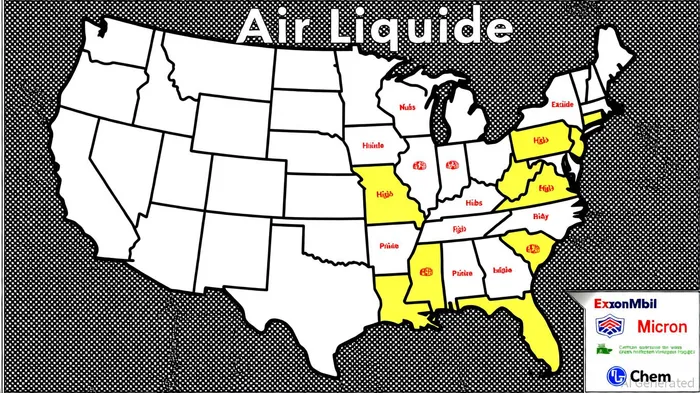







Comentarios
Aún no hay comentarios