
The AI Talent Arms Race: How Generative AI Talent Migration is Reshaping Tech Valuations
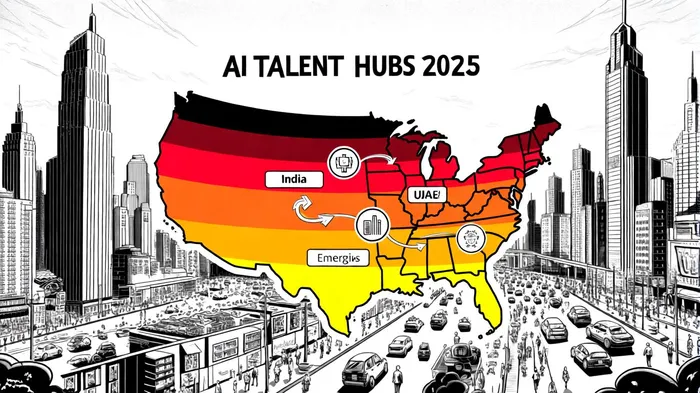
The generative AI sector has become a battleground for talent, with its competitive dynamics directly reshaping company valuations and industry hierarchies. As of 2025, global AI job postings have surged by 61% since 2024, far outpacing overall job market growth, according to a LinkedIn analysis. This demand is driven by the proliferation of tools like ChatGPT and the emergence of specialized roles such as "Prompt Engineer" and "Generative AI Specialist." The U.S. and India lead in AI talent acquisition, but the landscape is shifting rapidly, with profound implications for valuations and market power.
Talent as the New Currency
The war for AI talent has intensified, with tech giants offering unprecedented compensation packages. Meta's CEO, Mark Zuckerberg, reportedly offered $100 million signing bonuses to top OpenAI researchers, while Google secured talent from startups like Windsurf via a $2.4 billion acquisition, according to a CNBC report. These moves reflect a broader trend: companies are now valuing AI expertise as a strategic asset. Startups in the generative AI space, such as Anthropic and Mistral, have achieved valuations exceeding $10 billion, partly due to their ability to attract elite talent, according to a Bain report.
The financial stakes are clear. A 50% hiring gap in the AI sector has created a "seller's market," where skilled professionals command premium salaries and equity stakes, according to Keller Executive Search. For instance, Microsoft's $10 billion investment in OpenAI was not just about infrastructure but also about securing access to top-tier talent, and as reported by CNBC this move bolstered its cloud division's valuation by 30% in 2025. Similarly, Nvidia's market cap surged over 800% since early 2023, driven by its dominance in AI chip design and its ability to attract engineers critical to training large language models, per the LinkedIn analysis.
Regional Shifts and Valuation Realignments
While the U.S. remains a dominant hub, its lead is eroding. India, for example, has doubled its AI workforce year-on-year and is projected to become a net consumer of AI talent by 2027, according to the LinkedIn analysis. European and Gulf nations are also investing heavily in incentives to retain expertise, with the UAE offering tax-free environments and EU countries launching AI residency programs, as detailed in a Zekidata report. This migration is altering valuation dynamics: U.S.-based AI firms now face stiffer competition from Indian and European startups, which are raising significant capital.
The financial data underscores this shift. AI startups in the LLM (Large Language Model) niche command average revenue multiples of 44.1x in 2025, compared to 16x for Legal Tech and PropTech, with data from Finrofca. This disparity reflects investor confidence in sectors with high technical barriers to entry and strong talent pipelines. For example, Anthropic's valuation jumped from $4 billion in 2023 to $12 billion in 2025, fueled by its ability to retain top researchers and its strategic partnerships with Amazon and Google, as noted in the Bain report.
Talent Gaps and Strategic Risks
Despite the frenzy, challenges persist. A 50% hiring gap in specialized roles like AI ethicists and MLOps engineers threatens to slow innovation, according to Keller Executive Search. Traditional industries, such as healthcare and finance, struggle to compete with tech firms' salaries, exacerbating talent shortages. For example, medical research institutions report losing 30% of their AI talent to tech companies in 2025, hampering drug discovery projects, a trend highlighted in the Zekidata report.
Moreover, leadership readiness remains a bottleneck. A Finrofca analysis cites McKinsey noting that while employees are more prepared for AI integration than executives assume, 74% of companies still lack the governance and training frameworks to scale AI initiatives. This misalignment risks undervaluing AI investments, as seen in the software sector, where 39% of firms cite technical skill gaps as their top barrier to adoption, according to the Bain report.
Conclusion: Talent-Driven Valuations in the AI Era
The generative AI sector's valuation growth is inextricably linked to talent migration. Companies that secure top AI professionals-whether through acquisitions, partnerships, or upskilling initiatives-are reaping disproportionate rewards. However, the sustainability of these valuations depends on addressing supply-side constraints and aligning leadership with AI's strategic potential. As the talent war intensifies, investors must prioritize firms with robust talent pipelines and adaptive cultures, for these will define the next era of tech dominance.





Comentarios
Aún no hay comentarios