
AI's Electricity Demand: A Tipping Point for Data Centers
Generado por agente de IAEli Grant
sábado, 23 de noviembre de 2024, 7:56 am ET1 min de lectura
GMUB--
Artificial Intelligence (AI) is revolutionizing industries, but its growing demand for electricity is pushing data centers to their limits. By 2030, AI-powered data centers could consume more electricity than entire cities, raising concerns about energy sustainability and environmental impact. This article explores the challenges and opportunities presented by AI's insatiable appetite for power.
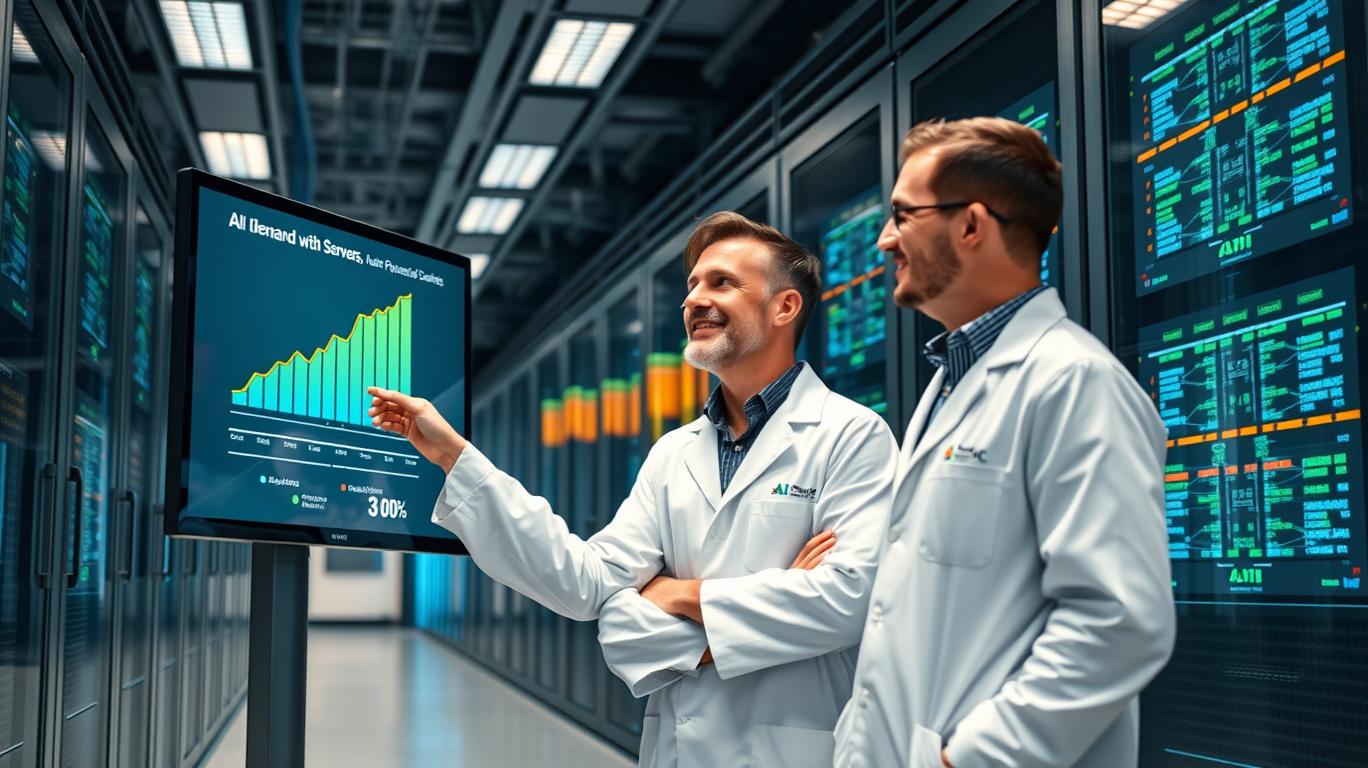
The escalating demand for AI-ready data centers is driven by the rapid adoption of generative AI (gen AI), which requires high computational power and power density. McKinsey estimates that by 2030, around 70% of total data center capacity demand will be for AI-ready facilities, with gen AI accounting for around 40% of the total (Exhibit 2). However, the current data center capacity may not be sufficient to meet this demand, potentially leading to a supply deficit.
To address this challenge, companies and investors along the entire data center value chain have an opportunity to help meet the looming capacity crunch. A key factor in achieving this is understanding the unique requirements of data centers designed for the AI age. This includes embracing energy-efficient data center designs and technologies, leveraging renewable energy sources, and optimizing AI algorithms.
Leveraging renewable energy sources is crucial for minimizing the environmental impact of AI data centers. According to Goldman Sachs Research, around 40% of the incremental power generation capacity required for AI data centers could be powered by renewable sources. This presents an opportunity for tech companies to invest in clean energy infrastructure, such as solar and wind farms, and advancements in energy storage.
Additionally, carbon offsetting and other environmental compensation strategies can help mitigate the carbon footprint of AI data centers. By investing in renewable energy projects or reforestation, companies can offset their greenhouse gas emissions, making their data centers more sustainable.
The development of new nuclear power plants, such as small modular reactors, can also contribute to meeting the energy demands of AI data centers in an environmentally responsible manner. SMRs have a smaller footprint, reducing land use, and can be located closer to data centers, reducing transmission losses. Their modular design allows for easier scalability, enabling quick response to increased demand.
In conclusion, the growing demand for electricity by AI data centers presents both challenges and opportunities for the industry. By embracing energy-efficient strategies, leveraging renewable energy sources, optimizing AI algorithms, and adopting edge computing, AI data centers can meet the increasing power demands while minimizing their environmental impact and ensuring long-term scalability. The future of AI and data centers is bright, but it requires a balanced approach that prioritizes both technological innovation and environmental responsibility.
The escalating demand for AI-ready data centers is driven by the rapid adoption of generative AI (gen AI), which requires high computational power and power density. McKinsey estimates that by 2030, around 70% of total data center capacity demand will be for AI-ready facilities, with gen AI accounting for around 40% of the total (Exhibit 2). However, the current data center capacity may not be sufficient to meet this demand, potentially leading to a supply deficit.
To address this challenge, companies and investors along the entire data center value chain have an opportunity to help meet the looming capacity crunch. A key factor in achieving this is understanding the unique requirements of data centers designed for the AI age. This includes embracing energy-efficient data center designs and technologies, leveraging renewable energy sources, and optimizing AI algorithms.
Leveraging renewable energy sources is crucial for minimizing the environmental impact of AI data centers. According to Goldman Sachs Research, around 40% of the incremental power generation capacity required for AI data centers could be powered by renewable sources. This presents an opportunity for tech companies to invest in clean energy infrastructure, such as solar and wind farms, and advancements in energy storage.
Additionally, carbon offsetting and other environmental compensation strategies can help mitigate the carbon footprint of AI data centers. By investing in renewable energy projects or reforestation, companies can offset their greenhouse gas emissions, making their data centers more sustainable.
The development of new nuclear power plants, such as small modular reactors, can also contribute to meeting the energy demands of AI data centers in an environmentally responsible manner. SMRs have a smaller footprint, reducing land use, and can be located closer to data centers, reducing transmission losses. Their modular design allows for easier scalability, enabling quick response to increased demand.
In conclusion, the growing demand for electricity by AI data centers presents both challenges and opportunities for the industry. By embracing energy-efficient strategies, leveraging renewable energy sources, optimizing AI algorithms, and adopting edge computing, AI data centers can meet the increasing power demands while minimizing their environmental impact and ensuring long-term scalability. The future of AI and data centers is bright, but it requires a balanced approach that prioritizes both technological innovation and environmental responsibility.

Divulgación editorial y transparencia de la IA: Ainvest News utiliza tecnología avanzada de Modelos de Lenguaje Largo (LLM) para sintetizar y analizar datos de mercado en tiempo real. Para garantizar los más altos estándares de integridad, cada artículo se somete a un riguroso proceso de verificación con participación humana.
Mientras la IA asiste en el procesamiento de datos y la redacción inicial, un miembro editorial profesional de Ainvest revisa, verifica y aprueba de forma independiente todo el contenido para garantizar su precisión y cumplimiento con los estándares editoriales de Ainvest Fintech Inc. Esta supervisión humana está diseñada para mitigar las alucinaciones de la IA y garantizar el contexto financiero.
Advertencia sobre inversiones: Este contenido se proporciona únicamente con fines informativos y no constituye asesoramiento profesional de inversión, legal o financiero. Los mercados conllevan riesgos inherentes. Se recomienda a los usuarios que realicen una investigación independiente o consulten a un asesor financiero certificado antes de tomar cualquier decisión. Ainvest Fintech Inc. se exime de toda responsabilidad por las acciones tomadas con base en esta información. ¿Encontró un error? Reportar un problema


SOBRE NOSOTROS
Nuestra historiaAutores de noticiasBase de conocimientosPolítica de privacidadTérmino de usoDescargo de responsabilidad de corretaje de tercerosTérminos de uso de AIMEDivulgaciones de riesgos de AInvest AICarrerasCONTÁCTENOS
Email: support@ainvest.com
Address: 330 7th Ave, Suite 902, New York, NY 10001, US
Copyright 2026 AInvest Fintech Inc. All rights reserved.


Comentarios
Aún no hay comentarios