
AI-Powered In-Store Retail Innovation: The Strategic Value of Instacart's Caper Carts in the UK Grocery Market
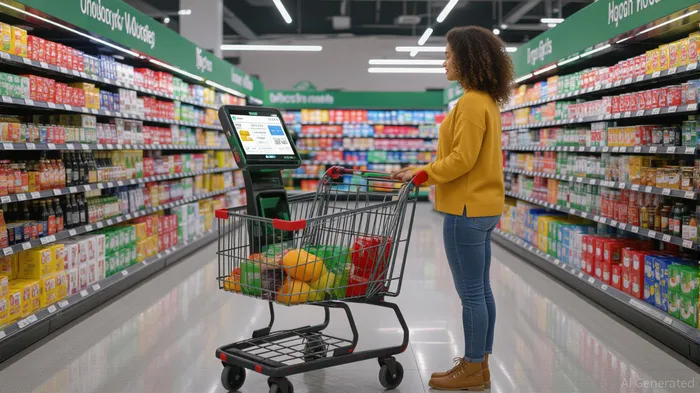
The UK grocery market is undergoing a seismic shift as retailers race to integrate artificial intelligence (AI) into their omnichannel strategies. At the forefront of this transformation is Instacart's Caper Carts, a technology poised to redefine in-store retail through seamless digital integration, operational efficiency, and hyper-personalized customer experiences. With Morrisons set to deploy Caper Carts in early 2026, the UK market is witnessing a pivotal moment in retail innovation—one that could determine the competitive edge of major players in an increasingly digitized landscape.
Omnichannel Integration: Bridging the Online-Offline Divide
Caper Carts are not merely smart shopping carts; they are the linchpin of a broader omnichannel strategy. By integrating AI-powered sensors, real-time item recognition, and loyalty program synchronization, these carts enable customers to transition effortlessly between online and in-store shopping. For instance, users can sync digital shopping lists, access personalized promotions, and checkout without queuing—all while earning loyalty points[1]. This aligns with UK consumer trends, where 79% of retailers anticipate AI agents becoming essential to compete effectively by 2025[4].
The technology's ability to display aisle-aware advertisements and gamified features, such as spinning a digital wheel for discounts, further enhances engagement[3]. According to a case study with Soelbergs Market, 40% of Caper Cart users who saw omnichannel offers redeemed them, underscoring the platform's effectiveness in driving conversions[2]. For Morrisons, this means transforming passive in-store interactions into dynamic, data-driven touchpoints that mirror the convenience of e-commerce.
Scalability and Operational Efficiency: A Retail Tech Game-Changer
Caper Carts are designed for scalability, with modular hardware and cloud-based tools enabling rapid deployment across diverse store formats[2]. Their integration with existing point-of-sale (POS) systems and loyalty programs reduces infrastructure costs, a critical factor for UK retailers navigating inflationary pressures. For example, the carts' anti-theft features and real-time inventory tracking help mitigate shrinkage, a persistent challenge for grocery chains[1].
Data from MarketsandMarkets projects the global smart shopping cart market to grow at a 14.91% CAGR, reaching $71.15 billion by 2034[5]. The UK, with its mature retail ecosystem and high consumer adoption of contactless payments, is well-positioned to capitalize on this trend. Caper's partnerships with Coles in Australia and Wegmans in the U.S. demonstrate the technology's adaptability, suggesting a replicable model for UK expansion[3].
Consumer Adoption and Challenges: Navigating the Hurdles
While the strategic value of Caper Carts is clear, adoption in the UK faces hurdles. High initial implementation costs and data privacy concerns under GDPR remain barriers, particularly for smaller retailers[6]. However, early trials in the U.S. and Australia show promise: users spend over 30 minutes shopping with Caper Carts, indicating strong engagement[5]. For Morrisons, the key will be balancing innovation with cost efficiency, leveraging its scale to offset upfront investments.
Operational complexity also persists. Training staff to support AI-driven systems and ensuring seamless integration with legacy infrastructure are non-trivial tasks[3]. Yet, the potential rewards—reduced labor costs, improved inventory accuracy, and enhanced customer retention—justify the risks for forward-thinking retailers.
Investment Implications: A Long-Term Play
Instacart's Caper Carts represent more than a technological novelty; they are a strategic asset in the UK's evolving retail landscape. By 2026, the deployment at Morrisons could serve as a blueprint for competitors, accelerating the adoption of AI-powered solutions across the sector. Investors should monitor key metrics: customer redemption rates for digital offers, reductions in shrinkage, and the speed of nationwide rollout.
For now, the UK grocery market stands at a crossroads. Those who embrace AI-driven innovation—like Morrisons with Caper Carts—will likely dominate the next decade, while laggards risk obsolescence in an era where convenience and personalization reign supreme.







Comentarios
Aún no hay comentarios