
The AI-Powered Energy Bottleneck and the Rise of Small Modular Nuclear Reactors (SMRs)
The artificial intelligence revolution is reshaping global energy demand at an unprecedented pace. By 2025, data centers-powered by AI algorithms-will consume 945 terawatt-hours (TWh) annually, doubling from 415 TWh in 2024 and accounting for 1.5% of global electricity use. This surge, driven by AI's insatiable appetite for computational power, is creating a critical bottleneck in energy infrastructure. Conventional power grids, already strained by climate-driven demand and decarbonization efforts, are ill-equipped to meet the 30% annual growth in AI-driven electricity consumption, which outpaces the 9% growth of traditional server demand.
The Energy Bottleneck: A Crisis in the Making
AI's energy footprint is no longer a theoretical concern. By 2028, AI could consume half of all data center electricity, rivaling the energy use of 22% of U.S. households. This demand is concentrated in regions with high-tech clusters, such as the U.S. Pacific Northwest and Europe's Rhine Valley, where data centers are clustering and straining local grids. For instance, U.S. data center energy use is projected to jump from 17 gigawatts (GW) in 2022 to 35 GW by 2030, with AI-specific centers requiring up to 80 MW of power-double that of standard facilities.
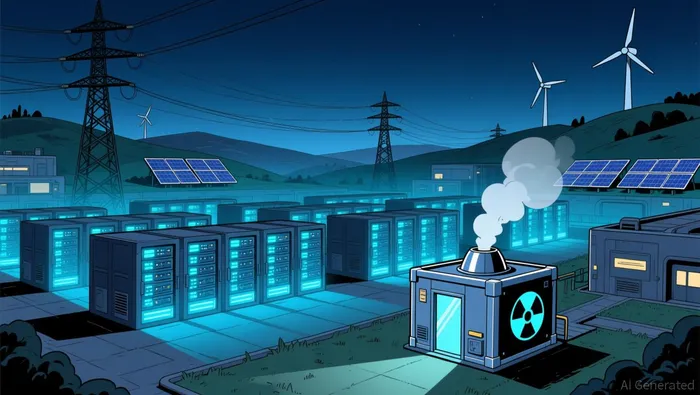
Renewables, while essential for decarbonization, face limitations in meeting AI's 24/7, high-capacity needs. Solar and wind, for example, require costly backup systems like gas plants or batteries to ensure reliability. Meanwhile, traditional nuclear power, though low-carbon, is too slow and capital-intensive to scale rapidly. Construction timelines for conventional reactors span 6–12 years, far exceeding the urgency of AI-driven demand.
SMRs: The Undervalued Solution to AI's Energy Appetite
Enter small modular reactors (SMRs), a technology poised to bridge this gap. SMRs offer scalable, low-carbon power with modular designs that can be manufactured in factories and deployed near industrial zones, including data centers. Their capacity (up to 300 MW) aligns with the energy needs of single facilities or clusters, and their advanced safety features-such as passive cooling systems-reduce operational risks.
Investment in SMRs is accelerating. The global SMR market grew from $6.3 billion in 2024 to $6.9 billion in 2025, with a projected compound annual growth rate of 9.1%. Tech giants are leading the charge: AmazonAMZN-- pledged $500 million to X-energy's SMR project, while Google secured the first corporate SMR purchase agreement with Kairos Power. Governments are also stepping in, with the U.S. Department of Energy allocating $900 million to advance SMR development and the ADVANCE Act of 2024 offering 50% fee reductions for SMR licensing.
Cost, Scalability, and Regulatory Tailwinds
While SMRs face higher upfront costs-levelized electricity costs range from $89–102 per megawatt-hour, compared to $26–50 for renewables-their long-term value proposition is compelling. Unlike renewables, SMRs provide firm, uninterrupted power, eliminating the need for costly backup systems. A microgrid powered by wind and solar, for example, could cost 43% less to operate annually than an SMR. However, this comparison overlooks AI's non-negotiable demand for reliability. For data centers, downtime is a financial catastrophe; SMRs mitigate this risk while aligning with decarbonization goals.
Regulatory support is another tailwind. The U.S. Executive Order 14300 and the IAEA's Nuclear Harmonization Initiative are streamlining SMR licensing and fostering international collaboration. Countries like Poland, China, and Canada are leveraging SMRs to replace coal plants and advance energy transition strategies. Despite challenges such as public acceptance and supply chain constraints, these reforms are accelerating deployment timelines.
The Investment Case: SMRs as a Strategic Bet
SMRs remain undervalued despite their strategic importance. While the first commercial reactors won't come online until 2030 at the earliest, the infrastructure and supply chain investments required today are creating opportunities for early movers. For investors, this means targeting SMR developers, suppliers of advanced materials, and companies involved in grid integration.
The U.S. government's $900 million funding program and the ADVANCE Act signal a commitment to reducing SMR costs through economies of scale. As replication and standardized designs drive down expenses, SMRs could become cost-competitive with renewables in the 2030s. For now, tech companies like Microsoft-already securing power from reactivated nuclear plants-are hedging their bets by partnering with SMR developers.
Conclusion: Powering the AI Future
The AI-driven energy bottleneck is not a distant threat but an imminent crisis. Conventional energy sources and renewables alone cannot meet the scale and reliability demands of AI infrastructure. SMRs, with their scalability, low-carbon profile, and regulatory momentum, are uniquely positioned to fill this gap. While current costs are high, government support, technological maturation, and the urgency of AI's energy needs make SMRs a critical, undervalued investment opportunity. For investors, the time to act is now-before the AI revolution outpaces the grid.







Comentarios
Aún no hay comentarios