
The AI-Powered Crypto Scam Epidemic: Regulatory Responses and Investor Protection Strategies in 2025
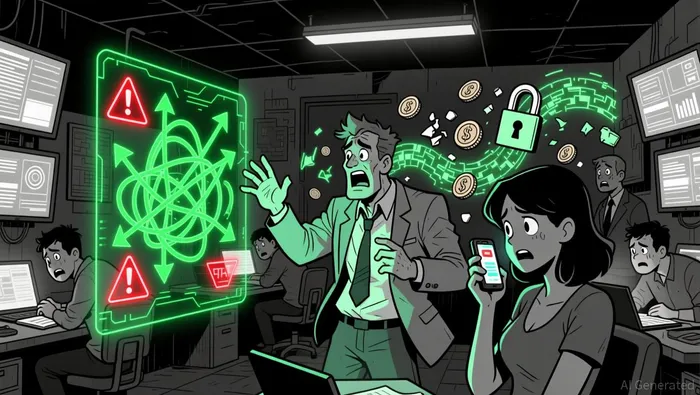
The convergence of artificial intelligence (AI) and social media has created a new frontier of financial fraud, with U.S. retail investors increasingly targeted by sophisticated crypto scams. In 2025, these schemes exploit AI-generated deepfakes, synthetic voice cloning, and automated phishing campaigns to mimic trusted institutions and public figures, luring victims into fraudulent investment platforms. According to Chainalysis, AI-powered scams have outpaced traditional fraud in both scale and realism, with one notable case involving a compromised Houston museum Instagram account promoting a $25,000 BitcoinBTC-- giveaway tied to Elon Musk. Such tactics underscore the urgent need for multi-layered investor protection strategies in an era where digital trust is weaponized.
The Mechanics of AI-Driven Scams
Scammers leverage AI to automate and personalize fraud at unprecedented speeds. For instance, "pig butchering" schemes use generative AI to craft long-term romantic or investment relationships with victims, gradually extracting large sums through fake platforms according to CNBC. Phishing websites, often indistinguishable from legitimate services like CoinbaseCOIN--, are generated en masse using AI website builders, enabling scammers to harvest login credentials and financial data. Voice cloning technology has also escalated risks: a U.S. parent was deceived by an AI-generated voice mimicking their child, requesting emergency funds. These tactics exploit human psychology and technological naivety, creating a perfect storm for retail investors.
Regulatory Enforcement: SEC and CFTC Crackdowns
The U.S. Securities and Exchange Commission (SEC) has intensified enforcement against AI-themed crypto fraud. In a landmark case, the SEC charged fake platforms such as Morocoin Tech Corp. and AI Wealth Inc. for defrauding investors of $14 million through WhatsApp groups and AI-generated investment tips. These platforms falsely claimed to offer "security token offerings" while siphoning funds through advance fees according to Yahoo Finance. The SEC has also targeted "AI washing"-misleading claims about AI integration in investment products-to prevent market manipulation according to HFLawReport.
Simultaneously, the Commodity Futures Trading Commission (CFTC) has secured over $17 billion in monetary relief in 2025 by prosecuting fraudulent digital asset schemes, including misrepresentation of trading performance and fund misappropriation according to Scar Inci. Both agencies are refining enforcement strategies to align with evolving crypto regulations, such as the EU's Markets in Crypto-Assets (MiCA) framework and the U.S. GENIUS Act, which aim to standardize stablecoin oversight and financial crime prevention according to Chainalysis.
Investor Education and Systemic Risk Mitigation
Despite regulatory efforts, education remains a critical defense. The North American Securities Administrators Association (NASAA) and FINRA have emphasized red flags during World Investor Week 2025, including pressure to invest immediately, unrealistic returns, and secrecy according to NASAA. For example, the SEC's crackdown on AI investment clubs revealed how scammers used WhatsApp groups to mimic financial professionals, directing victims to non-operational trading platforms.
Asset allocation strategies are also adapting to mitigate systemic risks. Institutional investors are integrating blockchain analytics tools like JP Morgan's proprietary platforms to monitor transactions and detect suspicious patterns in real time according to Anaptyss. Defensive equity portfolios now allocate hedging mechanisms to limit cryptocurrency-related risks, with Bitcoin's contribution to active risk exceeding 10% in some strategies according to ScienceDirect. Robo-advisers and pooled funds are further enabling retail investors to diversify holdings while leveraging compliance solutions to trace scammer wallets according to Elliptic.
The Future of Investor Protection
As AI-driven scams evolve, collaboration between regulators, technology firms, and financial institutions will be paramount. The Strategic Bitcoin Reserve (SBR) and Digital Assets Stockpile (DAS) initiatives, designed to seize and manage illicit crypto assets, highlight the U.S. government's commitment to systemic risk reduction according to Chainalysis. However, legacy fraud detection systems remain ill-equipped to handle AI-generated content, necessitating advanced tools like Chainalysis Alterya.
For retail investors, the lesson is clear: diversification, skepticism, and education are non-negotiable. While AI presents transformative opportunities, its misuse in fraud demands vigilance. As the SEC and CFTC continue to adapt enforcement frameworks, the onus remains on investors to recognize the red flags of AI-powered deception and adopt asset allocation strategies that balance innovation with caution.





Comentarios
Aún no hay comentarios