
The AI Infrastructure Gold Rush: Evaluating the Strategic Shift of Former Bitcoin Miners Like Iren
The global AI infrastructure landscape is undergoing a seismic shift, driven by the repurposing of assets from former BitcoinBTC-- miners. Companies like IRENIREN--, CleanSparkCLSK--, and CoreWeaveCRWV-- are leveraging their pre-existing power capacity, cooling systems, and data center infrastructure to meet the surging demand for high-performance computing (HPC) and AI workloads. This strategic pivot has not only revitalized their financial performance but also redefined their role in the global economy.
Capital Allocation and Strategic Advantages
Bitcoin miners have long struggled with the volatility of cryptocurrency markets and the operational costs of mining. However, the transition to AI infrastructure has unlocked new revenue streams by monetizing underutilized assets. For instance, IREN , five-year agreement with Microsoft to supply NvidiaNVDA-- GPUs in its data centers, a deal that underscores the value of miners' existing power infrastructure. Similarly, CleanSpark has repurposed its energy portfolio to build AI campuses, .
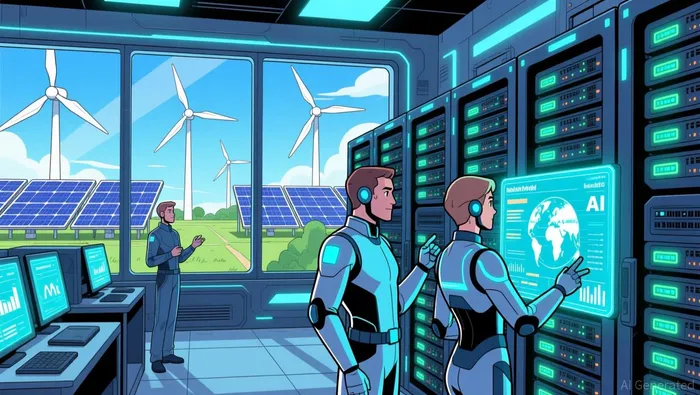 The strategic advantage lies in miners' ability to deploy AI infrastructure rapidly. According to Bernstein, , enabling hyperscalers like Amazon and Google to bypass the lengthy interconnection timelines of traditional data centers. This agility-scaling AI capacity in six months versus years-positions miners as critical enablers of the AI boom according to RSM US.
Sector Momentum and Financial Performance
The financial rewards of this pivot are evident. Miners who transitioned early, such as IREN and Cipher Mining, have year-to-date. CleanSpark's partnership with Submer to develop AI-ready campuses further highlights the sector's momentum, with its CEO noting that miners can deliver AI capacity at gigawatt scale according to CleanSpark's leadership.
Strategic partnerships have amplified this momentum. according to industry analysis. These deals capitalize on the of AI infrastructure demand between 2023 and 2030. Analysts from Bernstein have upgraded price targets for miners embracing AI, reflecting the sector's growing consensus that power assets and AI contracts now outweigh Bitcoin mining's value.
Risks and Sustainability Concerns
Despite the optimism, concerns persist. The rapid influx of capital into AI infrastructure has raised alarms about , particularly as debt-driven investments strain grid capacity and . While miners' low-cost renewable energy models mitigate some risks, the long-term viability of these projects depends on maintaining grid stability and managing debt loads.
Moreover, the post-2024 -cutting Bitcoin block rewards in half-accelerated the need for diversification but also exposed miners to heightened competition in the AI sector. Companies that fail to optimize operational efficiency or secure high-margin contracts may struggle to sustain profitability.
Conclusion
The strategic shift of former Bitcoin miners into AI infrastructure represents a transformative capital allocation trend. By repurposing power and data center assets, these firms are not only addressing the bottlenecks of AI expansion but also repositioning themselves as essential players in the global economy. While the sector's momentum is undeniable, investors must weigh the risks of overleveraging and market saturation against the potential for sustained growth. For now, the AI infrastructure gold rush shows no signs of slowing, with miners like IREN and CleanSpark leading the charge.







Comentarios
Aún no hay comentarios