
The AI Infrastructure Energy Dilemma: Who Should Pay?
The exponential growth of artificial intelligence (AI) has ignited a global race to build energy-intensive data center infrastructure, creating a critical dilemma: who should bear the costs of powering and sustaining these facilities? As governments and corporations grapple with this question, regulatory frameworks, corporate investments, and public funding mechanisms are converging to shape a complex landscape of responsibility and opportunity.
Regulatory Frameworks: Clean Energy Mandates and Streamlined Permitting
In 2025, the U.S. government has taken a firm stance on aligning AI infrastructure with sustainability goals. A landmark executive order requires large data centers (over 100 megawatts) to source 100% of their energy from clean sources-such as solar, wind, nuclear, or geothermal-to qualify for federal incentives like fast-tracked permits, loans, and tax credits according to the executive order. This "hourly clean energy matching" policy aims to decouple AI growth from carbon emissions while ensuring grid reliability.
Simultaneously, the Trump administration's executive order to accelerate data center development on federal and brownfield lands has streamlined permitting processes, reducing regulatory hurdles. Federal agencies are now directing grid operators to report on transmission upgrades and surplus capacity, facilitating infrastructure expansion. However, these policies face pushback from state regulators, who argue that federal preemption undermines local control over AI governance. The White House's AI Litigation Task Force, tasked with challenging state laws deemed "onerous," has further intensified this tension.
Corporate Investments: Renewable Energy and ESG Alignment
To comply with federal mandates and meet ESG goals, tech giants are making aggressive renewable energy investments. Apple, for instance, has allocated $600 million to European solar and wind projects, aiming to generate 1 million MWh annually by 2030. The company also plans to invest $500 billion over four years in U.S. infrastructure, including a new AI server factory in Texas according to their 2025 strategy. Similarly, Google has signed contracts for 8 GW of clean energy and pioneered the first corporate agreement for small modular nuclear reactors. These investments not only align with regulatory requirements but also position corporations as leaders in sustainable AI scaling.
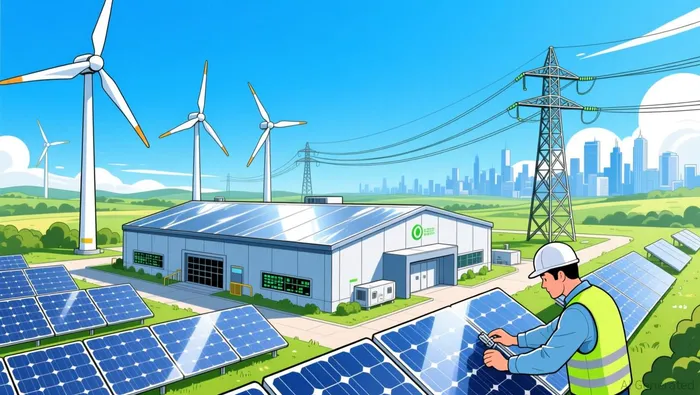 Energy efficiency is another priority. Google's Ironwood TPU, which is 30 times more power-efficient than earlier models, exemplifies how hardware innovation can mitigate energy demands. Meanwhile, tools like Data Center Infrastructure Management (DCIM) software and advanced cooling technologies are enabling operators to optimize energy usage. These strategies highlight a shift toward integrating sustainability into core operational models.
Cost Allocation: Grid Upgrades and Equity Concerns
The surge in data center demand has sparked debates over who should pay for grid upgrades. The U.S. Department of Energy (DOE) has directed the Federal Energy Regulatory Commission (FERC) to standardize interconnection processes for large loads, assigning 100% of network upgrade costs to the interconnection customer. While this approach aims to reduce redundancy and expedite development, critics argue it unfairly shifts costs to corporations rather than ratepayers. Consumer advocates warn that residential and small business customers should not subsidize infrastructure primarily benefiting large tech firms.
Conversely, data center operators emphasize the systemic benefits of their projects, including long-term grid reliability and economic growth. FERC's proposed rulemaking seeks to balance these concerns by ensuring transparency and fairness in cost allocation. For investors, this regulatory uncertainty underscores the need to monitor evolving policies and assess risks associated with grid interconnection delays or cost overruns.
Public Funding and Deregulation: A Double-Edged Sword
The 2025 AI Action Plan prioritizes deregulation and innovation, reducing federal oversight in areas like ethics and data privacy. While this approach incentivizes private-sector risk management, it also shifts responsibility for addressing AI-related harms-such as bias or security vulnerabilities-onto corporations. The Plan further withholds federal funding from states with "burdensome" regulatory frameworks, creating a fragmented landscape where companies must navigate conflicting state and federal priorities.
Public-private partnerships are emerging as a key strategy to bridge infrastructure gaps. For example, the Trump administration's emphasis on federal and brownfield lands for data center development has spurred collaboration between tech firms and government agencies. However, the lack of concrete timelines in the AI Action Plan raises concerns about long-term implementation risks for investors.
Investment Implications and the Path Forward
For investors, the AI infrastructure energy dilemma presents both opportunities and risks. Corporations that align with federal clean energy mandates-like Apple and Google-are likely to secure access to incentives and maintain market leadership. Conversely, companies failing to adapt to regulatory shifts may face financial penalties or reputational damage.
The cost allocation debate also highlights the importance of diversifying energy portfolios. While renewable energy investments offer long-term sustainability benefits, reliance on grid infrastructure remains a vulnerability. Investors should prioritize companies with hybrid strategies that combine clean energy procurement with grid resilience measures.
Ultimately, the resolution of the "who should pay" question will depend on balancing innovation with equity. As the DOE and FERC refine interconnection rules, and as corporate ESG commitments evolve, the AI sector must navigate a landscape where regulatory agility and ethical governance are as critical as technological advancement.







Comentarios
Aún no hay comentarios