
AI Infrastructure S-Curve: Comparing Power, Cooling, and Semiconductors as Under-the-Radar Plays
This is not just another tech cycle. The build-out of artificial intelligence infrastructure represents a foundational S-curve investment opportunity, a paradigm shift in how capital is allocated globally. The scale is staggering, with the total data center infrastructure market alone projected to reach $1 trillion by 2030. But that figure is just the tip of the iceberg. The entire AI value chain-power, compute, data centers, and beyond-will require an estimated $7 trillion of capital over the next decade.
Viewed through a historical lens, this build-out is comparable to the formation of the modern power grid and global telecom networks. It is a physical rail project for the digital age, creating a new infrastructure layer that will outlast any single software application. The shift is clear: capital is moving decisively from the promise of algorithms to the reality of servers, power plants, and cooling systems. This is the core of the investment thesis.
The evidence of this paradigm shift is already in motion. Brookfield's launch of a $100 billion global AI Infrastructure program is a landmark event. This isn't a speculative venture fund; it's a dedicated capital deployment vehicle anchored by a $10 billion equity fund and backed by partners like NVIDIANVDA--. The program's explicit goal is to acquire up to $100 billion of AI infrastructure assets, investing across every stage of the value chain. This move by a global infrastructure giant signals that the exponential growth phase has begun, and the focus is on the physical rails.
For investors, the implication is straightforward. The software layer will be crowded and competitive. The real multi-decade opportunity lies in the infrastructure layer-the companies providing the land, power, compute, and critical systems like cooling that are essential to run the AI factories. This is a capital-intensive, long-duration build-out that will define the next economic paradigm. The S-curve is steepening, and the infrastructure providers are the ones laying the tracks.
Comparing the Infrastructure Layers: Power, Cooling, and Semiconductors
The AI build-out is a multi-layered infrastructure race. While the world watches the chipmakers, the real S-curve is being built beneath them. Three foundational layers are now in focus: power, cooling, and semiconductors. Each offers a different adoption curve and risk/reward profile for investors.
First, consider the power layer. This is the most fundamental need, and it's already in the early stages of a steep adoption curve. Companies like Brookfield Renewable (BEP) are positioned as the utility-grade solution, with its $28 stock price and 5.3% dividend yield providing a steady return. The company has already signed deals with Microsoft and Google to supply clean energy for their AI infrastructure. This isn't speculative; it's a direct, contracted need. The adoption curve here is linear but essential, as every AI factory requires a reliable, scalable power source. The risk is that of overbuilding, but history suggests that will lower costs and accelerate adoption, not halt it.
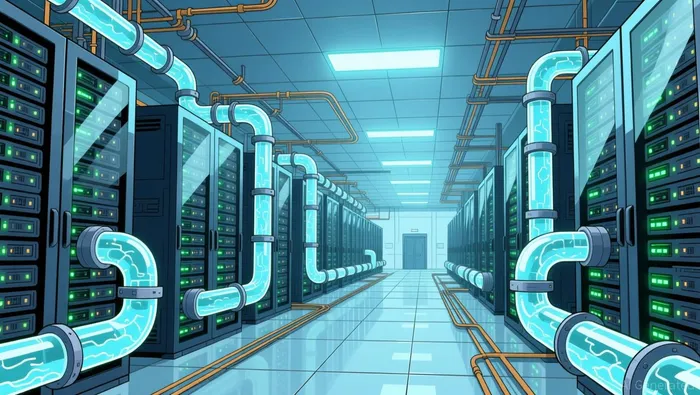
Next, the cooling layer is where the exponential growth is happening. This is the bottleneck for high-performance computing. Vertiv HoldingsVRT-- exemplifies this play, with its 31% trailing 12-month outperformance and a strategic $1 billion acquisition of PurgeRite to deepen its liquid cooling services. The company's thermal management portfolio is being integrated to offer end-to-end solutions for AI data centers. This layer is on a steeper S-curve than power, driven by the physical limits of air cooling. Vertiv's $9.5 billion backlog and 21% organic order growth signal intense near-term demand. The risk is execution and integration, but the growth trajectory is clear.
Finally, the semiconductor layer is the engine, but it's also the most volatile. Texas Instruments is a standout here, with its over 50% year-over-year data center revenue growth and a massive $60 billion investment in new U.S. fabs. This is a paradigm shift for a company traditionally known for analog chips. The adoption curve for specialized AI semiconductors is hyper-exponential, but it's also the most crowded and capital-intensive. The risk is intense competition and rapid technological obsolescence.
The under-the-radar play here is VertivVRT--. It sits at the intersection of two powerful S-curves: the explosive growth of AI data centers and the physical necessity of liquid cooling. Its recent acquisition and backlog provide a visible, near-term path to scaling that may be more predictable than the semiconductor race. For investors, the choice is between the foundational utility of power, the high-growth bottleneck of cooling, and the volatile engine of chips. Vertiv offers a compelling middle ground, building the rails for the next paradigm.
Adoption Rate and Exponential Growth: Which Layer is Next?
The AI infrastructure build-out is a classic S-curve in motion, but the adoption rate is now accelerating through its steepest phase. The question is which layer-power, cooling, or semiconductors-is primed for the next inflection point. Each faces a different bottleneck, but the exponential growth trajectory points to cooling as the immediate catalyst.
Power is the foundational layer, but its adoption is constrained by a physical bottleneck: the grid. Data centers already consume 1-2% of the world's power, and AI is pushing that to 3-4% by 2030. This isn't a simple linear ramp; it's a utility-like growth curve that will strain existing infrastructure, attracting regulatory scrutiny and spiking costs. The adoption rate here is slow because it's a system-wide build-out involving utilities, regulators, and massive capital. The growth is exponential in the long term, but the near-term adoption is bottlenecked by grid capacity and the time to deploy alternatives like microgrids or small modular reactors.
Cooling is where the adoption rate is accelerating most rapidly. As AI racks push densities into the three- and four-digit kWs, traditional air cooling fails. This forces a hard pivot to liquid cooling systems and specialized power infrastructure. Vertiv's CEO notes that activity on advanced cooling strategies is expected to further accelerate and evolve in 2025. The demand is no longer theoretical; it's here. The acquisition of specialized cooling services by companies like Vertiv signals a market that is moving from planning to deployment at scale. This layer is primed for the next phase because the technological shift is clear, the need is urgent, and the solutions are being commercialized now.
Semiconductors are the layer where exponential growth is already well underway, but it faces a more cyclical, capital-intensive cycle. Texas Instruments is a prime example, with over 50% year-over-year revenue growth from data centers in the first nine months of 2025. The company is investing $60 billion in new U.S. fabs to meet this demand. Yet, this growth is tied to the capital expenditure cycles of chipmakers and their customers. While the long-term trajectory is explosive, the near-term adoption rate is more volatile, subject to inventory corrections and the timing of massive fab build-outs. The growth is exponential, but the cycle is less smooth than the cooling transition.
The bottom line is that cooling is the next layer to hit its inflection point. The power bottleneck is a long-term constraint, and semiconductor growth is already in full swing. The cooling layer is where the immediate, exponential adoption rate is accelerating, driven by the physical reality of AI's heat. Companies that can scale liquid cooling and integrated power solutions will be positioned at the front of the next S-curve.
Valuation, Catalysts, and Risks: The Path to Exponential Returns
The path to exponential returns in AI infrastructure hinges on a few clear catalysts and a single, persistent risk. The primary driver is the massive capital expenditure wave. Analyst estimates now project that hyperscaler capital spending on AI will reach $527 billion in 2026. This isn't just a number; it's the fuel for an entire supply chain. The key is to identify the companies positioned to capture this spending as it flows down the stack.
The first major catalyst is the ramp of custom silicon and advanced packaging. As hyperscalers build their own ASICs, they need the underlying IP and physical packaging to make them work. For companies like Marvell Technology, the 2026 catalyst is the volume production of its 3nm custom silicon projects for Amazon and Microsoft. Revenue must cross from design wins into cash flow. Similarly, Amkor Technology is building capacity in Vietnam and Arizona to serve as a "China Hedge" for advanced 2.5D packaging. The 2026 test is whether it can diversify its customer base beyond a single lead customer and recognize revenue from its new capacity. These are the infrastructure layers where demand is becoming more durable, less tied to the fleeting software wars above.
A second, more fundamental catalyst is the shift in networking. The bottleneck for AI clusters has moved from compute to data transport. Arista Networks is positioned to benefit from the industry's move toward an open Ethernet standard for AI backbones, a transition that hits hardware production in 2026. This bifurcation creates a new, high-margin layer of demand for specialized networking gear.
Yet the dominant risk is overbuilding in data center property. History suggests that when infrastructure booms, supply eventually outstrips demand, leading to lower prices for the physical space. The risk is that this overbuilding could pressure the valuation of pure-play data center REITs. However, the underlying need for power and cooling remains. As one analysis notes, overbuilding in AI is likely to result in lower prices for AI assets, but the electricity needed would remain the same, if not increase. This creates a potential divergence: the value of the physical real estate may compress, but the value of the power and cooling infrastructure that supports it could remain robust.
For investors, the setup is about selective exposure. The exponential returns will come from companies that are not just building the next data center, but the next generation of silicon, packaging, and networking that makes it run. The risk is that the market will eventually punish the builders of the physical shell if they are not also capturing the value of the underlying power and connectivity. The path forward requires watching the execution of capex plans and the diversification of supply chains, while keeping a close eye on the signs of overbuilding that could dampen returns from the property layer.





Comentarios
Aún no hay comentarios