
AI Infrastructure Beneficiaries: Strategic Stocks Thriving Amid the Broadcom-Nvidia Rivalry
The AI infrastructure market has entered a transformative phase, driven by the complementary dominance of BroadcomAVGO-- and NvidiaNVDA--. While these two giants operate in distinct segments-Nvidia excelling in general-purpose GPUs and Broadcom specializing in custom ASICs-their rivalry is fueling a broader ecosystem of beneficiaries. Investors seeking exposure to this high-growth sector should focus on companies positioned to capitalize on the infrastructure, partnerships, and supply chain dynamics shaping the AI landscape in 2025.
Nvidia's GPU Dominance and Its Ecosystem Winners
Nvidia remains the undisputed leader in AI GPUs, with its CUDA platform enabling a vast ecosystem of developers and enterprises. The company's Blackwell GPUs, which generated $11 billion in sales in 2025, are powering large-scale AI inference and reasoning tasks, particularly for cost-efficient models like DeepSeek's R1. This dominance has created a ripple effect for suppliers and partners.
For instance, OracleORCL--, Arista NetworksANET--, and Micron are key beneficiaries of Nvidia's infrastructure expansion. Oracle's cloud services are increasingly integrated with Nvidia's AI solutions, while Arista's high-speed networking gear supports the data center demands of AI workloads. Micron, a critical supplier of memory components for Nvidia's GPUs, stands to gain as AI adoption accelerates. Additionally, TSMC's advanced manufacturing capabilities are essential for producing Nvidia's cutting-edge chips, further cementing its role in the supply chain.
Broadcom's Custom ASICs and Strategic Partnerships
Broadcom has carved out a niche in the custom AI ASIC market, offering cost-effective solutions for hyperscalers like Google, Meta, and OpenAI. Its AI revenue surged 63% in Q3 2025, reaching $5.2 billion, driven by contracts for custom accelerators. Notably, Google's Ironwood TPU-a Broadcom-designed chip for AI inference-is projected to become a major revenue driver, with each unit commanding a price premium.
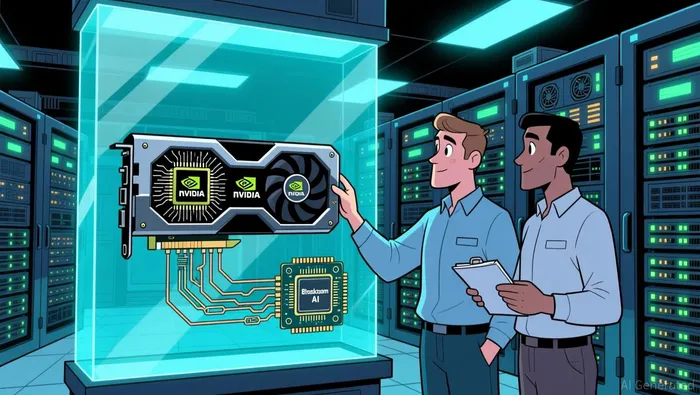 Broadcom's partnerships extend to OpenAI, where it is co-designing 10 gigawatts of custom AI accelerators, leveraging its Ethernet stack for networking solutions. This collaboration, alongside OpenAI's $100 billion investment from Nvidia, highlights the complementary nature of the AI ecosystem. While Broadcom and Nvidia compete indirectly, their combined efforts are driving demand for specialized infrastructure.
Key Suppliers and Partners in the AI Supply Chain
Beyond the two chipmakers, several companies are strategically positioned to benefit from the Broadcom-Nvidia rivalry:
- Corning (GLW): A leading supplier of fiber optic cables for data centers, Corning's products are critical for accelerating AI workloads and enabling faster processing speeds.
- Ciena: This optical networking provider is supplying components that support high-speed data transmission in AI data centers, ensuring efficient performance for both Broadcom and Nvidia clients.
- Marvell Technology: Challenging Broadcom's dominance in custom AI chips, Marvell aims to capture 20% of the market by 2028, up from less than 5% in 2023.
- Oracle and Arista Networks: These firms are gaining traction as cloud and networking partners for both AI leaders, with Oracle's infrastructure and Arista's switches becoming essential for hyperscale deployments.
Investment Implications
The AI infrastructure market is expanding rapidly, with multiple winners emerging from both general-purpose and specialized solutions. Investors should prioritize companies with diversified exposure to this ecosystem. For example, Corning and Ciena offer defensive positions in optical infrastructure, while Marvell and Oracle provide growth opportunities tied to custom silicon and cloud services.
Moreover, the strategic partnerships between Broadcom, Nvidia, and hyperscalers like OpenAI and Google underscore the importance of a collaborative supply chain. As AI workloads grow in complexity, the demand for specialized networking, memory, and manufacturing solutions will only intensify.
Conclusion
The Broadcom-Nvidia rivalry is not a zero-sum game but a catalyst for innovation across the AI infrastructure supply chain. While Nvidia's GPUs and Broadcom's ASICs dominate their respective niches, the real opportunities lie in the companies enabling their success. By investing in suppliers like Corning, Ciena, and Marvell, as well as partners like Oracle and AristaANET--, investors can position themselves to thrive in the AI-driven economy of 2025 and beyond.







Comentarios
Aún no hay comentarios