
The AI Image Generation Arms Race: Can OpenAI Regain Consumer Mindshare from Google's Nano Banana?
The AI image generation market in 2025 is a battleground of innovation, with Google's Nano Banana Pro and Openai's DALL·E 3 vying for dominance. While Openai has long held the crown in consumer adoption, Google's recent advancements-coupled with its ecosystem integration-pose a formidable challenge. This analysis explores how strategic product innovation and consumer adoption dynamics are reshaping the landscape, and whether Openai can reclaim its lead.
The Google Playbook: Ecosystem Integration and Enterprise Dominance
Google's Nano Banana Pro, powered by Gemini 3 Pro, has leveraged the company's sprawling ecosystem to drive adoption. By embedding the tool into core services like GoogleGOOGL-- Search, Google Photos, and Android, the model has achieved rapid mainstream traction. As of December 2025, the Gemini app-which includes Nano Banana Pro-boasts 650 million monthly active users, with 13.5% of the global AI chatbot market share. This integration has not only democratized access but also created a flywheel effect: users generate images within Google's ecosystem, reinforcing its stickiness.
For enterprises, Nano Banana Pro's capabilities-such as 4K resolution, multilingual text rendering, and the ability to blend up to 14 images-have made it a studio-quality tool. Its partnerships with Adobe, Figma, and Canva further cement its role in professional workflows. Notably, the model's SynthID watermark addresses transparency concerns, a critical factor for brands navigating AI-generated content regulations.
Consumer adoption metrics, while less publicized, are telling. A G2 analysis revealed California as the epicenter of Nano Banana Pro interest, with search scores near the maximum (100), followed by Washington and Massachusetts. This mirrors the pattern of early AI tool adoption in tech-forward regions. Additionally, the model generated 200 million image edits and attracted 10 million new Gemini users within weeks of its August 2025 launch.
Openai's Edge: Conversational AI and Consumer-Centric Innovation
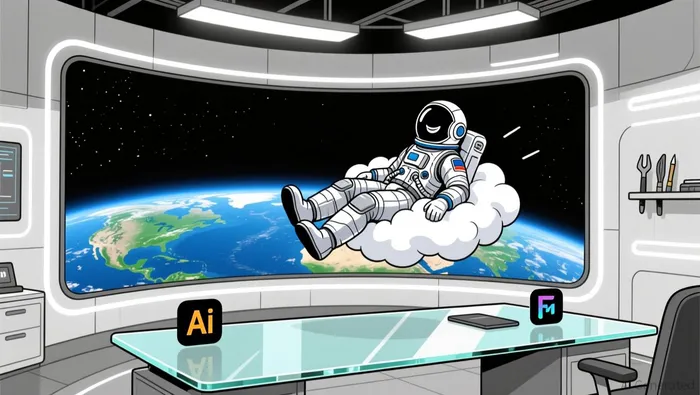
Openai's DALL·E 3, integrated directly into ChatGPT, has redefined user interaction. By enabling image generation through conversational prompts-such as "an astronaut lounging on a cloud over Earth"-the tool has lowered the barrier to entry for casual users. This seamless integration has driven 800 million weekly active ChatGPT users and 7.5 million ChatGPT Plus subscriptions. The ability to refine images based on user feedback further enhances its appeal, creating a feedback loop that deepens engagement.
Openai's enterprise strategy is equally robust. ChatGPT Enterprise's 600,000 paying business users and partnerships with Fortune 500 companies underscore its dominance. The GPT-4o model's multimodal capabilities-processing 1 million tokens of context-have made it indispensable for document analysis and cross-modal workflows. However, Openai's consumer-centric focus, particularly among Gen Z 75% of U.S. users report weekly usage, gives it a unique edge in shaping cultural trends.
The Mindshare Gap: Where Google Excels, Openai Struggles
While Openai leads in consumer engagement, Google's enterprise and ecosystem-driven approach is closing the gap. Nano Banana Pro's 48% market share in image generation within a week of launch highlights its rapid adoption, particularly in professional contexts. Meanwhile, Openai's consumer tools, though popular, face challenges in enterprise adoption due to data privacy concerns and the need for custom integrations.
Google's pricing strategies also tilt the scale. Platforms like Higgsfield and Freepik offer Nano Banana Pro at 0.058–0.22 per generation, making it accessible for creators and small businesses. Openai's enterprise pricing, while competitive, remains opaque, potentially deterring smaller adopters.
Can Openai Regain the Upper Hand?
Openai's strength lies in its conversational AI ecosystem and viral consumer appeal. The integration of DALL·E 3 into ChatGPT has created a self-reinforcing loop: users engage with ChatGPT for text, then generate images, and finally return to refine their prompts. This stickiness is hard to replicate. However, Google's enterprise-first strategy and ecosystem integration are eroding Openai's lead in professional markets.
For Openai to regain mindshare, it must:
1. Expand enterprise partnerships to match Google's reach in creative and advertising tools.
2. Enhance multimodal capabilities to address complex workflows (e.g., video and audio integration).
3. Leverage its cultural influence to drive adoption in emerging markets, where Google's Android integration already has a foothold.
Conclusion: A Tug-of-War in the AI Arms Race
The AI image generation market is no longer a binary contest. Google's Nano Banana Pro and Openai's DALL·E 3 represent two distinct but complementary strategies: enterprise integration vs. consumer virality. While Openai's conversational AI and cultural resonance give it a short-term edge, Google's ecosystem-driven approach is building long-term durability. For investors, the key question is not which will win, but how these strategies will evolve-and whether hybrid models (e.g., Openai's enterprise tools or Google's consumer-focused expansions) will emerge as the new standard.





Comentarios
Aún no hay comentarios