
AI in Higher Education: Strategic Partnerships as Catalysts for Talent Development in Emerging Markets
Strategic Partnerships: Bridging the Gap Between Education and Industry
In emerging markets, the disconnect between academic training and workforce demands has long hindered employability. AI-driven partnerships are addressing this gap by fostering dynamic ecosystems where institutions, governments, and corporations co-create solutions tailored to local and global labor markets. For instance, in India, 57% of higher education institutions have adopted institutional AI policies, with 40% in the process of development. These policies emphasize embedding AI into curricula, from foundational courses to interdisciplinary programs, while prioritizing ethical frameworks and workforce readiness.
Industry collaborations are central to this transformation. In India, co-created courses and AI clinics-where students engage in real-world problem-solving with industry partners-have become common. For example, IBM's Skillsbuild program and Google's $1 billion pledge for AI education are reshaping skill development. Such initiatives not only align academic outcomes with employer expectations but also create scalable pathways for reskilling and upskilling, essential in an AI-driven economy.
Brazil: AI as a Tool for Pedagogical and Administrative Efficiency
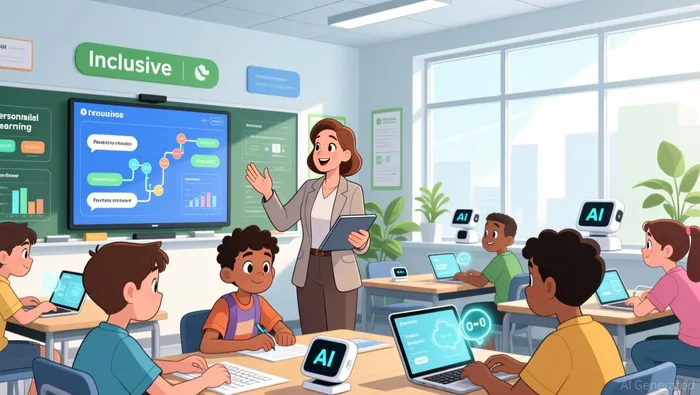 Brazil's experience underscores AI's potential to enhance both pedagogical practices and institutional efficiency. A 2020 study in Espírito Santo evaluated the impact of AI-powered Automated Writing Evaluation (AWE) systems in public schools preparing for the ENEM college entrance exam. The results showed significant improvements in students' essay scores, with AI-only feedback proving as effective as hybrid systems involving human input. This scalability is particularly valuable in resource-constrained settings, where AI can democratize access to high-quality education.
Beyond academics, AI is streamlining administrative processes. GPRS's ReadyRecruit platform, an AI-powered recruitment associate, exemplifies this trend. By enabling 24/7 multilingual communication, ReadyRecruit allows institutions to focus on strategic interactions while automating routine tasks. Such tools not only improve enrollment outcomes but also reduce operational costs, freeing resources for curriculum innovation and student support.
Nigeria: Policy-Driven AI Adoption and Ethical Considerations
While Nigeria's AI initiatives in higher education are still nascent, the country is prioritizing inclusive and ethical adoption through its national education policy framework. Unlike India and Brazil, where concrete case studies abound, Nigeria's focus remains on policy design and capacity building. This highlights both an opportunity and a challenge: while early-stage adoption allows for tailored strategies, it also necessitates significant investment in infrastructure, faculty training, and governance.
The global AI in Learning and Development market, projected to reach $97 billion by 2034, underscores the urgency of such investments. For Nigeria and similar markets, partnerships with global EdTech leaders-such as Microsoft's LinkedIn Learning courses or HP's AI Teacher Academy-could accelerate progress. However, ethical concerns, including algorithmic bias, demand robust frameworks to ensure equitable access and responsible AI use.
Challenges and the Path Forward
Despite promising advancements, several hurdles persist. In India, only 17% of faculty consider themselves AI experts, necessitating tiered training models that combine workshops, MOOCs, and advanced credentials. Similarly, Brazil's AWE study revealed the need for teacher reorientation to leverage AI effectively. These challenges highlight the importance of sustained public-private collaboration, particularly in emerging markets where resource constraints are acute.
For investors, the opportunities are clear. The AI-powered upskilling market is expanding rapidly, driven by the need for continuous learning as automation reshapes job roles. Companies like Eightfold AI, which partners with organizations like S&P Global to enhance talent intelligence, demonstrate the commercial viability of AI-driven workforce solutions. Meanwhile, infrastructure providers such as IotaComm, which collaborates with Stony Brook University on LoRaWAN® testbeds for smart infrastructure, illustrate the potential for AI to drive innovation beyond traditional education models.
Conclusion
Strategic partnerships are the linchpin of AI's transformative potential in higher education, particularly in emerging markets. By aligning curricula with industry needs, enhancing pedagogical efficiency, and addressing ethical challenges, these collaborations are not only improving employability but also fostering resilient, future-ready workforces. For investors, the key lies in supporting initiatives that prioritize scalability, inclusivity, and long-term workforce transformation. As AI continues to redefine education and employment, the institutions and markets that embrace these partnerships will lead the next wave of global talent development.







Comentarios
Aún no hay comentarios